
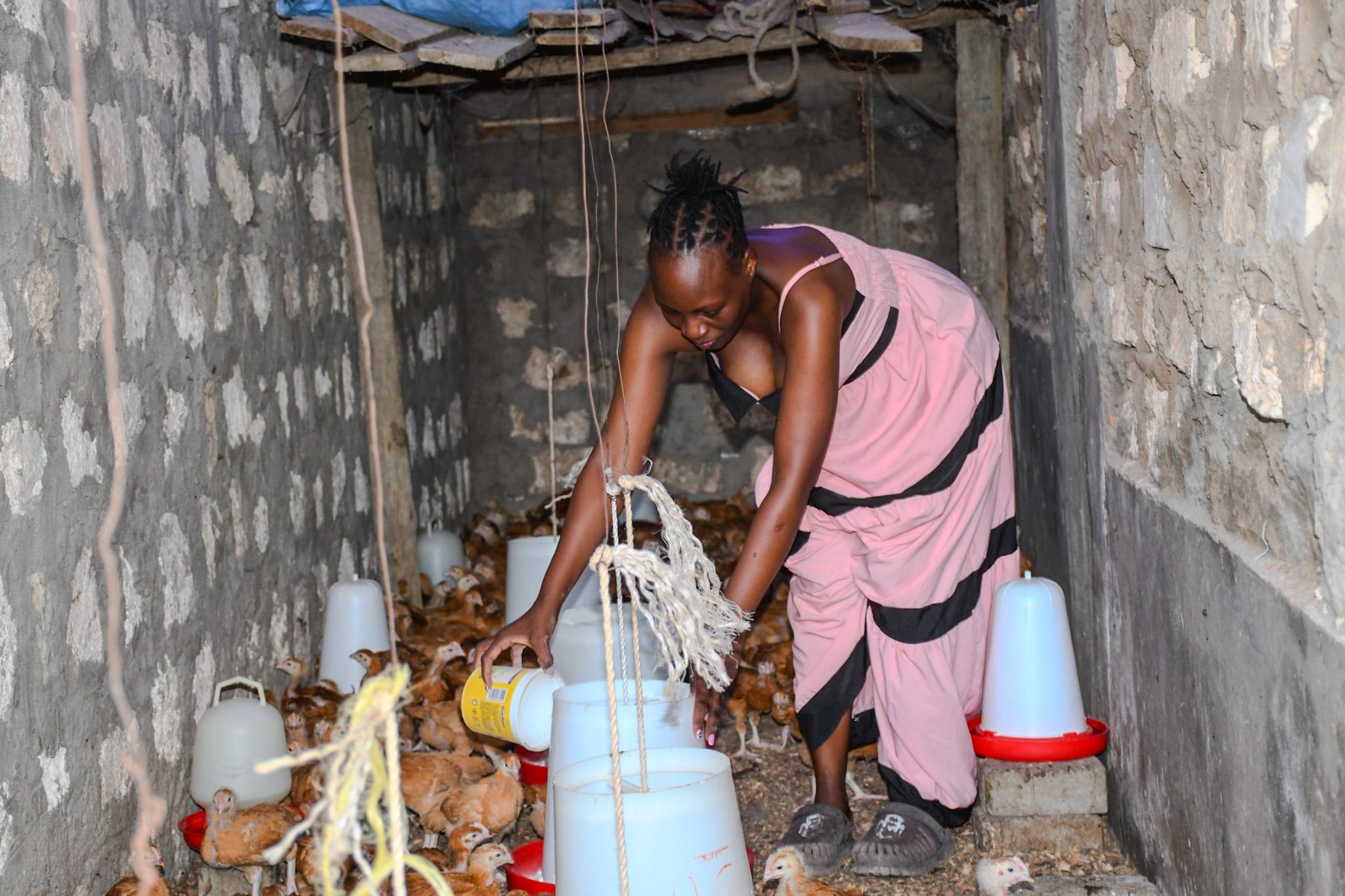
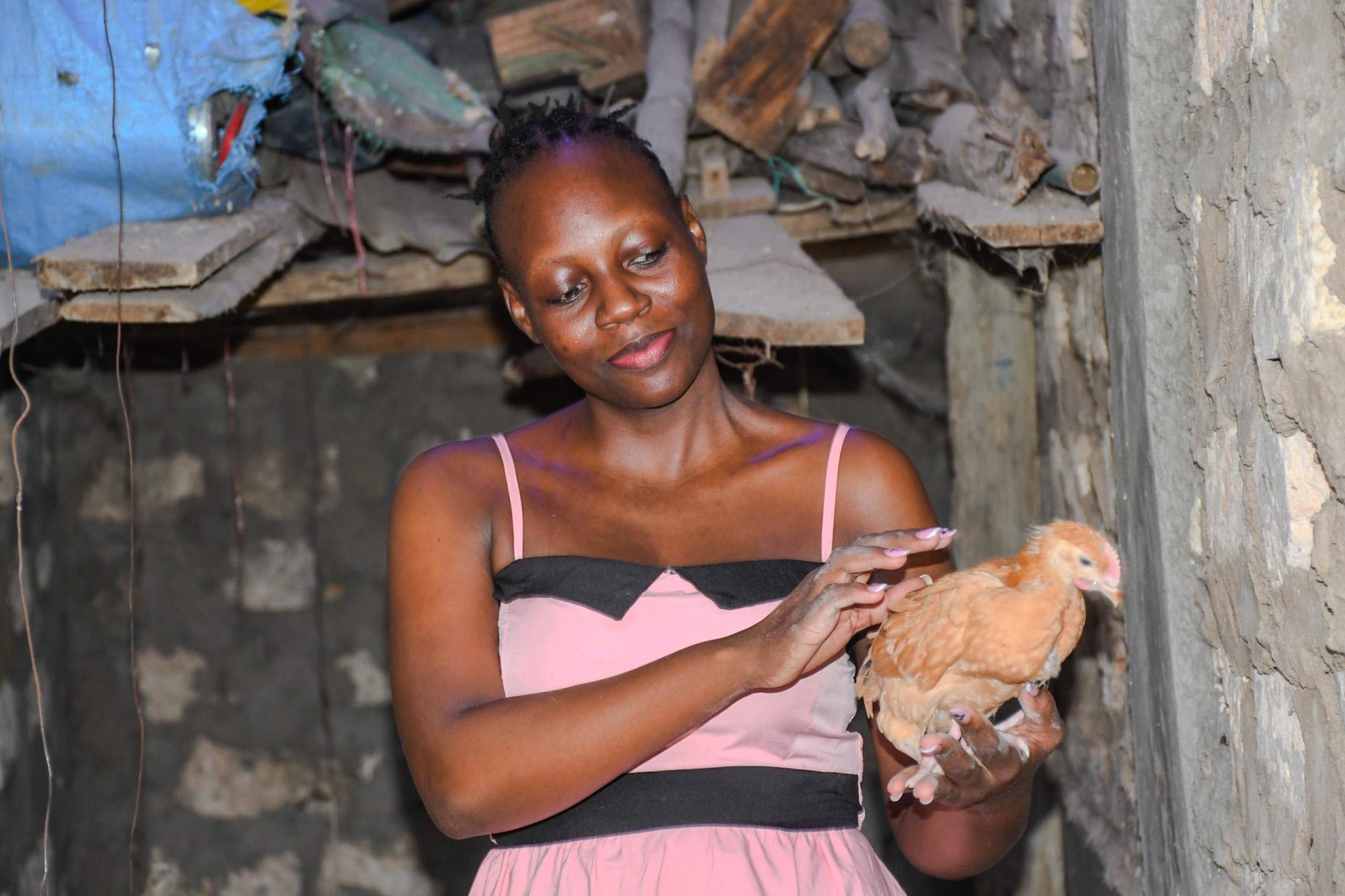
Granda Orute, a 30-year-old mother from Chuda, Mombasa County, originally from Teso, spent about a decade living with the hardships of financial dependence within her marriage. She had committed herself to her husband and their two young boys, but without an independent income, she depended on her husband for everyday household needs, including food, school supplies and toiletries.
Asking money from her spouse often became a source of resentment and conflict. The tension escalated into verbal and physical violence, affecting not only Granda but also her two sons, who lived with the strain in their home. Glanda’s turning point came when CREAW engaged her through grassroots outreach to survivors of gender-based violence. She first received psychosocial support, which gave her a safe space to process years of trauma and begin rebuilding her sense of self-worth.
The Jasiri program complemented this support with economic empowerment. Grand participated in an intensive four-day financial literacy training, where she learned to separate business funds from household money, calculate margins, manage liquidity, save, and understand options such as Saccos, formal banks and community credit. These lessons helped her understand financial management not simply as accounting, but also as a practical tool for independence and decision-making.
“The greatest lesson was separating business money from household cash… Today, with my own income, my life has transformed. I no longer have to beg for everything.”
Before joining the program, Granda already had a small poultry venture of around 30 chickens. However, the birds struggled because she lacked sufficient money for balanced commercial feeds and veterinary care. The venture remained small and struggled to grow. The business grant provided the catalyst she needed. Granda invested the funds in commercial poultry feeds and essential veterinary care. With better nourishment and care, the chickens matured and began fetching better market prices. Instead of consuming the returns, she reinvested them into the enterprise.
Her flock grew gradually from 30 birds to 50, then 100, and eventually to more than 300 healthy chickens. Her poultry infrastructure can now handle up to 500 chicks. What began as a small household activity has become a growing enterprise and an independent source of income. The impact of the business has extended far beyond the poultry house. From her earnings, Granda can contribute to household expenses instead of having to ask her husband for financial support at every turn. The financial pressure and conflict that once characterized the marriage have reduced, and physical violence has stopped.
“Right now I have a voice in my home; we can sit and talk. We can contribute together: if we want to buy a plot of land, we sit, discuss saying my husband will give half, I will give half, and we buy the plot together,” she reflects.
Granda now describes having a stronger voice in her home. She and her husband can sit together, discuss family investments and contribute jointly. When they considered purchasing a permanent plot of land for their enterprise, they were able to agree on a shared contribution. Her children have also experienced the change. Granda speaks of the happiness she sees in her two sons when they see her relaxed and financially capable.
Granda’s story illustrates how psychosocial support and economic empowerment can work together to help a survivor rebuild her life. Her growing poultry enterprise has not only strengthened her income but also contributed to greater confidence, dignity and decision-making within her household.
The Jasiri Program is a five-year (2023–2028) initiative designed to strengthen the resilience of GBV survivors, expand their access to economic opportunities, and shift social norms so adolescent girls and young women (AGYW) can thrive in entrepreneurship and employment. Implemented across 16 counties in Kenya, the program is delivered by a consortium comprising the Centre for Rights Education and Awareness (CREAW), GROOTS Kenya, the Collaborative Centre for Gender and Development (CCGD), the Centre for Domestic Training and Development (CDTD), and Advocates for Social Change Kenya (ADSOCK), in partnership with Mastercard Foundation.