Jasiri Program Archives - CREAW KENYA

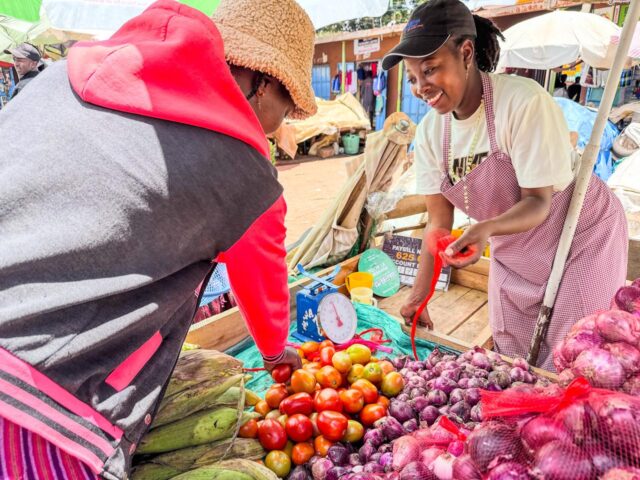
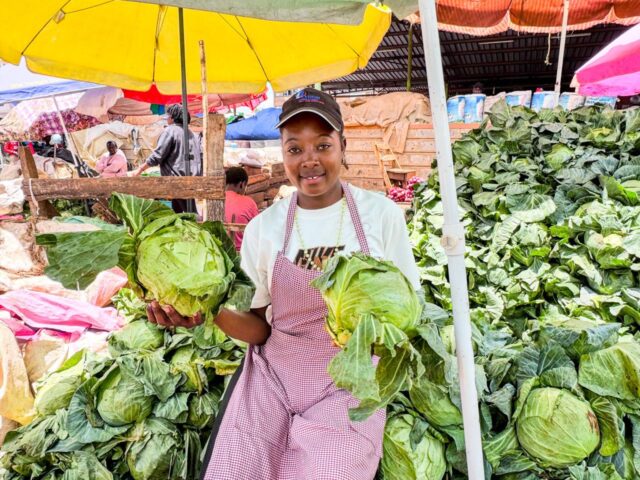
Mary-Muthoni-serves-a-customer-at-her-stall-in-Karatina-Market.-Photo-by-Wambui-Kimari.jpeg

April 27, 2026by CREAW
Mary Muthoni at her stall in Karatina Market. Photo by Wambui Kimari

The hustle and bustle of Karatina Market in Nyeri County is impossible to ignore. One of Kenya’s largest open-air markets, it pulses with movement. Voices calling out prices, sacks of produce shifting from hand to hand, traders negotiating in quick, practiced rhythms. Agricultural goods move in large volumes here. The pace is fast. Hectic. Relentless.

Tucked between hundreds of stalls, Mary Muthoni tends to her customers.

In a space that loud, Mary is soft-spoken, almost shy. She smiles gently at a customer before turning to welcome us. Her groceries seem to rise around her small frame. A mound of cabbages, baskets of tomatoes, onions, and maize arranged with care.

At 27, her face does not immediately betray the weight she carries. Married young, Mary is a mother of two and a survivor of abuse at the hands of both her husband and in-laws.

Her firstborn developed disabilities following complications from meningitis. Instead of support, this became the source of further abuse. She eventually fled back to her family home, hoping for refuge. But even there, the welcome was strained. Her child’s special needs seen as an added burden, demanding more than the family was willing or able to give.

Determined to survive, Mary sought out casual work, taking on laundry jobs. But even this came at a cost. Unable to afford daycare, she carried her child with her to work. There were days the crying made it difficult to complete tasks. Days she had to stop working altogether to rush to hospital. Many employers preferred workers without such responsibilities. Opportunities slipped through her fingers.

The financial, emotional, physical strain began to show. Caring for a child with special needs without support, while navigating rejection and instability, took a toll on her mental health.

By the time she was introduced to Jasiri’s work, Mary was depressed and struggling to find a way forward.

Through CREAW, she first received counselling which gave her space to process, breathe and begin again. From there, she underwent financial literacy training, building skills in business setup, record keeping, marketing, and product positioning.

With a KES 25,000 business grant, Mary started a clothes-selling business. However, the venture did not go as planned. Sales were low and losses discouraging.

But Mary did not stop.

She noticed how traders in Karatina bought produce in bulk and resold it across towns and villages. With what remained of her capital, she pivoted by starting small with onions.

This time, it worked.

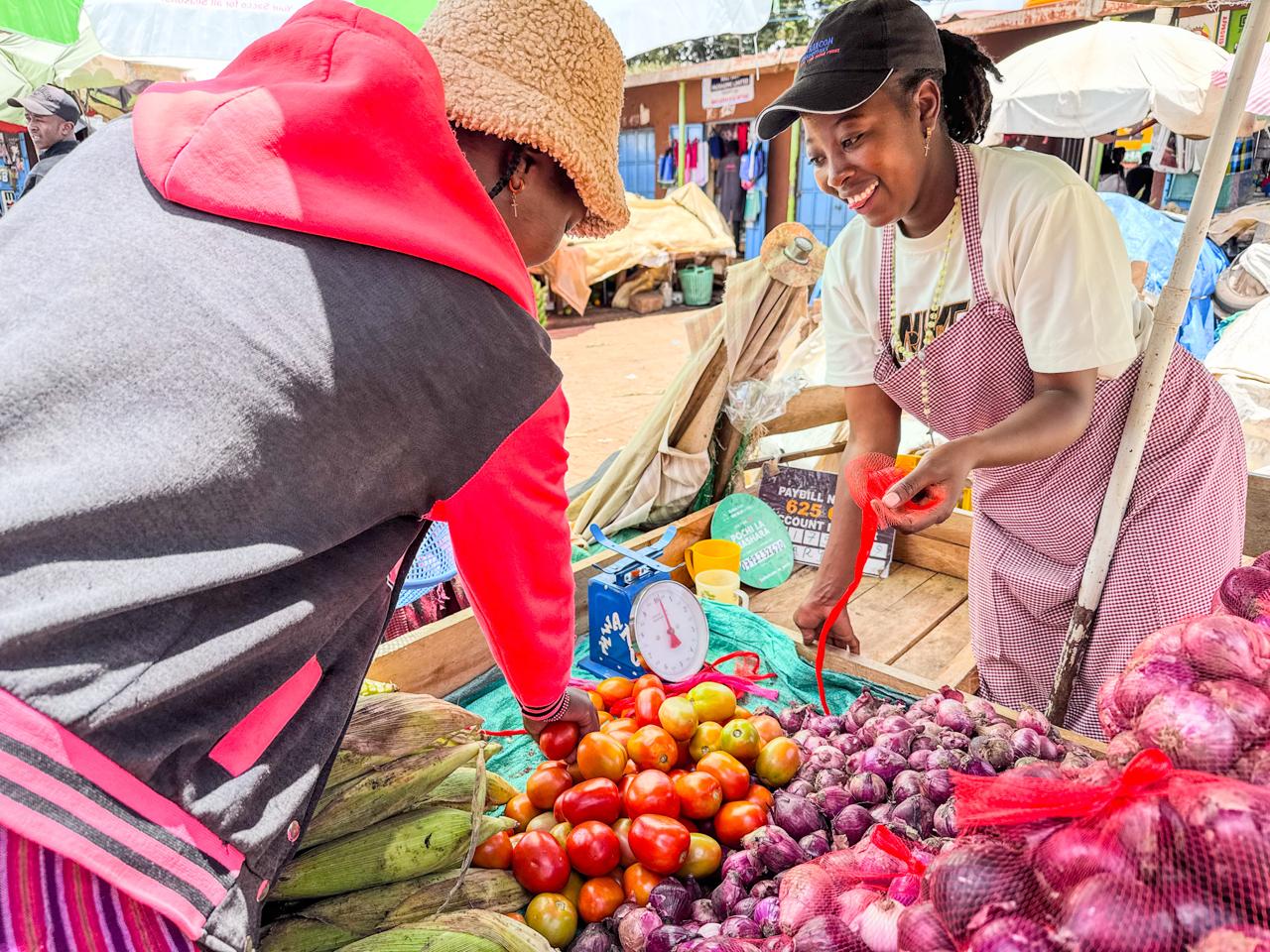
Mary Muthoni serves a customer at her stall in Karatina Market. Photo by Wambui Kimari

Gradually, she expanded her stock to include tomatoes, maize, and cabbages, applying the lessons she had learned.

“While my income is not as big just yet, I am now able to generate enough to restock and cater for my basic needs,” she reflects.

There was a time she could not afford rent, school fees, or even food.

“Now, I can pay daycare for my child with special needs, and school fees including transport for my other child,” she says, a quiet smile breaking through.

Her income now supports medication for her child, who suffers from convulsions. She can afford the extra care her child needs. School transport has eased her daily burden, allowing her to focus on growing her business.

Mary dreams of expansion, of becoming a large-scale trader, of building something stable and lasting.

“I would like to encourage any woman experiencing abuse to get out of the house,” she says.

“Stop hiding. Gather the courage to seek help. I would not have been supported if I stayed behind, crying about my problems. I also hope more women can join the Jasiri Program. It has transformed my life. It understood my challenges and walked with me through this journey.”

The Jasiri Program is a five-year (2023–2028) initiative designed to strengthen the resilience of GBV survivors, expand their access to economic opportunities, and shift social norms so adolescent girls and young women (AGYW) can thrive in entrepreneurship and employment. Implemented across 16 counties in Kenya, the program is delivered by a consortium comprising the Centre for Rights Education and Awareness (CREAW), GROOTS Kenya, the Collaborative Centre for Gender and Development (CCGD), the Centre for Domestic Training and Development (CDTD), and Advocates for Social Change Kenya (ADSOCK), in partnership with Mastercard Foundation.
Victoria-Mumbua-Painting-Buildher-1.jpeg

December 6, 2025by CREAW


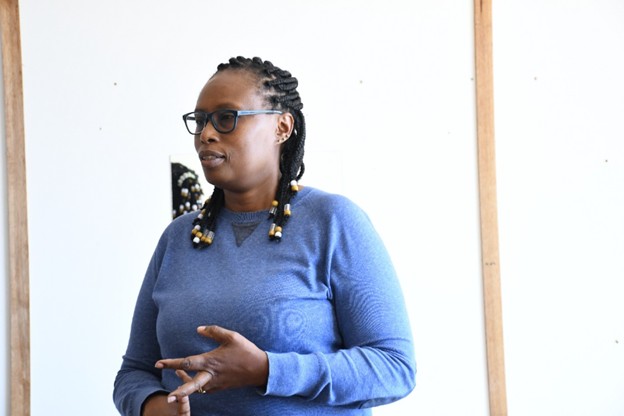
For as long as she can remember, Victoria Mumbua has always had an eye for detail, especially when it came to painted walls. She would notice the uneven strokes, the bumps, the cracks and silently think, “I could do better.” That quiet curiosity led her to Buildher, one of the partners under the Jasiri Program, which equips young women with hands-on skills to help them participate meaningfully in the world of work. At Buildher she is learning painting and decoration.

As a mother of two, Victoria juggles motherhood, studies, and an internship that runs six days a week. Her days begin at dawn and end after sunset leaving home at 6 a.m., attending classes from 8 a.m. to 5 p.m., then heading home to care for her children.

By the time she walks through the door, she’s exhausted. “Sometimes I feel like I’m losing touch with them,” she says quietly. “If someone told me one of them misbehaved, I wouldn’t even know whether to believe it or not.”

The demanding schedule has also strained her social life. But Victoria now sees that as a blessing. “Before Buildher, I didn’t know how to say no,” she admits. “Now I have boundaries. I know what matters.”

Through the Buildher’s training, Victoria is learning not only painting and decoration techniques but also discipline, financial literacy, and resilience. The program has given her access to trainers who challenge her to stay consistent, and to mental health support that helps her cope with the emotional toll of her journey.

Her sister occasionally helps her with food, rent, and school fees, but Victoria has learned to hold on to her bigger goal to complete her training and secure sustainable employment.

There are moments when she feels like giving up. “I’ve wanted to leave this program a million times,” she laughs. “Every week I say I’m done. But then wonder what would happen should I quit.”

She finds motivation in the women she meets at construction sites who tell her they earn Ksh 2,000 a day. “It reminds me that there’s something better waiting on the other side of this hard work,” she says.

Today, Victoria speaks with quiet confidence and determination. She’s learning to see beyond the struggles of the present to the promise of independence and stability ahead.

“I’m not just learning how to paint walls,” she says with a smile. “I’m learning how to rebuild my life.”


Nasimiyu.png

November 23, 2025by CREAW

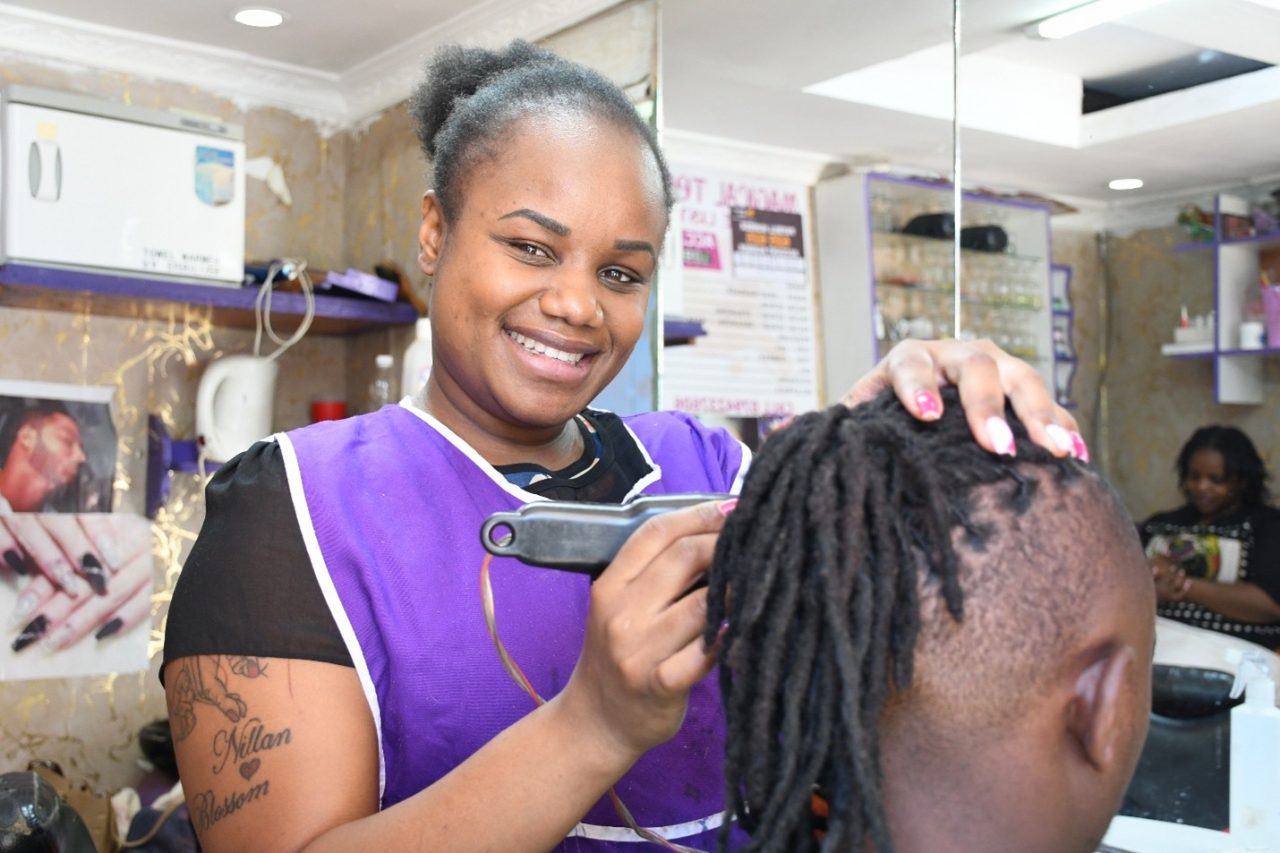
Justin Nasimiyu, a mother and resident of Kibra, has walked a challenging path as a survivor of gender-based violence (GBV). Her journey is one of courage, reflection, and starting anew.

For years, Justin endured a painful marriage with a violent, alcoholic husband. He not only disregarded her feelings but also brought another woman into their home to humiliate her in front of their children. Justin faced daily beatings, insults, and was left to raise her children alone, as her husband support the needs of the family. “I lived through pain every day, but no one seemed to notice. I had to carry the burden alone,” she recalls quietly.

One day, Justin realized she couldnt continue living like that. After deep reflection, she made the brave decision to walk away and take her children with her. Leaving was not easy, but she knew she had to do it for herself and her children.

A close friend who witnessed Justin’s struggles introduced her to CREAW, where she was enrolled in the Jasiri Program. This connection transformed her life. Through Jasiri, Justin received counseling that helped her begin to heal from the emotional pain she had carried for so long. She also participated in financial literacy training, learning essential skills for managing her business. She was taught the importance of pursuing her passions, saving money for personal use, business, and emergencies, as well as keeping accurate records of every coin earned and spent.

“Before Jasiri, I didn’t know how to manage anything. I was just surviving, but they taught me how to plan for my life and my future,” she expresses.

After completing the training, Justin received a grant that enabled her to open her own salon business. From that moment on, her life started to improve. Today, Justin can comfortably pay school fees and provide food for her children, allowing her to support her family without the daily struggles that once weighed her down. “I now feel proud when I can meet my children’s needs without begging or waiting for someone to step in,” she says with a soft smile.

Justin is deeply grateful to Jasiri for giving her the opportunity to rebuild her life. “Jasiri came through for me in a way my friends and family could not. They helped me when I had no other way out,” she shares sincerely.

The difference between her past and present is stark; she has gone from days filled with pain and fear to days filled with hope and growth. She now has the strength to support her children even when they face challenges in school.

“To all the women going through the same thing, don’t sit in silence, waiting for friends or family to save you. Look within yourself and ask the hard questions. Staying too long in suffering can destroy you in the end,” she advises. Justin encourages women to share their stories and seek help from people and organizations that can genuinely support them.

Justin is thankful to Jasiri for pulling her out of a life of pain. She hopes Jasiri will continue to encourage and support her as she raises her children and builds her life.

The Jasiri Program aims to enhance the resilience of GBV survivors, increase their participation in economic opportunities, and shift social norms to create an enabling environment for them to thrive in the world of entrepreneurship and work. The program is implemented by a consortium comprising Centre for Rights Education and Awareness (CREAW), Grassroots Organizations Operating Together in Sisterhood (GROOTS Kenya), Collaborative Center for Gender and Development (CCGD), Centre for Domestic Training and Development (CDTD) and Advocates for Social Change Kenya (ADSOCK in partnership with the Mastercard Foundation. 


MOU-signing-Morendat-2-1280x853.jpeg

May 14, 2025by CREAW
CREAW Executive Director Wangechi Wachira and KPC Managing Director Joe Sang during the signing of the MOU

In a timely move to economically empower marginalized, young female survivors of gender-based violence (GBV), the Centre for Rights Education and Awareness (CREAW), the KPC Foundation, and the Morendat Institute of Oil and Gas National Polytechnic (MIOG) have signed a four-year Memorandum of Understanding (MoU) to offer fully sponsored technical and vocational training to young women in Nairobi and Mombasa counties. 

The MoU outlines a shared commitment to provide technical skills training while also enhancing work-readiness through comprehensive coaching and mentorship, enabling their full participation in the economy and contributing to their long-term dignity and independence. The partnership also seeks to support the young women by securing internship placements for practical industry exposure and facilitating job linkages by tapping into existing industry networks. In addition, select beneficiaries will receive grants for entrepreneurship 

Speaking during the MoU signing ceremony, KPC MD Mr. Joe Sang noted that gender-based violence continues to rob young women of opportunities in economic participation. Without access to education and skills, many survivors face unemployment, economic exclusion, and generational cycles of poverty.  

“At KPC, we remain alive to these challenges and we remain steadfast in our endeavor to make a difference. In a bid to restore hope and confidence among survivors of GBV, KPC will fully sponsor globally accredited, hands-on training for the young women at our Morendat Institute of Oil and Gas (MIOG) polytechnic. The courses that will be offered under this MoU include: International Welders Certificate, Fiber Optic Installation Technician, Certificate in Motor Vehicle Diagnostics, Certificate in Electrical Installation, Forklift Operator Certification Course and International Fire Fighters Certification Course among others” he said.

The partnership is particularly significant for young women who are survivors of GBV, many of whom face economic exclusion, unemployment, and limited access to education. Studies show that GBV has profound consequences on women’s ability to participate in economic life often leading to lost productivity, job loss, and intergenerational poverty. By equipping survivors with technical skills and pathways to decent work, this initiative directly challenges the cycle of violence and economic vulnerability.

CREAW Executive Director Wangechi Wachira noted that this partnership will open up real opportunities for young women who are survivors of gender based violence to gain practical skills at the facility, find spaces to work, and build strong networks that can support their growth. 

“This isn’t just about skilling. It’s about restoring dignity, hope, and the belief that every young woman deserves a chance to live a meaningful and empowered life,” Wangechi said.

CREAW, through its Jasiri Program, will identify and support young women aged 18–35 who have either survived or are at risk of GBV. The KPC Foundation will leverage Kenya Pipeline Company’s national infrastructure and industry networks to support internship and employment opportunities. MIOG will provide globally accredited, hands-on training in high-demand fields including welding and fabrication, fibre optic installation, electrical installation, motor vehicle diagnostics, CNC machining, refrigeration and air conditioning, and fire safety.

Participants in Nairobi and Mombasa are encouraged to apply by clicking on this link. https://ee.kobotoolbox.org/x/jTbjPF8g