Blog Archives - Page 7 of 14 - CREAW KENYA

Noolorami-at-her-Beadwork-stand-min-1280x853.jpg

January 12, 2022by CREAW

In the thick forested, hilly, serene and dark soiled landscape of Ololunga in Narok county, lies a beacon of hope. A center that has attracted international recognition, with its unique ways of tackling environmental conservation to address climate change. Paran Women Group is the hidden gem of Narok county,  which functions as an umbrella organization for 24 indigenous women’s groups.

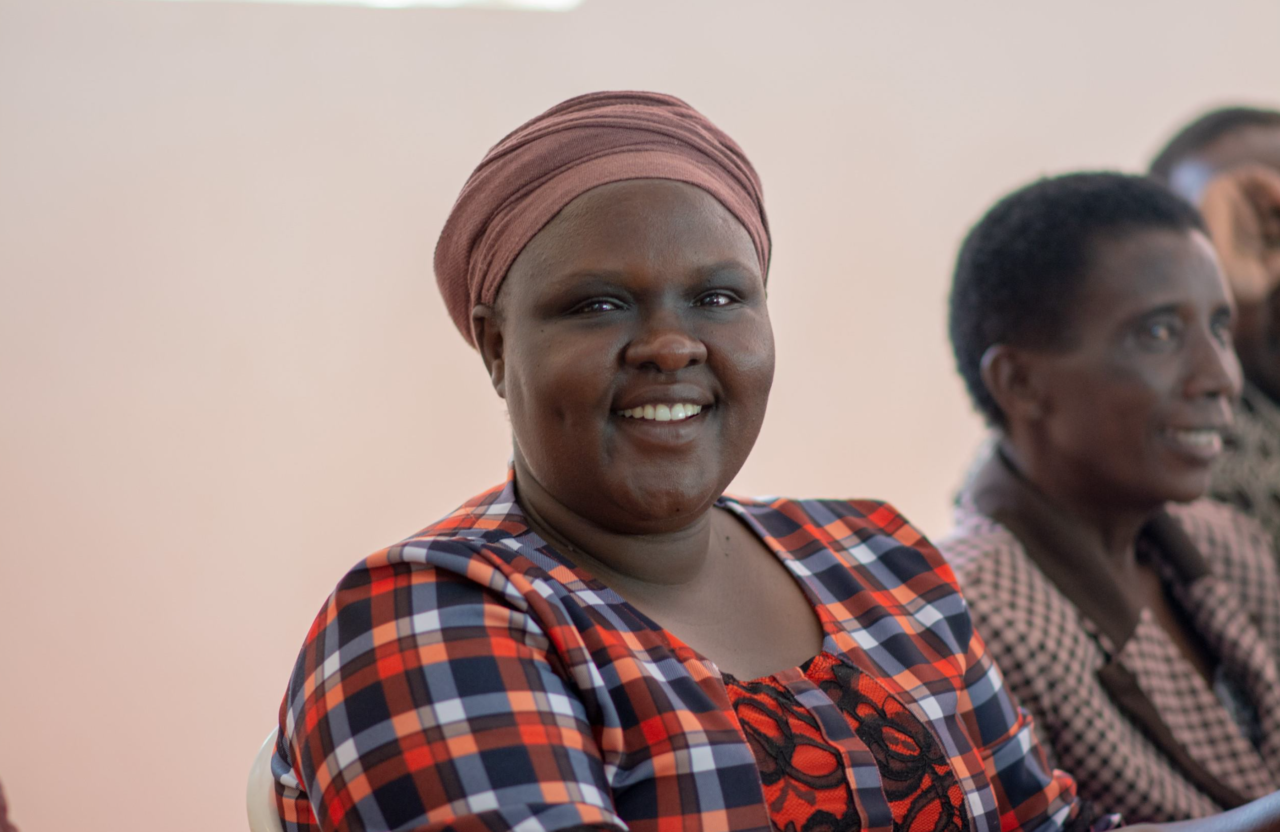
Noolorami Kimorgo, who is a widow and a mother of 7, is excited we visited the center. Adorned in the groups trademark yellow wrapper commonly known as leso, her smile tells it all about her excitement. Just like every other woman in this group, Noolarami is grateful she joined the team and has seen her life change for the better.

“I was widowed at a very young age. My husband’s brothers did not support the education of my children so I had to fend for myself. That is how I started illicit brew business, which often got me in trouble with the authorities,” Explains Noolorami as she reminisces of her struggling days.

The constant harassment by the police saw her leave her matrimonial home in Kotolia, Narok county and went back to her father’s home to start life all over again. It was during this time that her mother recommended she joins Paran Women Group.

“At the center, I was very resourceful in the construction of these traditional Manyattas. I also do some beadwork as well as engage in making of briquettes, which is an alternative energy source so as to reduce deforestation from firewood demand,” Says a delightful Noolorami.

Paran Women Group works on women’s socio-economic empowerment, indigenous women’s rights and environmental justice, to ensure the reduction of poverty, enhance access to clean water and build resilience to climate change.


According to Naiyan Kiplagat, the group’s founder, women were worst hit by the scarcity of rain caused by deforestation activities in the Mau forest, which forced them to walk several kilometers in search of water. Under the umbrella of Paran Women Groups, they have pledged to change the narrative.

King’asunye Naiguta, a community champion from Olorien, knows too well the plight of young girls, in this community that is predominantly from the Maasai tribe. The water scarcity challenge had a direct implication on girls dropping out of school in search of water, whereas some opted for early marriage.

“As a Maasai woman who lives in her father’s homestead, I also went through my own fair share of struggles. My brothers looked down upon me and would dissociate me from our family property. My brother once beat me up and chased me out of our home so that I don’t inherit land and property from my father,” Says the strong-willed King’asunye, who reported the case to the area chief, giving her rights to own land left to her by her father.

“We encounter daily the challenge of patriarchy that denies women the right to participate in decision-making. As indigenous women we also face double marginalization. Influencing policies, budgets and plans to ensure that they are gender responsive is a task that requires long-term awareness and advocacy,” Affirms Naiyan.

They are however working towards overcoming these challenges by creating awareness among indigenous women on their rights as enshrined in the Kenyan constitution, as well as creating partnerships with other like-minded organizations. The group’s main beneficiaries are women, who aim to empower women and girls in the communities.

“In our work on SDG 1 to end poverty we work to empower our female members who do unpaid care work. We help them to have a diversified income through developing income-generating initiatives and also by advocating for more equality and for the recognition of women’s unpaid work in Kenya,” Proudly states Naiyan, who started the group in the year 2005.

The group has over 30,000 tree seedlings, with exotic, hybrid and indigenous trees. Beading is identified as a major source of income to the women at the center as they sale the beautiful pieces of art to tourists. Equally, poultry farming has seen many bid poverty goodbye, as women from various groups keep poultry both in large and small scale.

“Through beadwork and poultry keeping, I have been able to educate my children and lead a descent life. I can afford all my basic needs. Paran is truly a beacon of hope for me,” Chuckles Noolorami, who is said to be instrumental in running operations at the center.

Paran Women Group is one of the 13 women rights organization groups supported by CREAW through the Women’s Voice and Leadership project that aims to strengthen institutional capacity and interventions of local/grassroots women rights organizations seeking to empower women and girls to realize their rights and achieve gender equality.

The group now works through training, capacity-building, networking and does exchange programs among indigenous women’s groups. More importantly, they work with the youth and children to facilitate intergenerational learning.

Despite the relevant role played by Indigenous women in protection of forest ecosystem, they are not yet recognized as agents of change and the space for their voice in decision making spaces including in forest related initiatives is minimal. Paran Women Group is changing the narrative one step at a time.


GEF_Mashinani_Meeting.jpeg

January 12, 2022by CREAW

As a global co-leader in the Generation Equality Action Coalition on ending gender based violence (GBV), the government of Kenya during the Generation Equality Forum in Paris in June 2020 made bold and concrete commitments to accelerate action and investments towards addressing GBV and actualizing gender equality for women and girls.

In its commitments, Kenya pledged to increase funding by 2.3 billion by 2022 and an additional 5 billion by 2026 for GBV prevention and response, scale up police integrated response to GBV, establish safe houses in all 47 counties as well establish survivor funds among other pledges.

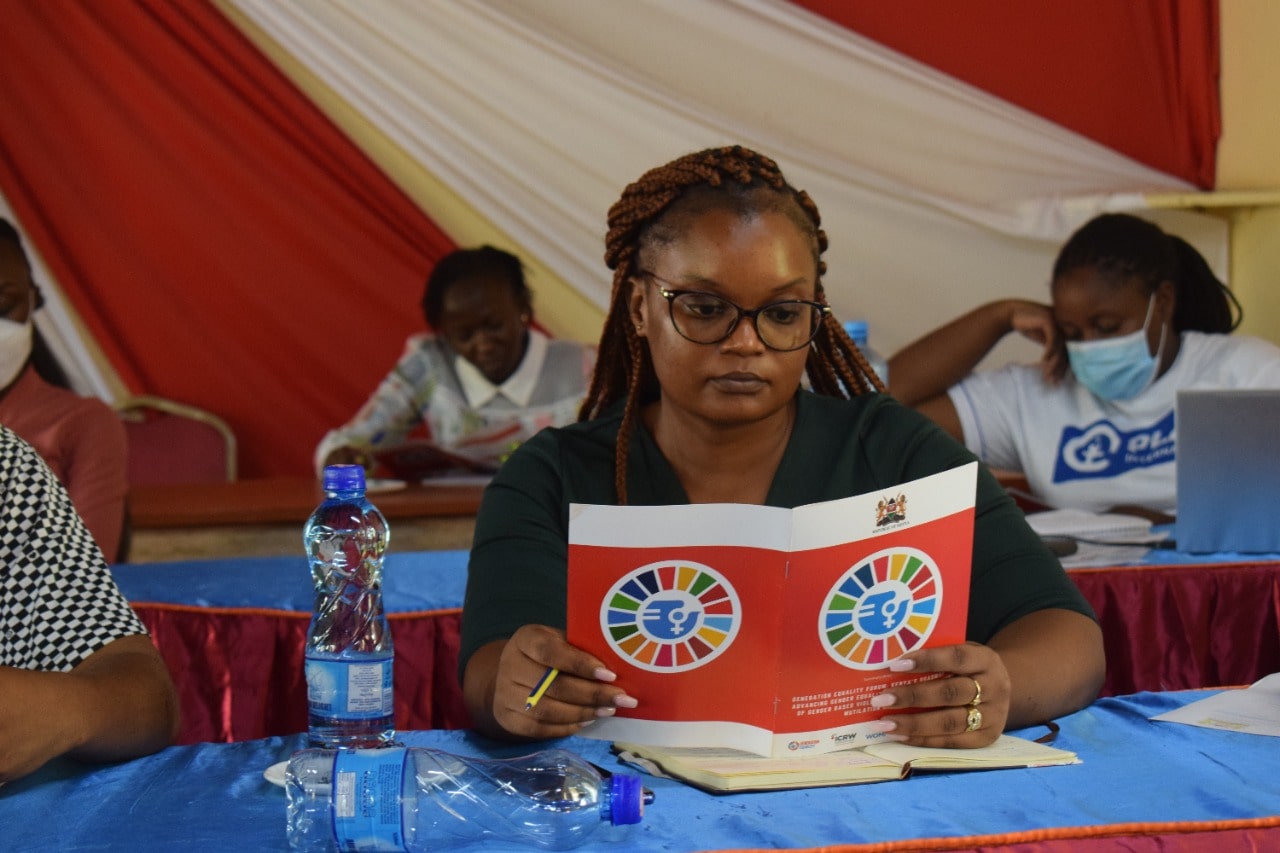
Against this backdrop, CREAW Kenya in partnership with the UN Women and governments are implementing the Generation Equality Mashinani aimed at cascading the campaigns to the county level for action planning and domestication of the national roadmap to address GBV by 2026.

Kilifi is among the counties where the Generation Equality Mashinani campaign is being piloted. Recently CREAW in partnership with the State Department of Gender and UN Women organized a forum to disseminate the national roadmap and deliberate on the County specific priorities to address GBV.

During the two day forum that brought together state and non-state actors including the Kilifi Gender Sector Working group stakeholders culminated into a draft Action Plan to spearhead the domestication of the national GEF roadmap to address GBV by 2026.

In specifics, Kilifi County will prioritize on enacting a county specific GBV policy, adequate financing for GBV prevention and response, inculcate a multisectoral approach to streamline coordination of GBV activities at the county level as well as prioritize the development of GBV information system.


Linda-Haki-1280x853.jpg

January 12, 2022by CREAW

“ I feel elated, I a more knowledgeable and I have obviously grown in my profession as a lawyer”

These are the words of  a delighted Berlyn Moraa, one of the 15 Linda Haki mentees, who have been working alongside CREAW’s legal officers, to offer pro-bono services to women and girls who seek help.

The Kenyatta University law student, was more than excited to be shortlisted for the mentorship program. Little did she know that her passion for advocating for the rights of children, would put her at the forefront in advancing their voices at CREAW.

“My highlights have been seeing women come into the office heartbroken and confused but leave being hopeful and optimistic. Some will even text you later just to thank you,” Narrates Berlyn.

For Hezron Chege, the 11 months experience has been a mixture of emotions, learning and unlearning as well as getting the job done. As a student who had been a volunteer during legal clinics in campus, at Jomo Kenyatta University of Agriculture and Technology (JKUAT), Chege was familiar with dealing with a myriad of cases. However, none of the cases he handled in school were related to Gender Based Violence (GBV)

“ I was ignorant about GBV. I did not understand why a woman would stay in an abusive relationship when they can walk away. Right now am knowledgeable and can guide a client through GBV referral pathways” Admits Hezron.

The emotional aspect of supporting survivors through their journey of seeking justice has not been easy on the young lawyers. Michael Kinyua Njoki admits seeking counselling frequently to help him serve clients better.

“ When you come to CREAW, the clients look at you as a legal officer and not a student, so much is expected from your end as a professional. There is no room for second guessing,” Affirms Njoki.

According to Naomi Kilima, CREAW’s project lawyer who also doubles up as the mentees supervisor, the 11 months journey has seen the students develop their skills immeasurably.

“They are all able to perfectly draft pleadings. I always get excited when I get a good report from the courts regarding their works and they have been able to build on each other’s strengths. You can see the teamwork they exhibit,” Says Naomi

Poverty has been cited as one of the key contributing factors for lack of access to justice for women and marginalized populations living below the poverty line. It is against this backdrop that CREAW in partnership with the United Nations Development Program (UNDP) are implementing the Linda Haki project in Nairobi’s informal settlements, specifically Kibra, Eastleigh and Makadara in Nairobi County.

“From my interactions with women and children who have gone through different forms of violence, I would like to specialize in Human Rights Law at a later stage in my career. I got the right opportunity to witness the injustices women and girls go through and I feel I can do more,” Says Edith Nyanchama, who is currently at the Kenya School of Law.

“My experience at CREAW has been phenomenal. For the next Cohort, I would encourage them to be open minded, be willing to learn. Theory is easy to grasp but practical is the order of the day. Kwa ground Vitu ni different,” Assures Jackline Tumo, who is pursuing Law at Kenyatta University as her second degree.

Having paralegals who offer pro-bono services to clients who visit CREAW offices for legal aid, has increasingly helped offer more support to bigger number of clients compared to depending on CREAW’s lean team of legal officers.

The Linda Haki project objectives are mainly to improve access to quality and timely legal aid services and legal information for women in Nairobi County, as well as enhance implementation of legal aid framework including the National Action Plan for Legal Aid 2017-2022 and the Legal Aid Act 2016 to ensure sustainable and quality legal aid and services in Nairobi County.


Kadzo_Kilifi_Woman_Carpenter-min.jpeg

January 12, 2022by CREAW

Kadzo Samuel Kaingu is definitely a woman without limits. She epitomizes resilience, as her never giving up spirit is show cased through her carpentry business. A venture that is less trodden by women, especially for a middle aged woman who is a mother
of 6.

As the world was trying to come to terms with the ravaging effects of the COVID-19 pandemic, Kadzo was equally struggling to put her life back to order. Her carpentry workshop in Naeni location in Kilifi county, one of the 6 coastal counties of Kenya, had been vandalized. All her investment and hard earned money was taken away by the robbers.

“I was left stranded with nothing to cater for my needs and that of my children. At that time, three of them were in secondary school so I urgently needed their school fees,” Says Kadzo.

With no one else to look up to, Kadzo started doing menial jobs like laundry work as well as working in construction sites. Her woes in search of a stable job continued, until she was identified by a community champion, who recommended her for business development training, that CREAW was conducting for women led businesses in Kilifi County, with support from Mastercard Foundation.

“Through the training, I came to learn a lot of mistakes I was making in my previous business. I never had a record of inventory, I was also poor in budgeting hence I could not account for the sales I would make. I was more eager to start on a clean slate,” She adamantly agrees.

From the training, Kadzo was among the women that were selected for a cash support of Ksh 15,000 (USD 150). She took care of her immediate home needs and reinvested the remaining Ksh 10,000 in her business.

“I got a workshop near Kiwandani Prison and bought materials needed to run the workshop. I am grateful that now I can comfortably account for whatever I make. I have a record of things sold like beds, tables and even doors, which are mostly preferred by people who are building homes around here,” Smiles Kadzo.

According to a 2020 study by the International Centre for Research on Women and Kenya Association of Manufacturers, raising start-up capital is one of the biggest challenges for women entrepreneurs in Kenya’s key manufacturing sector, with banks requiring collateral that most of them do not have.

However, CREAW with support from Mastercard Foundation was able to fill this gap by providing women like Kadzo with affordable financial services. Jasiri Loan Fund is available in three counties of Mombasa, Kilifi and Nairobi which has enabled entrepreneurial women to access start-up capital to invest and expand their businesses.

The joy and gladness on Kadzos face is a reflection of what women economic empowerment can do, to uplift businesses as well as improve livelihoods especially in women led homes, where majority are the drivers of the small scale economy in Kenya.


rsz_teenage_pregnancy_kilifi-min-1280x853.jpg

January 9, 2022by CREAW

Cases of teenage pregnancy are not a new phenomenon in Kilifi county, as it has put the region among top 10 counties in Kenya that records high numbers of teenage pregnancies.

*Zawadi (not her real name) who is a pupil in Muyu wa Kae primary school is heavily pregnant. Her Form One boyfriend at Mrereni Secondary School is said to be responsible.

“ He would buy me pads when my parents could not afford any. I realized I was pregnant months later into the relationship,” Confirms *Zawadi.

The class 8 pupil, who is expected to sit for her national exam early 2022, began her prenatal clinic visits and is expected to deliver mid next year.

*Janet (not her real name) aged 16 years from the same school in class 7 said poverty drove her into early sex. When her father died, she was left with her mother to fend for them but it has been tough. Janet is already a teenage mum.

“Life was tough as our mother is poor. I had to borrow pads from friends and at times use pieces of clothes during my menstruation period,” Ascertains Janet.

The two young ladies story paints a dire picture of young girls engaging in sex for sanitary towels. Unfortunately, their choice has consequences, leaving them to carry another burden of being teenage mums.

It is to this end that CREAW with support from the Kingdom of Netherlands, implemented Usawa na Haki dhidi ya dhulma project in Kilifi and Meru county, to strengthen the capacity of the state by collaborating capacity of non-state actors to respond and address the needs of sexual and gender-based violence survivors.

Distribution of sanitary towels has been one such intervention in curbing teenage pregnancies as well as overcoming period poverty. This has been a great boost to girls who solely depended on their parents for support or even get the essential commodity from schools.

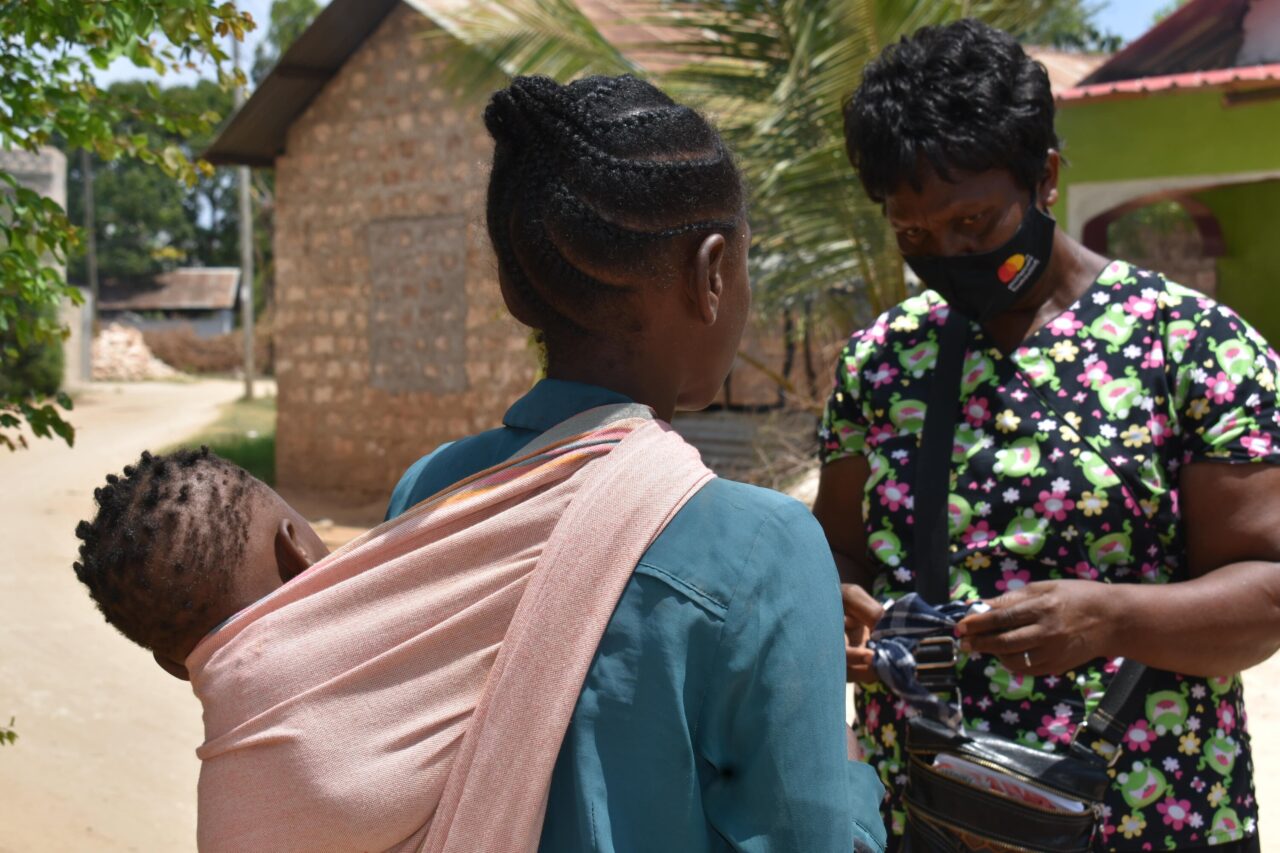
*Mwanaisha, who is a 15 year old orphan, has been a beneficiary of the dignity kits distribution in Magarini. The kits contained sanitary towels, 3 underpants, soap, a mask and sanitizer.

“I live with my uncle and my brother. When I start my periods, it is hard to tell them about it since sometimes they even struggle to find money for food. The pads and panties have really come in handy for me,” Says Mwanaisha.

Through Community Champions like Helda Lameck, CREAW has been sensitizing the community to help reduce the cases of GBV and teenage pregnancy and ensure no girl drops out of school due to pregnancy.

Muyu Wa Kae village elder Karisa Charo says GBV cases have been on the rise hence more need to intensify efforts towards enlightening the community on the vice.

“Last month we rescued nine pregnant girls. There are so many challenges in the community and we would like parents to be sensitized more,” he said.

Currently, he says they are still looking for the perpetrators and bring them to book while the girls are still in school. Magarini assistant county commissioner Abigael Mulobi says teenage pregnancy has gone down since the interventions by community champions through the support of CREAW.

She said the numbers may be on the rise but since the Usawa na Haki project was introduced, there has been a positive change in the areas reached, as society now understands the importance of ensuring teenage girls are protected.

According to Mulobi, previously there were no organizations that were supporting local administration officials against the vice but since CREAW came in, the numbers have gone down.


rsz_1ripples_shelter_coordinator-1280x853.jpg

December 17, 2021by CREAW

In the advent of COVID-19 pandemic in 2020, the Kenyan government took measures to curb the spread of the virus. One such intervention was the indefinite closure of schools. Children had to go back home, unfortunately, some went back to parents who had lost their means of livelihoods or worse still, some lost their parents through the virus.

Meru county was not different from other parts of the country. In fact, Ripples International, a child focused organization had to open wide its doors for abused children as many cases were being reported.

“A lot of rescue procedures were hampered, hence we had to be innovative and that is how we started tele-counselling,” Says Prince Mwenda, Ripples International senior project manager.

On average, the Tumaini Center under Ripples International, can comfortably accommodate 40 children per year, however, 10 months into 2021, the center has already registered 53 girls and is still counting.

The influx in number of children and severe cases of abuse became a concern, as the center was overstretched in resources and could not offer much needed support to the young girls seeking a safe piece of haven in the institution.

“Thanks to the support we got from CREAW, we are able to afford food and other basic needs for the girls at the shelter. We also get counselling support for our girls and staff who need it,” Affirms Mwenda.

According to Brian Mwirigi, CREAW’s Pro-bono lawyer in Meru county,  children matters are very demanding, emotive and require right representations.

“Sometimes the case is brought to me when it is too late. Many survivors don’t report the first abuse due to perpetrators threatening them with death, hence repeated offence against the survivor,” Says Mwirigi.

Agnes Oduma is a Social Worker, who has been supporting girls at the Tumaini Center. According to her, she receives more cases of sexual abuse, followed by assault meted against the children.

“It breaks my heart to see these young ones brought it broken and traumatized. It is necessary to continue community sensitization and enlightening parents to take care of their children. Some have been abused by close family members,” Sighs Agnes.

Carol Muriuki, is a human rights champion and resident of Kithithina in Buuri, Meru County, is the go-to person when cases of sexual and gender-based violence (SGBV) occur in the area. Carol is among a group of champions trained on gender-based violence by CREAW through the Usawa na Haki project. She says that in most defilement cases, where the perpetrators are relatives of the survivor, were being hidden, leaving survivors to suffer.

“We have sensitized children on how they can report cases of defilement, especially where a relative is involved. From this, we have had children report such incidents to their teachers or to me,” she says.

Ms Mercy Nkatha, the assistant chief for Nduruma sub-location in Imenti Central, is a member of Utawala Chiefs Group that brings together 15 administrators bound by the desire to stem SGBV.

“We formed the group as chiefs to address our welfare, but in our meetings, we noted there was a rise in gender-based violence across our jurisdictions. Most of the concerns were cases of defilement and we decided to do something,” Ms Nkatha says.

The assistant chief notes that the CREAW training has helped them to better handle cases of defilement and domestic violence, making it possible for perpetrators to face justice. She has been led in sensitizing boda boda riders, members of Nyumba Kumi and other community members on SGBV.

With such efforts by various stakeholders working towards stemming out the vice of GBV and threatening the safety of women and girls, Usawa na Haki dhidi ya dhulma project hopes to achieve safe spaces for women and girls to flourish.


rsz_wvl_cohort2_induction-1280x853.jpg

December 14, 2021by CREAW

We are pleased to welcome our new partners under the Women’s Voice and Leadership programme. This is the second cohort to join the program, since its inception in 2019.

These second cohort of grassroots women’s rights organisations will continue to advance the rights of women and girls, LGBTQ+, persons with disability and sex workers  from the 11 counties across Kenya, including, Kisumu, Kwale, Laikipia, Kericho, Embu, Bomet, Machakos, Uasin Gishu, Nakuru, Tharaka Nithi, Tana River, Isiolo, Kiambu, Mombasa and Kajiado.

In the next two years CREAW will work with the WROs to enhance their institutional capacity and continue to support their interventions around gender equality in communities.


Isiolo-ARP-Ceremony-min.jpeg

December 6, 2021by CREAW

Although Kenya has banned the practice of FGM, it still occurs, particularly amongst semi-nomadic tribes like the Maasai and Samburu. Like in other parts of Africa, Asia and the Middle East, the ritual cutting or removal of some or all of the external female genitalia is a dangerous cultural practice rooted in ideas of modesty, hygiene and ‘purity’. However, FGM often has serious adverse health effects such as lack of voluntary control over urination or defecation, repeated infections which can lead to infertility, life-threatening problems during childbirth and girls even die as a result of the procedure due to massive loss of blood and infections.

Coupled with the FGM ban, Alternative Rite of Passage, best known as ARP training, is slowly beginning to have a positive impact. ARP is a community-driven initiative that retains the cultural celebration of a girl’s transition into womanhood without the ‘cut’, early/forced marriage as well as teenage pregnancy.

It is to this regard that CREAW supported and attended the annual ARP ceremony in Mokogodo, Isiolo county, on the invitation of our community champions in Leparua. In partnership with anti FGM champions in Mokogodo, our champion organized for this anti-FGM graduation ceremony that mimics the actual ceremony albeit devoid of the cutting.

“ARP is a very successful intervention though it needs a lot of funds to implement, if implemented well it has capacity to end FGM. When Kajiado county started ARPs community shied away, people were skeptical but today FGM is least practiced there” Margaret Champion Leparua

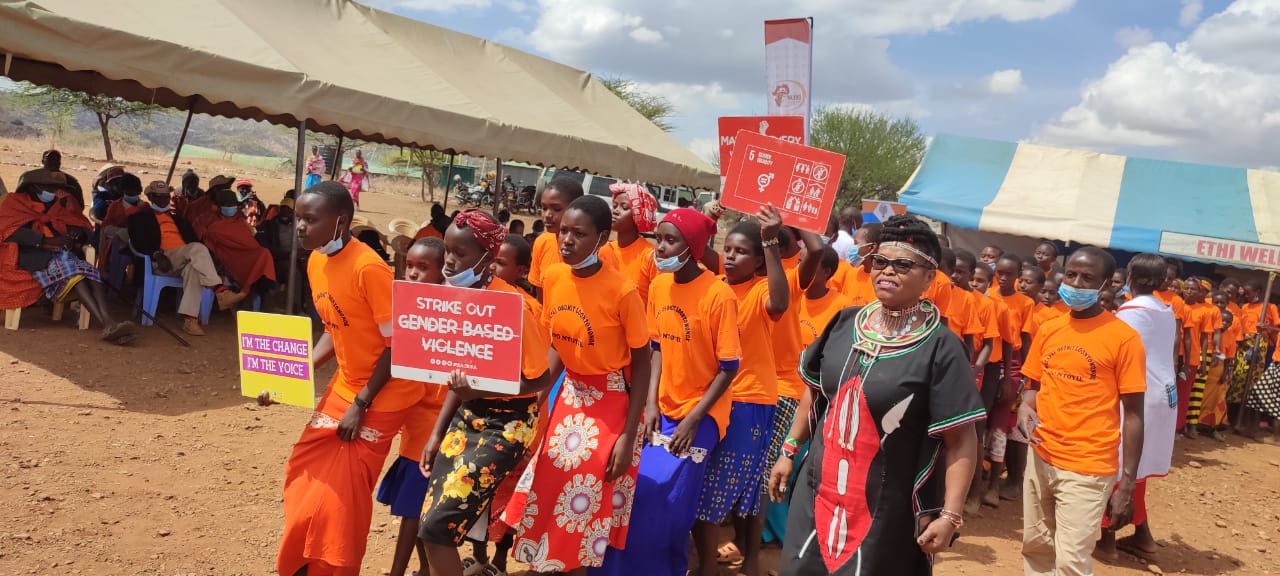
In the successful ceremony, 200 girls, 20 from Leparua and 180 from Mokogodo, graduated on the start of the 16 days of activism. In attendance were religious and cultural elders who blessed the new graduates as the highlight of the event. It is believed by speaking the blessings the elders by extent also remove the curse believed to follow girls who remain uncircumcised.

CREAW used the forum to advocate for a zero-FGM campaign and urged the girls to be good ambassadors of the campaign. CREAW staff distributed 200 dignity kits to the girls and pledged to support a bigger event next year that would incorporate Oldonyiro ward.

According to Kenya’s 2014 Demographic Health Survey, only 21 per cent of women in the country were circumcised in 2013, compared with 27 per cent in 2008-09 and 32 per cent in 2003.


DSC_0779-1280x719.jpg

October 21, 2021by CREAW

When Center for Rights Educations and Awareness (CREAW) Kenya, spread its wingHaki s to Kitui county to support women and girls facing violence in the community, Dorcas Belinta, a widow and founder of Mosa vision group, was only doing little to economically empower her fellow widows in Kisasi village Kitui Rural Subcounty.  

Luckily, she was among 30 women picked from 14 active women led community based organizations in Kitui county to undergo a training on how best they can support survivors of gender based violence, as well as create awareness in the community regarding the vice. The training which is supported by CREAW in partnership with ForumCIV under the Haki Mashinani project is implemented in Kitui and Nyeri counties. It was based on the SASA model, which addresses violence against women, in community-based approaches and aims at changing the attitudes and behavior of men and women.  

 The four-phase process, developed by Raising Voices in Kampala, Uganda, mobilizes communities for a change in social norms. The primary goal of SASA! is to reduce violence against women and girls by exploring the balance of power in intimate partner relationships and in broader community dynamics. 

 “After the training we had our first community dialogue, where we invited the chief, 3 religious leaders and village elders. It was an open session of learning and unlearning what we thought was right as a community” Says Dorcas. 

 The primary school teacher, was encouraged by feedback she got after the meeting. She would get invited to have a talk in other community dialogues as well as enlighten her students more on issues of sexual and gender based violence. 

 “Previously, Mosa Vision group was doing table banking and outreaches in schools distributing sanitary packs, but now the training has built our capacity in addressing violence against women in the community” Confirms Dorcas. 

 The mother of three is now fixing her eyes on the political scene, as she feels political good will is another key in advancing the gender agenda as well as championing for the rights of women and girls. 

 “I want to be the next woman representative of Kitui County in the 2022 general elections. I understand the plight of widows and want to champion for their rights to own property as well as access property left behind by their late husbands. Widows here don’t have people who enlighten them on their rights” Concludes Dorcas with a smile.

 As a GBV champion, Dorcas notes that there’s an emerging trend of economic violence aside from sexual violence in Kitui County. As a widow, she relates well with women involved in matrimonial property succession and marriage, that were proving hard for them to handle. With her eyes focused on her political ambition, Dorcas is a woman on the move to make it better for fellow women and the next generation of girls. 


Jane-Sempelai-1280x832.png

October 19, 2021by CREAW

In 2013, Kenya enacted a Matrimonial Property Act that drew hope for the women of Kenya in their quest to own and inherit matrimonial land and properties. The Act reinforced equal rights as enshrined in the Constitution for both spouses when they own properties together and granted some new rights to women landowners. 

Despite the many monumental gains for individual women in Kenya, pastoralist women still have the long road to walk; their hope of justice to what legally and inherently belong to them is deemed by the cultural traditions and lack of awareness that stops many women from accessing their fair share of land and property, especially in cases of inheritance. 

*Naserian (not her real name) is the youngest wife among three other co-wives, her life has been marred with violence and for along time she did not have a voice in her own home. Her husband beats her up and does not consult her on any issue regarding land or the sale of properties. 

Recently, she met Jane Marsoi a renowned women’s rights activist at a community dialogue-teaching women on their rights and the power inequalities that discriminates on women. There, she learnt that she also had a voice over what concerns her life and that of her family. It is then that she took action! 

“By virtue of their gender, women’s property rights have been trampled- they are never consulted by their spouses when selling land,” says Jane while explaining to us that many women are helpless, it is depicted in the lack of awareness of their rights. 

“I was glad when Naserian approached me to help her; I explained to her the right channels to report to,” Jane adds. 

Naserian says she felt something was a miss when a stranger started farming on the family’s land. On inquiring, she was informed that the husband had sold the land without consulting her. When she confronted the husband, she beats her up till she was unconscious. She spent one week in hospital nursing the wounds. Undeterred, she resolved to explore the legal channel to access matrimonial lands. 

Together with Jane, they approached the area Chief who summoned the husband and gave and injunction to those who had bought the family lands.  

Today Naserian smile is noticeable, she tells us she got her share of the land and is happy that she can farm and provide food for her children and meet other basic needs. 

With the Matrimonial Property Act in Action, women now have equal rights to the land that is bought and sold in their name. In cases of polygamous marriages, each wife now has a right to a portion of the lands. The law also takes into account the non-monetary contribution in marriages- including domestic work, home management, childcare and farm work. 

And as Jane tells us, the teachings that CREAW has accorded the activists in the area have enabled them to brave through the societal ridicules to stand up to the male dominated Council of Elders in a bid to secure women’s rights to properties and transform norms and attitudes that promotes practices like FGM and other forms of gender based violence. 

As part of the Wajibika Initiative supported by the United Nation Trust Fund to End Violence Against Women, CREAW works with women-led groups to mobilize and rally communities on women’s rights issues. These includes, raising awareness among communities on the norms that promotes violence against women and engaging authorities to enact gender policies to cater for women’s equality and provide redress mechanisms on gender based violence.