Jasiri Fund Archives - CREAW KENYA

caroline.jpg

July 28, 2026by CREAW

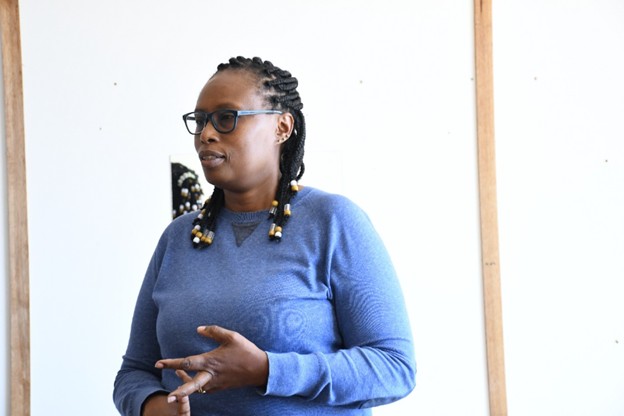
For more than 15 years, Caroline  Karengo has dedicated her career to equipping young people with practical skills that can transform their lives. As the Principal of SnP School Of Beauty, which operates campuses in both Nairobi and Nyeri, she has witnessed firsthand how vocational training opens doors for young women and men who might otherwise remain unemployed.

Through the Jasiri Program, Caroline and her institution have partnered with CREAW to provide beauty and cosmetology training to young women, particularly those facing economic hardship. Together, they are helping participants gain employable skills while building the confidence needed to succeed in life and business.

The college offers comprehensive training in cosmetology, combining hairdressing and beauty therapy with additional courses that prepare students for today’s job market. Beyond technical skills, learners receive training in social media marketing, enabling them to advertise their services and reach customers online.

Students also participate in life skills sessions that focus on communication, professional conduct, confidence building, personality development, and healthy relationships with clients, colleagues, family members, and the wider community.

When the institution expanded into underserved communities, Caroline quickly noticed a significant gap. Many young women, including single mothers, lacked employable skills despite having a strong desire to work and improve their lives. Most could not afford tuition, leaving them without opportunities to gain meaningful employment.

By sponsoring learners, the Jasiri program has enabled many young women to access professional training that would otherwise have remained beyond their reach. Despite personal challenges including balancing motherhood, financial difficulties, and other family responsibilities the students have demonstrated remarkable commitment to completing their training.

Beyond graduation, SnP institution works closely with employers to connect graduates to job opportunities while also mentoring those interested in entrepreneurship. Students are guided on how to establish and manage their own beauty businesses, while others use their new confidence to pursue careers in sales, marketing, and even manufacturing beauty products such as shampoos and conditioners.

“Many of the young women who join us are eager to learn but simply cannot afford training. Through the Jasiri Program, they receive that opportunity and leave with skills that can support them for a lifetime.”

Caroline also highlights an important challenge within the beauty industry. While many individuals learn basic braiding or hairstyling informally, employers increasingly seek professionals with comprehensive technical skills such as hair cutting, roller setting, beauty therapy, customer care, and professional workplace conduct. Through the Jasiri Program, this skills gap is being addressed by producing graduates who are better prepared for formal employment.

Already, the results are evident. Many graduates from the first cohort are now working in salons, while others have ventured into different career paths, empowered by the confidence and professional skills they acquired during training.

Despite these successes, Caroline believes many more young people remain unreached. Across communities, countless young women and men remain unemployed not because opportunities do not exist, but because they lack access to affordable training.

“The beauty industry has opportunities. Salons are constantly looking for qualified professionals. When young people receive proper training, they become employable, confident, and even capable of starting businesses of their own.”

Caroline believes expanding initiatives like the Jasiri Program will help bridge the gap between unemployed youth and the growing demand for skilled professionals in Kenya’s beauty industry. By investing in practical skills, entrepreneurship, and personal development, the program is not only changing individual lives but also strengthening communities through sustainable economic empowerment.

The Jasiri Program is a five-year (2023–2028) initiative designed to strengthen the resilience of GBV survivors, expand their access to economic opportunities, and shift social norms so adolescent girls and young women (AGYW) can thrive in entrepreneurship and employment. Implemented across 16 counties in Kenya, the program is delivered by a consortium comprising the Centre for Rights Education and Awareness (CREAW), GROOTS Kenya, the Collaborative Centre for Gender and Development (CCGD), the Centre for Domestic Training and Development (CDTD), and Advocates for Social Change Kenya (ADSOCK), in partnership with Mastercard Foundation.
JacintaStory-1280x853.jpg

July 28, 2026by CREAW


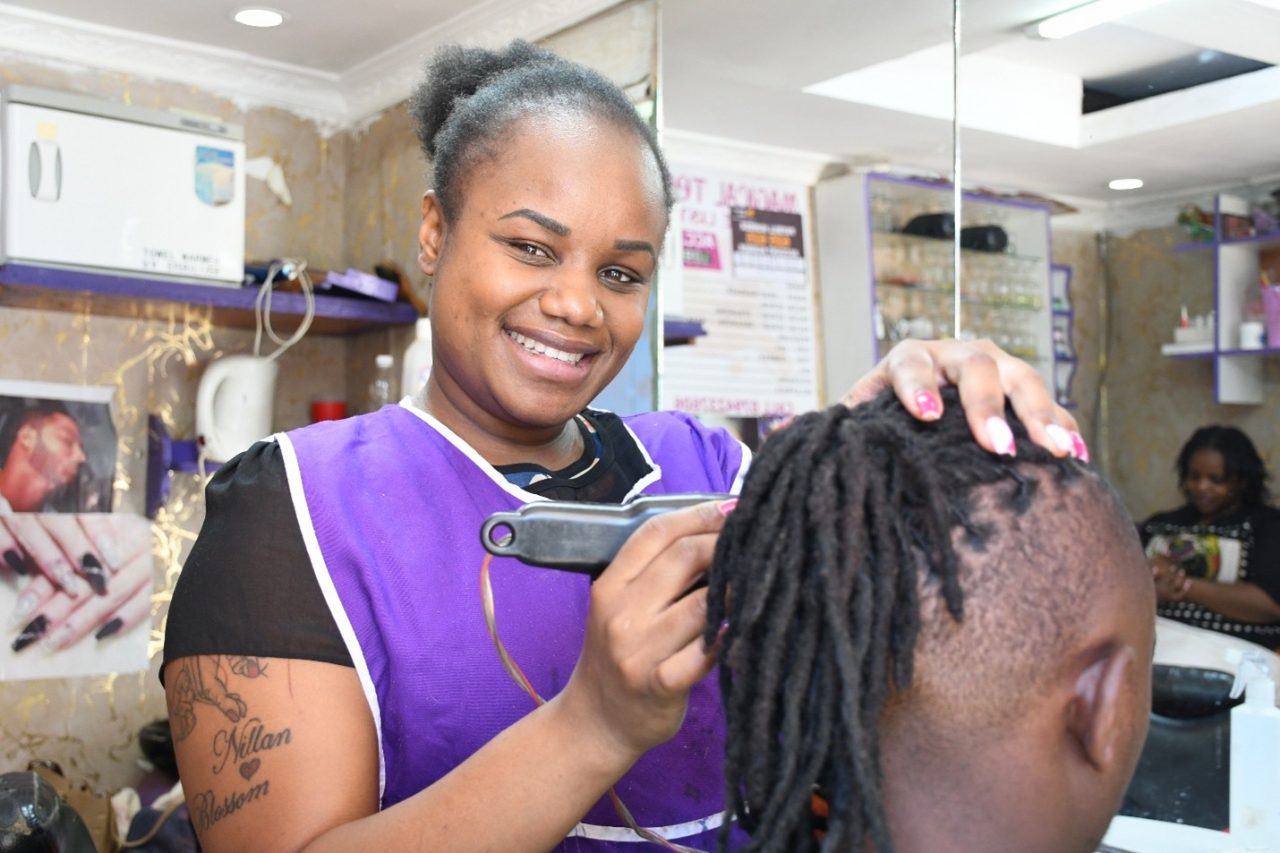
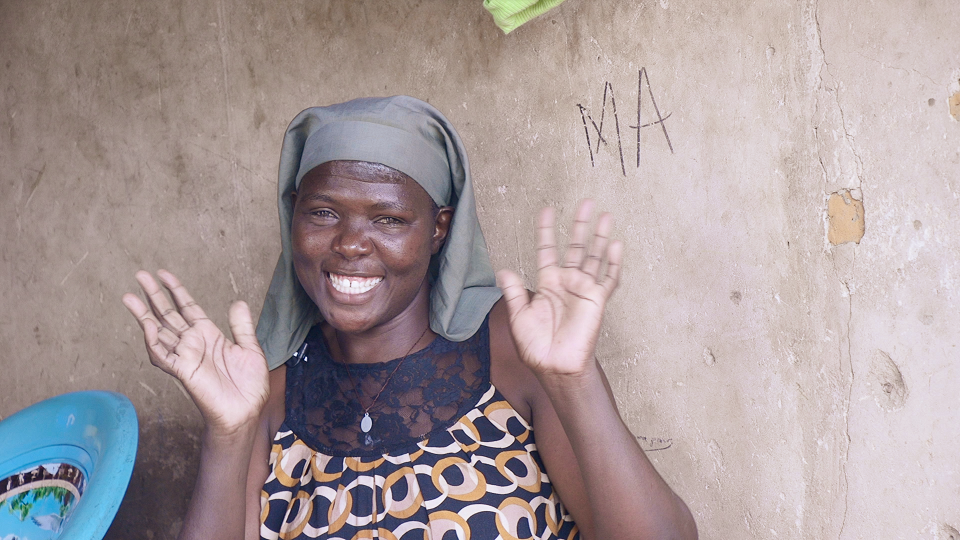
Just a few years ago, Jacinta Kihara could never have imagined owning a thriving beauty business in Nyeri. At 29 years old, she was trapped in a vicious cycle struggling to provide even the most basic necessities for her children. Today, she proudly runs her own nail spa, employs two people, and is steadily growing a business that has restored her dignity and given her family a brighter future. 

Before joining the Jasiri Program life was incredibly difficult. Providing food for her children was a daily struggle, buying diapers felt like an impossible luxury, and paying school fees was a constant source of stress. To survive, Jacinta relied on casual labour. She washed clothes in other people’s homes, cleaned houses, and occasionally found work on farms, earning just enough to put food on the table for that day. 

Everything began to change after a friend referred her to CREAW. The friend, who had also survived violence, shared how counselling at the organization had helped her stand again on her on. Encouraged by this testimony, Jacinta sought help. Her first step was counselling, where she received psychosocial support that helped her begin healing from the challenges she had experienced. The sessions restored her confidence and prepared her for the next phase of her journey. 

Although she already possessed basic nail care skills and had saved a small amount of money from occasionally offering nail services in other salons, she lacked the capital and financial management skills needed to establish her own business. Through the program Jacinta participated in business and financial literacy training before receiving a business grant of KSh 25,000.

The training transformed the way she viewed entrepreneurship. For the first time, she learned the importance of budgeting every shilling before spending it. She was taught how to separate business money from personal expenses, allocate funds for rent, stock, staff salaries and savings, and maintain financial discipline. She also understood that saving consistently is essential for business growth and for preparing for emergencies.

Using the grant strategically, Jacinta carefully budgeted every expense. She first paid KSh 5,000 for business rent before purchasing salon equipment, including machines, chairs and essential supplies. Because of the financial literacy skills she had gained, every shilling was accounted for, allowing her to establish her salon without wasting resources. 

Starting the business was not easy. For the first four months, she managed the salon completely on her own. As her client base gradually expanded, she hired her first employee. Three months later, she brought on a second staff member to meet the growing demand. 

Today, Jacinta’s business continues to grow steadily. Having additional staff has enabled her to serve more clients without turning anyone away, increasing both customer satisfaction and business income. 

The impact extends far beyond the business itself. Jacinta can comfortably buy food for her family, purchase necessities such as diapers without worry, pay school fees on time, settle household bills, and even set aside savings for emergencies. What was once a daily struggle for survival has become a life of stability, confidence, and hope. 

“Before, I survived through casual jobs washing clothes, cleaning houses, or working on farms just to feed my children. Today, I own my own nail spa, employ two people, and can comfortably provide for my family.” 

“The financial literacy training completely changed how I manage money. I now budget for rent, stock, salaries, savings, and emergencies. Because of that discipline, my business continues to grow every day.” 

By combining psychosocial counselling, business training, financial literacy, and start-up capital, the Jasiri Program equipped her with both the confidence and the practical skills needed to build a sustainable livelihood. 

The Jasiri Program is a five-year (2023–2028) initiative designed to strengthen the resilience of GBV survivors, expand their access to economic opportunities, and shift social norms so adolescent girls and young women (AGYW) can thrive in entrepreneurship and employment. Implemented across 16 counties in Kenya, the program is delivered by a consortium comprising the Centre for Rights Education and Awareness (CREAW), GROOTS Kenya, the Collaborative Centre for Gender and Development (CCGD), the Centre for Domestic Training and Development (CDTD), and Advocates for Social Change Kenya (ADSOCK), in partnership with Mastercard Foundation.

Millicent-Alouch.png

July 7, 2023by CREAW

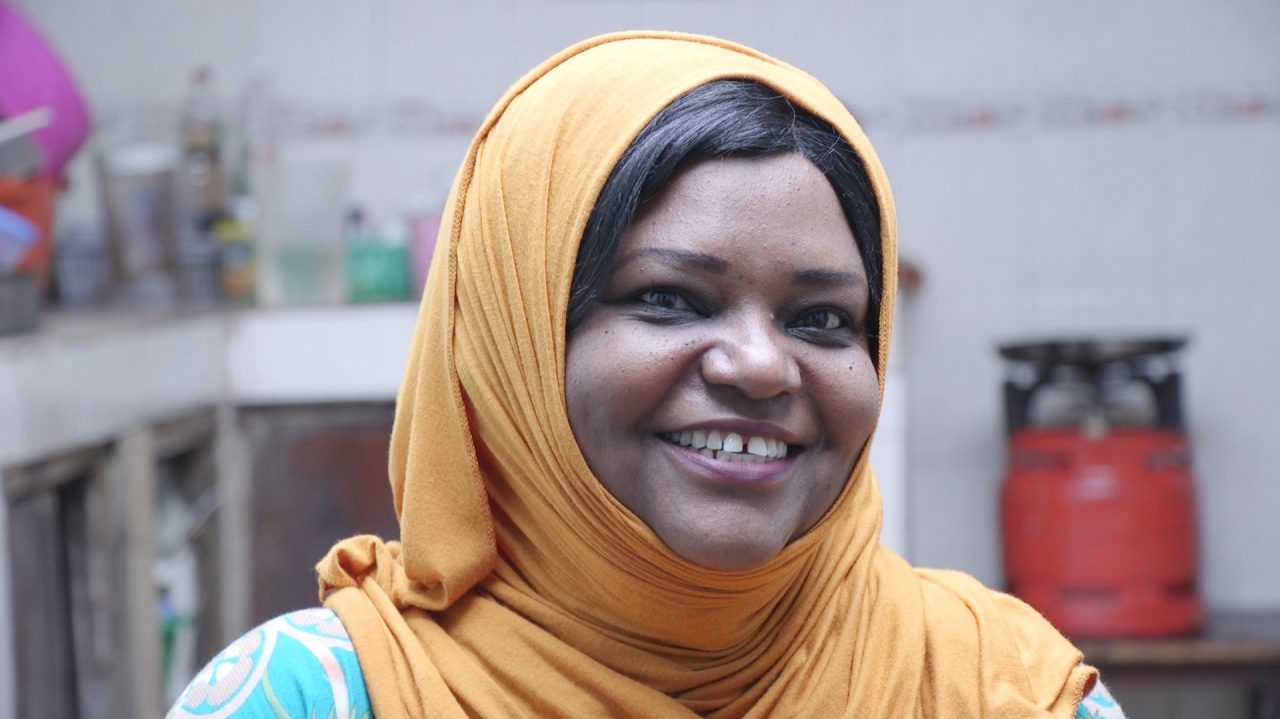
Millicent Aluoch is a devoted mother of five children living in Mombasa County. Her marriage was tumultuous, with Millicent sometimes seeking refuge at her parents' house, trying to escape the violence and discord in her marriage. Yet, despite the hardships, she found herself going back to her husband, driven by her love for her children and the desire to keep the family together.


Jane-Wangechi-1-1280x853.jpg

April 22, 2022by CREAW

45-year-old Jane Wangechi Ngoge, has revolutionised her life, from being the down trodden woman who lived from hand to mouth, to a successful entrepreneur, striving so hard to break the glass ceiling of agribusiness in the capital city of Nairobi.

Before the COVID-19 pandemic struck in 2020, the mother of 3 was having marital challenges with her partner. His meagre income as a mason could not sustain the family comfortably. She started selling samosas by the roadside in her neighbourhood in Kayole, however this was short-lived.

“During lockdown and restriction of movement in the country, my world came crumbling down. My husband left. I had to start doing menial jobs to support my children and I. The jobs were also not easy to come by,” Narrates Wangechi, as she recounts the challenges she went through to ensure she provides basic needs for her children.

It was during her low moment that she was listening to a radio show where CREAW’s toll free number 0800 720 186 was shared for anyone who needed psychosocial support. Luckily for her, she was interrogated and put under the 3 months’ cash transfer program, which sought to cushion families from the adverse effects of COVID-19.

“When I got the first cash transfer of Kes 7,000, I started selling fruits around my neighbourhood. I joined a chama where I was saving Kes 300 every 2 weeks. When I got the second and third instalments, I opened a shop coupled with an M-Pesa agency,” Says Wangechi as she chuckles.

That was never the end for her. Wangechi was among beneficiaries who went through business development training, where women were taught on how to budget, do record keeping as well as finding market for their products.

“Access to information and business skills remain a major challenge to women survivors of GBV. Providing training on financial literacy and life-skills is crucial for efficient use of financial services and products. With the right training, they are able to revive their businesses, acquire productive assets and save for their future plans,” Confirms Moses Okello, the Women Economic Empowerment Lead at CREAW, who has been supporting women under the program rebuild their life post-COVID-19.
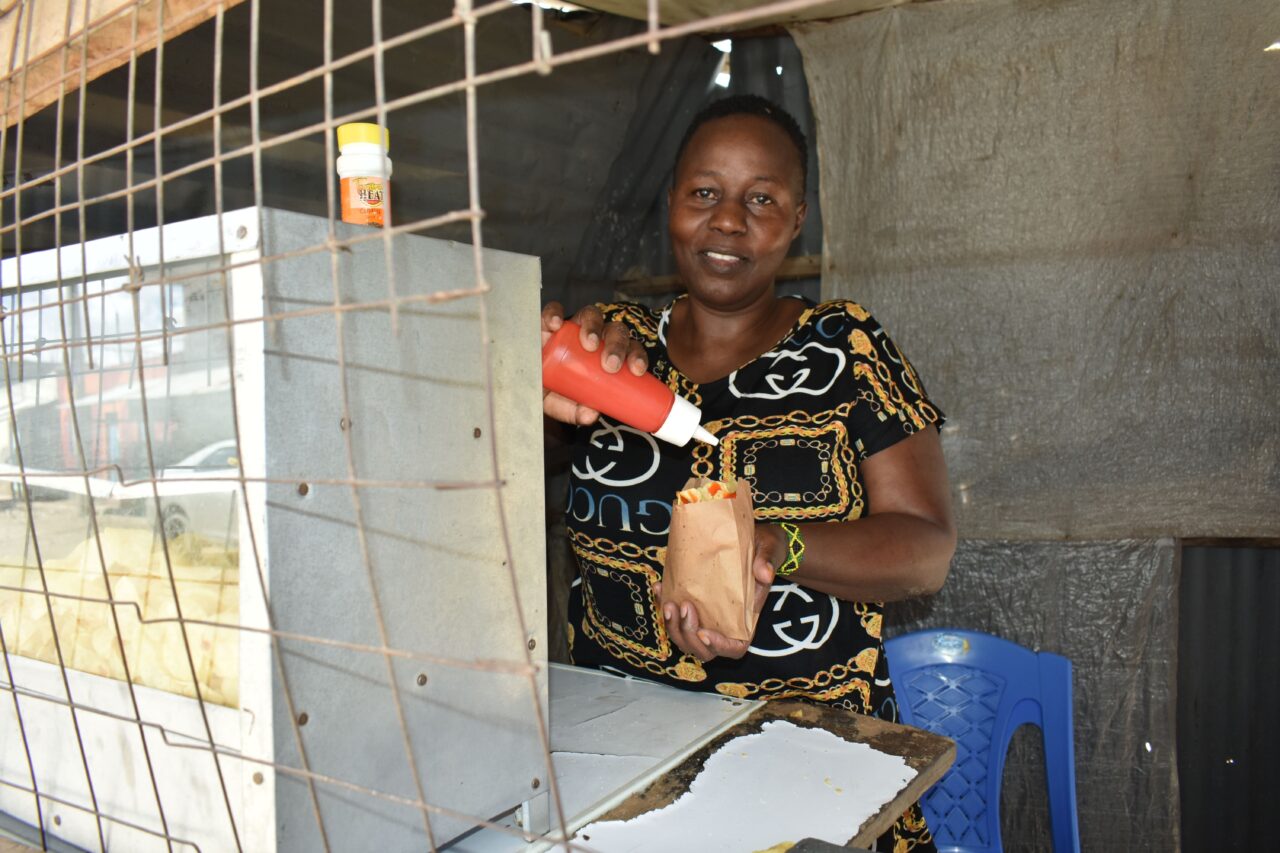
With the introduction of Jasiri Fund, the first of its kind financial inclusion program for survivors of gender based violence to access affordable loans, Wangechi took a loan of Kes 90,000, which she used to restock her business as well as hired a motorbike operator who has been supporting her in delivery of goods as well as transportation.

“From the money I had saved in the Chama, I got a dairy cow which delivered recently. I milk 13 litres of milk daily and I sell a litre of fresh milk around my neighbourhood at Kes 70. I also added some chicken, two goats and two pigs.’’

Through the business training she underwent, Wachechi has mastered the art of creating several flows of income. From the milk she sells, she makes roughly Kes 910 daily, whereas the shop has become her other economic backbone. In a good week, she fetches Kes 3600 in profits.

“I am now comfortably supporting my children. My firstborn son joined university recently. I am happy to say that my life feels like a dream come true. I never thought that I could one day run

successful businesses as well as comfortably take care of my family single handedly,” Smiles Wangechi.

She has been comfortably doing her monthly loan repayments of Kes 8,000 per month and looks forward to taking up another loan to help her purchase a piece of land where she will fully venture into agribusiness. From doing menial jobs to now being an employer of 3 staff looking up to her, Wangechi now exemplifies the face of resilience and what a woman can do when economically empowered.


CAO_4352-min-1280x853.jpg

April 22, 2022by CREAW

When COVID-19 pandemic pocked its scary nose in Kenya, food insecurity, sexual and gender-based-violence and job losses, were some of the news making headlines in the local dailies. As many were obsessed with casting their nets on the effects of the pandemic, CREAW through its partners was delving deep into the murky waters to find a solution for more than 5,000 survivors of gender based violence.

To dignify and empower women economically, Cash transfer was part of the solutions as it had the potential to help vulnerable households stay off starvation, reduce the vulnerability of survivors and those at risk of sexual and gender-based violence.

Mary Bandi from Kayole in Nairobi was one such woman. She had lost her hotel job and was now doing laundry work that could barely meet the needs of her family. On the side, she had an outstanding mortgage loan that needed to be cleared.

“My husband and I had separated long before the pandemic. As the sole provider for my two children and I, the heat was too much. I even developed blood pressure due to the economic stress I was going through,” Says Mary.

With the cash transfer she received totalling to Kes 21,000, Mary started selling crisps by the roadside outside her house. Little by little, she got orders from mini-markets around Kayole, where she supplied in bulk.

In her own words, she got a second chance at life. Mary was invited for a business development training organised by CREAW, to help beneficiaries of cash transfer program work on their business skills even as they rebuild their lives.

“What stood out for me was stock taking, saving and investing. I realised from the money I got, little went into saving. That is when I started saving little by little to help me complete my house mortgage. In a few months’ time I will be through with the balance,” Proudly states Mary, casting her eyes around her house.

Thanks to the introduction of Jasiri Fund immediately after the business development training, Mary saw an opportunity to grow her crisps business as well as diversify into the fashion industry.

“I took a loan of KES 50,000. I spent KES 30,000 for buying 3 bales of handbags. From each bale I was able to make a profit of KES 40,200. This enabled me repay my loan in 3 months,” States Mary as she was taking us through her record book.

“Investing in women owned enterprises promotes economic development among women survivors of GBV. However, mainstreaming of GBV support services into the financial inclusion program is key to reducing women’s risk of experiencing violence as well as strengthening equal access to economic resources that enhances women’s empowerment.” Confirms Moses Okello, the Women Economic Empowerment Lead at CREAW, who has been supporting women under the program rebuild their life post-COVID-19.

By the time we were leaving her home, Mary had already gotten second approval for a loan of KES 65,000. She wants to use it in expanding her handbags business as well as find another branch for the same.

With support from Mastercard Foundation, through the Response, Recovery and Resilience Project in partnership with GROOTS and The Collaborative Centre for Gender and Development: CCGD, CREAW has been providing women like Mary with affordable financial services through Jasiri Fund. The fund is available in ten counties, that has enabled 1000 entrepreneurial women to access start-up capital to invest and expand their businesses.


Kadzo_Kilifi_Woman_Carpenter-min.jpeg

January 12, 2022by CREAW

Kadzo Samuel Kaingu is definitely a woman without limits. She epitomizes resilience, as her never giving up spirit is show cased through her carpentry business. A venture that is less trodden by women, especially for a middle aged woman who is a mother
of 6.

As the world was trying to come to terms with the ravaging effects of the COVID-19 pandemic, Kadzo was equally struggling to put her life back to order. Her carpentry workshop in Naeni location in Kilifi county, one of the 6 coastal counties of Kenya, had been vandalized. All her investment and hard earned money was taken away by the robbers.

“I was left stranded with nothing to cater for my needs and that of my children. At that time, three of them were in secondary school so I urgently needed their school fees,” Says Kadzo.

With no one else to look up to, Kadzo started doing menial jobs like laundry work as well as working in construction sites. Her woes in search of a stable job continued, until she was identified by a community champion, who recommended her for business development training, that CREAW was conducting for women led businesses in Kilifi County, with support from Mastercard Foundation.

“Through the training, I came to learn a lot of mistakes I was making in my previous business. I never had a record of inventory, I was also poor in budgeting hence I could not account for the sales I would make. I was more eager to start on a clean slate,” She adamantly agrees.

From the training, Kadzo was among the women that were selected for a cash support of Ksh 15,000 (USD 150). She took care of her immediate home needs and reinvested the remaining Ksh 10,000 in her business.

“I got a workshop near Kiwandani Prison and bought materials needed to run the workshop. I am grateful that now I can comfortably account for whatever I make. I have a record of things sold like beds, tables and even doors, which are mostly preferred by people who are building homes around here,” Smiles Kadzo.

According to a 2020 study by the International Centre for Research on Women and Kenya Association of Manufacturers, raising start-up capital is one of the biggest challenges for women entrepreneurs in Kenya’s key manufacturing sector, with banks requiring collateral that most of them do not have.

However, CREAW with support from Mastercard Foundation was able to fill this gap by providing women like Kadzo with affordable financial services. Jasiri Loan Fund is available in three counties of Mombasa, Kilifi and Nairobi which has enabled entrepreneurial women to access start-up capital to invest and expand their businesses.

The joy and gladness on Kadzos face is a reflection of what women economic empowerment can do, to uplift businesses as well as improve livelihoods especially in women led homes, where majority are the drivers of the small scale economy in Kenya.