Blog Archives - Page 5 of 13 - CREAW KENYA

Kevin-Murori-1280x853.jpg

April 27, 2022by CREAW

Kelvin Murori is an epitome of the silent reality of men who go through intimate partner violence. The 30 year old father of 2, had a rough patch in his marriage, to the extent of his wife of 5 years abusing him physically.

In this typical patriarchal society where men shun away from sharing their marital challenges, Murori is defying the narrative and boldly steps out to tell his story.

“ My wife used to beat me when I come home from work without any money. She would get so aggressive to the point of locking me out of the house. I spent nights out in the chicken shed since I did not want anyone to know what I was going through,” Confirms Murori.

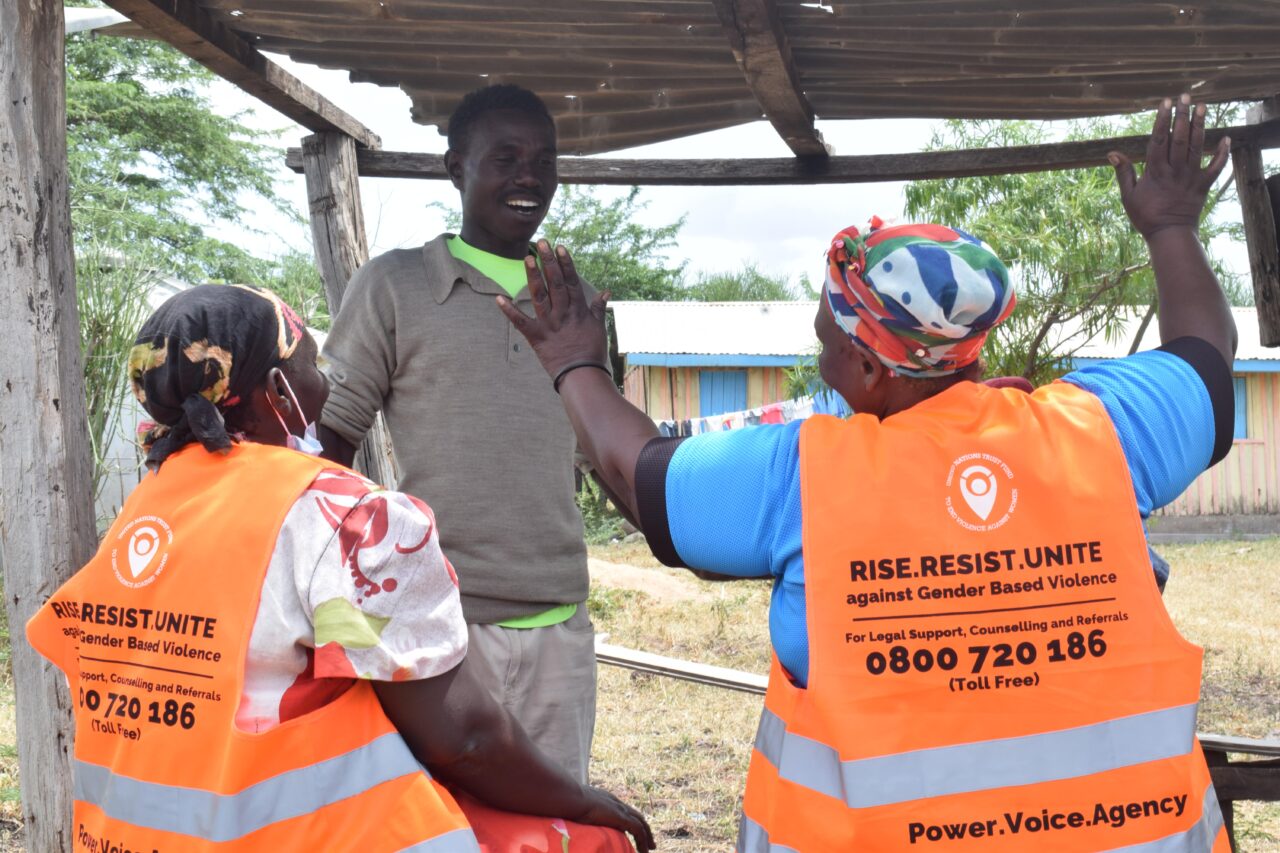
The boda boda operator came across Razia Salim a community champion from Wabera ward, who was raising awareness about gender based violence in the community. The message attracted him, which ended up helping him to open up to her.

“ I was invited to join a men engagement meeting. I realized there was a meeting of men in the community who were standing up for the rights of women and girls, as well as mentoring young men to be responsible members of the community,” Says Murori.

Through his continuous engagement and active participation in the meetings, is when it dawned on him that he had not been supportive enough to his wife and children. Unfortunately, he would sometimes spend the little money he made as a boda boda operator in consuming alcohol.

“ He would come home empty handed and expected to find food on the table. I would get frustrated because at that point, I was also struggling to make ends meet for the family. I know what I did was extreme but am grateful to Razia who helped me join a table banking group that has really helped improve the economic status of my family,” Shyly says Pascaline as she confirms her past brutality towards her husband.

The couple now owns 2 motorcycles which have been a great income generation, that has seen Murori provide for his family. His wife Pascaline also started a vegetable vending business  in Kiwanja Ndege and together, the couple is epitomizing strength in unity. The punches and exchange of kicks and blows have been silenced by peaceful hugs and laughter.

According the Men Group in Kiwanja Ndege location is Isiolo county, the greatest challenge women and girls face in the community, is the retrogressive culture of Female Genital Mutilation, which has seen girls drop out of school.

“I have personally protected my grandchildren against the Cut. My girls are survivors but have sworn not to let their children and the next generation from going through the initiation,” says Abdul Haji, one of the elders at the group.

Jeremiah Kaberia is another reformed man in the group. The father of 6 regrets his early years of marriage as he was an absent father to his children. His love for the bottle superseded that of his family to the extent of him being a run-away husband. However, ever since he was introduced to the group, he has turned a new leaf.

“I have started bonding with my children afresh. I now know how they are faring on in school. I have become responsible to family thanks to this group. We have accountability partners who help us stand when we fall,” confirms Kaberia.

Through the Wajibika project, men engagement has been identified as a holistic approach to prevent and respond to SGBV. This is due to the critical role men and boys play in promoting gender equality as well as engaging with multiple systems and stakeholders for gender transformative change that seek to meaningfully engage men and boys to challenge negative notions of masculinity and promote healthy, gender equitable relationships.


Peninah_Survivor_Amkeni_Beneficiary-min-1280x853.jpg

April 27, 2022by CREAW

Hezron Chege Ndaki has decided to build his young career around humanitarian work and championing for the rights of women and girls. He is grateful for the opportunity he got at CREAW through the Linda Haki project, where his work under the legal department,  involved drafting pleadings, legal representation as well as mediation where necessary. It is through his diligence that Hezron is back to CREAW mentoring Linda Haki interns in cohort three.

“ My new job entails guiding the new interns that have joined the team this year. I am overseeing the work of 5 interns just to help ease the work pressure that the legal officers have when attending to clients,” Says Hezron.

As an intern he was able to demystify issues around gender based violence as well as family relations. Some of his major highlights this year (2022), has seen him secure a court order, barring a man from evicting his client from their matrimonial home.

“ I got a letter inviting him for mediation but he continued harassing me and the children threatening to throw us out of the house. It is when Wakili advised that we apply for a protection order in court,” narrates *Njoki (Not her real name) as she opines her optimism in getting access to the house she helped build and maintain.

The case is still in court as the two parties have been directed to try and mediate before it gives its direction on the matter.

Another milestone under his sleeve is child custody case. *Penina ( not her real name) had found herself in precarious situation. She had separated from her partner who was the father of her 2 children. The children went to school in an institution where their father was an administrator. Oblivious of the law, he ended up abducting the children, forgetting the mother had full custody of them after their separation.

“ He took the children without my consent. He came home while I was not around and took them away with him. I had to seek for help because one of the reasons for our separation was the physical abuse he meted against me and the children traumatising them even further. I feared for their lives,” Says *Peninah, thanking Hezron and his team for moving swiftly in securing the children.


The team went to the children court and booked the matter under certificate of urgency and filed the case in court, serving the perpetrator court orders.

“ He was so shocked that what he did was a crime, thinking he was entitled to the children since he is the father. We enlightened him on the law and he even signed consent to agree in supporting the children’s welfare,” proudly states Hezron.

For Hezron and the legal team at CREAW, having a great workmanship and collaboration has made it easier for them to serve women and girls who seek legal advice as well as psychosocial support, thanks to the Linda Haki project that is steadily increasing access to justice for survivors of GBV.

Poverty has been cited as one of the key contributing factors for hindrance of access to justice for women and marginalised populations living below the poverty line. It is against this backdrop that CREAW in partnership with the United Nations Development Program (UNDP) are implementing the Linda Haki project in Nairobi’s informal settlements, specifically Kibra, Eastleigh and Makadara in Nairobi County.


KEPSA-Gender-policy-1.jpeg

April 27, 2022by CREAW

The sixty-sixth session of the Commission on the Status of Women (CSW) took place from 14 to 25 March 2022. However, due to the continued impact of the COVID-19 pandemic, CSW66 took place in a hybrid format. All side events and parallel events were fully virtual.

CREAW was honoured to have participated in the side events organised by Kenya Private Sector Alliance (KEPSA). The discussion which focused on women’s economic empowerment in the changing world of work, sought to highlight the effective approaches and progress towards actualisation of women’s and girls’ rights.

Speaking during the event, CREAW’s Executive Director Wangechi Wachira, emphasised the need for continuous collaborations amongst stakeholders, to push for economic justice for women in their places of work.

“ Kenya needs to fast-track the ratification of the ILO convention 190 to address sexual harassment and safe guard the rights of women in the world of work,” said Wangechi fronting for women as being good for business.

The discussions culminated with Kenya Private Sector Alliance (KEPSA) launching its first of a kind private sector gender mainstreaming policy.

According to KEPSA, putting policies in place that encourage women entrepreneurs and expanding women access to capital and networks will help them realize their entrepreneurial dreams.

Chairperson KEPSA, Flora Mutahi said the policy aims to offer guidance to companies and organisations seeking to optimize gender equality and women empowerment initiatives.

“The formulation of this policy demonstrates the private sector’s commitment to ensuring that gender mainstreaming is integral to the policies and operations of an organisation. It is therefore imperative to ensure that no one is left behind in this quest for sustainable growth and development.” said Mutahi.

The launch, which was part of the two-week observance activities of CSW 66, under the theme of Women Economic Empowerment in the Changing World of Work, was witnessed by  Jebii Kilimo, and Rachel Shebesh, Chief Administrative Secretaries (CAS) in the Ministry of Gender, Public Service, Senior Citizens Affairs and Special Programmes.


Narok_Policy_1.jpeg

April 27, 2022by CREAW

The Narok county Gender Policy launch brought together gender stakeholders in a colourful ceremony that signified the beginning of change and protection of the interest of the minority groups in the county.

Narok County Commissioner Isaac Masinde who presided over the launch recognized the policy is a great milestone to the residents as the vulnerable groups like people with disability, women, and youth will be included in all government initiatives.

The policy which was drafted with the help of the Kenya Women Parliamentary Association (KEWOPA) and grassroots organizations with the help of CREAW-Kenya, aimed at providing gender equality and women’s empowerment in national development and decision processes, enhancing the participation of women and men, boys and girls, access to all government services and initiatives without any form of discrimination.

“One of the goals of launching the policy is to ensure the rights and equality of every mother and to help girls avoid circumcision and early marriage,” said KEWOPA’s Mercy Mwangi, who expressed hope for what the policy would do for the county.

The function was held at the William Ole Ntimama stadium and brought together different stakeholders among them Members of County Assembly, women groups, government officials, Non-Governmental organizations and religious leaders.

Ms Christine Lemain, the chair, Gender committee in the County Assembly said the policy is a big plus to women as they will get a chance to participate in the decision making and development of the county.

“The women are not flower girls in the assembly. We are very important because we have to speak issues affecting women, which are many, in the assembly,” she said.

The Nominated MCA reminded that FGM is a crime in the county saying the women who will engage in the retrogressive practice will risk being arrested and prosecuted.

“We want to make it open in this county that FGM, early marriages and child labour are crime in this county. These are some of the issues the police is addressing,” she said.

Narok Executive Member in Charge of Education, Youth and Gender Cecilia Wepali lauded the NGOs that have been in the forefront of developing the policy that will benefit the Narok residents.

She asked women to vie for political seats and compete for other jobs available so that they too can participate in the development of the Nation.

Since the onset of devolution in the year 2013, Narok County has had only the Women Representative elected as a woman, all other elective positions are normally taken by men.


Isiolo_Gender_Policy.jpeg

April 27, 2022by CREAW

Isiolo became the fifth county to officially launch its very own Gender Policy to help mainstream gender in the county’s policies and processes. The draft of the policy which was introduced to the County Assembly of Isiolo in September 2021 and was unanimously passed by members of the assembly.

The policy was drafted with the support of CREAW and the Kenya Women Parliamentarians Association (KEWOPA). It has been work in progress for the last four years before this great milestone could be achieved.

According to Isiolo county governor Mohamed Kuti, the policy will promote realizatdion of two-third gender rule by offering equal empowerment opportunities for women, youth and girls, and strengthening already existing institutional structures aimed at eliminating all forms of violence.

“The policy will ensure a just society where all live free of discrimination, violence and marginalisation and enjoy equal rights and opportunities for sustainable development,” Dr Kuti said in a speech read on his behalf by county secretary Dr Ahmed Galgalo.

The gender policy 2021/2025 is a progressive move towards ensuring gender equality and protection of women, girls, and youth in Isiolo.

The law provides a clear framework for the implementation of this policy with concrete measures to prevent Sexual Gender-Based Violence, Female Genital Mutilation (FGM), and radicalisation of youth to violent extremist groups.

“Inclusion of women and girls in policy and development processes is critical for a gender-equal society. Beyond the launch, we want to see the implementation fast-tracked to deliver safety nets and progress for women and girls,” said Wangechi Wachira, CREAW-Kenya’s Executive Director

Ms. Mercy Mwangi of KEWOPA stressed on the need for the county government and partners to set aside enough funds to support women and girls.

“There is need for equal access to opportunities and resources for women empowerment,” she said.

Several development partners and civil society organisations committed to support implementation of the policy for better results. Isiolo is the fifth county to come up with a gender policy in Kenya after Makueni, Kisumu, Meru and Migori.


Police-1-1280x853.jpg

April 22, 2022by CREAW

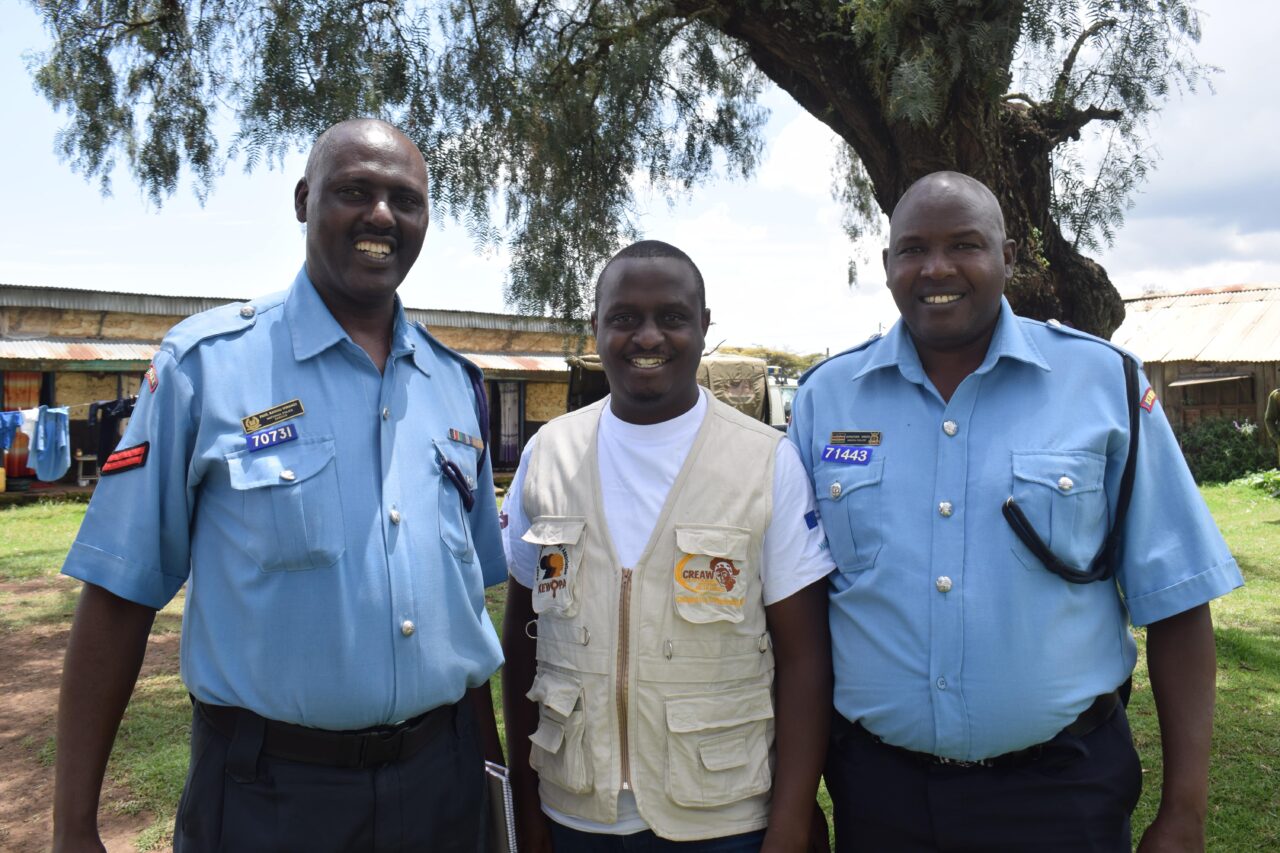
Corporal Paul Kamau Mwangi, is a police officer at Nairegi Enkare police station in Narok county, who is a crimes and investigations officer that deals with cases of Gender based Violence (GBV). The broad smile on his face and warm reception is one key element in helping survivors of GBV feel comfortable around him hence easily opening up. However, this was never the case before.

Corporal Kamau has been part of a group of police officers trained by CREAW on handling GBV cases, collection of exhibits and preparation of charge sheets for cases.

“Before we would write charge sheets that were not very clear to the DPP hence hampering the investigation process hence denying justice for the survivors of GBV,” Confirms corporal Kamau.

Globally, 1 in every 3 women face some form of sexual and gender-based violence (SGBV) in their lifetime. In Kenya, data from the Kenya Demographic and Health Survey shows that 45% of women and girls face a form of gender based violence annually.

CREAW in partnership with UN Trust Fund has supported the development of a tool for professionally documenting cases, collecting data, keying it into a system and analyzing it.

Ever since the trainings, Kamau acknowledges to have never lost a case on grounds  of technicality. The rate of convictions increased since they were able to present watertight evidence against perpetrators.

“One such case of a man who defiled a young girls and was sentenced to 20 years in prison. In 2021, we had 7 cases in court which are running smoothly with no interference and we hope for a favourable ruling,”

Frequent transfer of police officers from one location to the other, has been one major challenge that Oldonyiro OCS Gilbert Maiyo notes that has been hindering the strengthening of Gender Desks officers.

“It’s imperative to keep on training more officers on matters GBV so as to have a larger population of officers knowledgeable on the topic. As an officer, you can specialize on cases of GBV but need a formidable team to work with, that is equally empowered,” confirms Maiyo.

According to Corporal Kamau, the leading cases of GBV in Nairegi Enkare is Intimate Partner Violence, where out of 60 cases they prosecuted in 2021, more than 20 women were complainants, who reported being assaulted by their spouses. This is closely followed by defilement and rape.

Miles away in Isiolo County, Corporal Benard Omoit has been at the forefront of protecting women and girls. He leads the gender and children protection desk at the Isiolo Police Station. As for Omoit, he attributes a tremendous improvement on handling of GBV cases to training, as well as attending sessions in Court Users Committee (CUC) with various service providers.

“ The committee comprises of various stakeholders in the justice system. That is where we normally meet and iron out hitches and focus on how best we can collaborate and support survivors of GBV access justice,” narrates Omoit.

Thanks to the training, corporal Omoit championed for a specialized Gender Desk that was separated from the crimes and reporting desk, which gave the clients the much needed confidentiality and dignity while reporting vices meted against them.

“As stakeholders, we have been able to reach out to the community through advocacy to break the fear of police by community members hence rebuilding that confidence in the forces,” adds Omoit.

According to a United Nations Department of Economic and Social Affairs, less than 1 in 10 women who seek help after experiencing violence turn to the police, and only a minority of cases of gender-based violence are ever formally reported to the police, with even fewer cases resulting in convictions.

It is to this end that CREAW in partnership with UN Trust Fund, sought to train police officers on sexual and gender based violence cases, so as to protect the dignity of survivors of sexual and gender-based violence by ensuring confidentiality, respect and safety during reporting of cases, as well as collect data on local SGBV trends and use these for effective interventions to advocate for the reduction in the number of SGBV cases. For corporal Kamau and Omoit, these efforts are funning their flame in championing for access to justice for survivors of SGBV as they mentor their fellow police in the crusade.


Jane-Wangechi-1-1280x853.jpg

April 22, 2022by CREAW

45-year-old Jane Wangechi Ngoge, has revolutionised her life, from being the down trodden woman who lived from hand to mouth, to a successful entrepreneur, striving so hard to break the glass ceiling of agribusiness in the capital city of Nairobi.

Before the COVID-19 pandemic struck in 2020, the mother of 3 was having marital challenges with her partner. His meagre income as a mason could not sustain the family comfortably. She started selling samosas by the roadside in her neighbourhood in Kayole, however this was short-lived.

“During lockdown and restriction of movement in the country, my world came crumbling down. My husband left. I had to start doing menial jobs to support my children and I. The jobs were also not easy to come by,” Narrates Wangechi, as she recounts the challenges she went through to ensure she provides basic needs for her children.

It was during her low moment that she was listening to a radio show where CREAW’s toll free number 0800 720 186 was shared for anyone who needed psychosocial support. Luckily for her, she was interrogated and put under the 3 months’ cash transfer program, which sought to cushion families from the adverse effects of COVID-19.

“When I got the first cash transfer of Kes 7,000, I started selling fruits around my neighbourhood. I joined a chama where I was saving Kes 300 every 2 weeks. When I got the second and third instalments, I opened a shop coupled with an M-Pesa agency,” Says Wangechi as she chuckles.

That was never the end for her. Wangechi was among beneficiaries who went through business development training, where women were taught on how to budget, do record keeping as well as finding market for their products.

“Access to information and business skills remain a major challenge to women survivors of GBV. Providing training on financial literacy and life-skills is crucial for efficient use of financial services and products. With the right training, they are able to revive their businesses, acquire productive assets and save for their future plans,” Confirms Moses Okello, the Women Economic Empowerment Lead at CREAW, who has been supporting women under the program rebuild their life post-COVID-19.
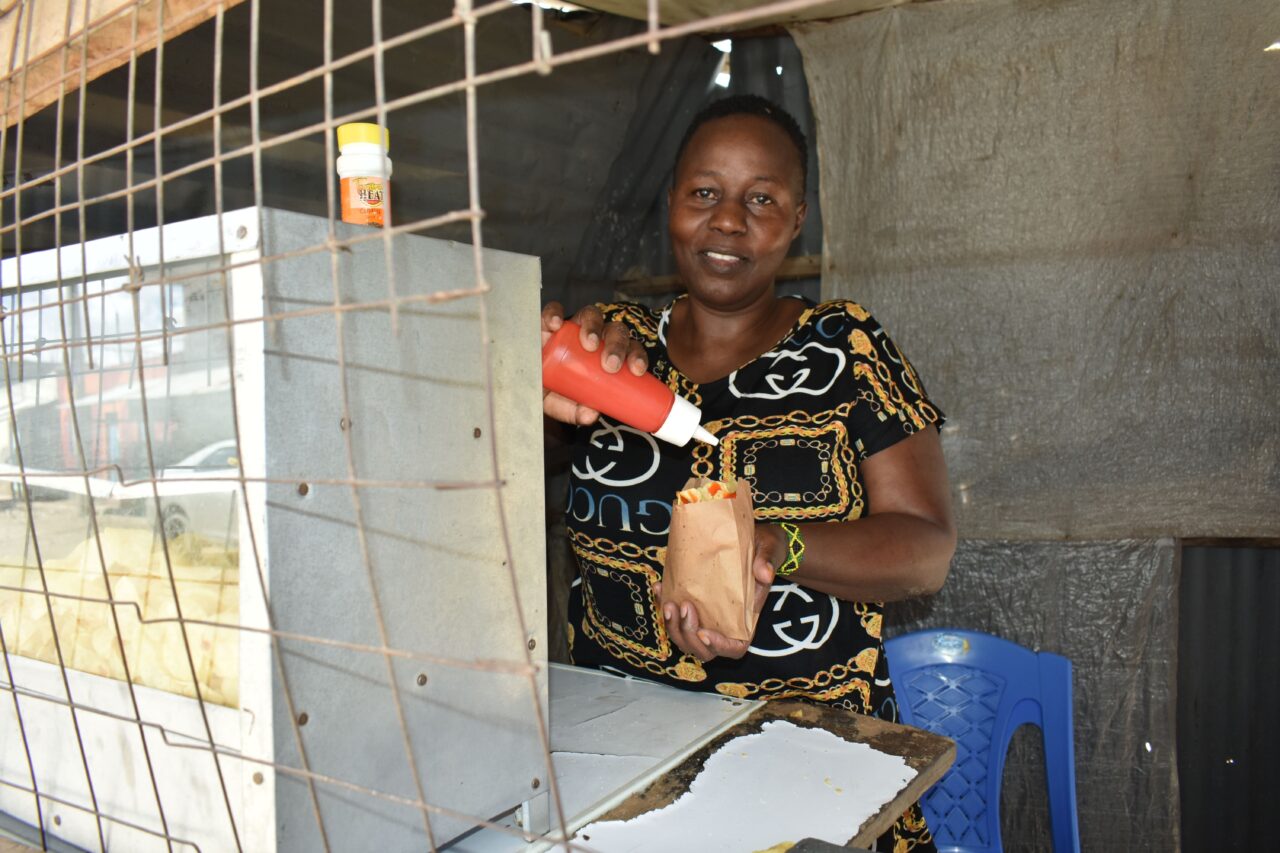
With the introduction of Jasiri Fund, the first of its kind financial inclusion program for survivors of gender based violence to access affordable loans, Wangechi took a loan of Kes 90,000, which she used to restock her business as well as hired a motorbike operator who has been supporting her in delivery of goods as well as transportation.

“From the money I had saved in the Chama, I got a dairy cow which delivered recently. I milk 13 litres of milk daily and I sell a litre of fresh milk around my neighbourhood at Kes 70. I also added some chicken, two goats and two pigs.’’

Through the business training she underwent, Wachechi has mastered the art of creating several flows of income. From the milk she sells, she makes roughly Kes 910 daily, whereas the shop has become her other economic backbone. In a good week, she fetches Kes 3600 in profits.

“I am now comfortably supporting my children. My firstborn son joined university recently. I am happy to say that my life feels like a dream come true. I never thought that I could one day run

successful businesses as well as comfortably take care of my family single handedly,” Smiles Wangechi.

She has been comfortably doing her monthly loan repayments of Kes 8,000 per month and looks forward to taking up another loan to help her purchase a piece of land where she will fully venture into agribusiness. From doing menial jobs to now being an employer of 3 staff looking up to her, Wangechi now exemplifies the face of resilience and what a woman can do when economically empowered.


CAO_4352-min-1280x853.jpg

April 22, 2022by CREAW

When COVID-19 pandemic pocked its scary nose in Kenya, food insecurity, sexual and gender-based-violence and job losses, were some of the news making headlines in the local dailies. As many were obsessed with casting their nets on the effects of the pandemic, CREAW through its partners was delving deep into the murky waters to find a solution for more than 5,000 survivors of gender based violence.

To dignify and empower women economically, Cash transfer was part of the solutions as it had the potential to help vulnerable households stay off starvation, reduce the vulnerability of survivors and those at risk of sexual and gender-based violence.

Mary Bandi from Kayole in Nairobi was one such woman. She had lost her hotel job and was now doing laundry work that could barely meet the needs of her family. On the side, she had an outstanding mortgage loan that needed to be cleared.

“My husband and I had separated long before the pandemic. As the sole provider for my two children and I, the heat was too much. I even developed blood pressure due to the economic stress I was going through,” Says Mary.

With the cash transfer she received totalling to Kes 21,000, Mary started selling crisps by the roadside outside her house. Little by little, she got orders from mini-markets around Kayole, where she supplied in bulk.

In her own words, she got a second chance at life. Mary was invited for a business development training organised by CREAW, to help beneficiaries of cash transfer program work on their business skills even as they rebuild their lives.

“What stood out for me was stock taking, saving and investing. I realised from the money I got, little went into saving. That is when I started saving little by little to help me complete my house mortgage. In a few months’ time I will be through with the balance,” Proudly states Mary, casting her eyes around her house.

Thanks to the introduction of Jasiri Fund immediately after the business development training, Mary saw an opportunity to grow her crisps business as well as diversify into the fashion industry.

“I took a loan of KES 50,000. I spent KES 30,000 for buying 3 bales of handbags. From each bale I was able to make a profit of KES 40,200. This enabled me repay my loan in 3 months,” States Mary as she was taking us through her record book.

“Investing in women owned enterprises promotes economic development among women survivors of GBV. However, mainstreaming of GBV support services into the financial inclusion program is key to reducing women’s risk of experiencing violence as well as strengthening equal access to economic resources that enhances women’s empowerment.” Confirms Moses Okello, the Women Economic Empowerment Lead at CREAW, who has been supporting women under the program rebuild their life post-COVID-19.

By the time we were leaving her home, Mary had already gotten second approval for a loan of KES 65,000. She wants to use it in expanding her handbags business as well as find another branch for the same.

With support from Mastercard Foundation, through the Response, Recovery and Resilience Project in partnership with GROOTS and The Collaborative Centre for Gender and Development: CCGD, CREAW has been providing women like Mary with affordable financial services through Jasiri Fund. The fund is available in ten counties, that has enabled 1000 entrepreneurial women to access start-up capital to invest and expand their businesses.


Narok_Reformed_Cutter-1280x853.jpg

April 22, 2022by CREAW

In the year 2011, the Kenyan government passed the Prohibition of Female Genital Mutilation Act into law, imposing harsh criminal penalties for cutting. Global efforts have accelerated progress towards the elimination of female genital mutilation (FGM) for the past decade.

In cultures where FGM is entrenched in tradition and social norms, it takes courage to speak up against it. One such voice is that of 62 year old Nooretet Saidimu from Olootingual village in Narok County. The reformed cutter in now spearheading the protection of girls against the vice, albeit one village at a time. We were interested to find out what motivated the U-turn from a perpetrator to a protector.

Why is Female Genital Mutilation (FGM) still being carried out? 

Female genital mutilation was part and parcel of our life because it is a culture we found in existence. It signified the rite of passage from a girl into womanhood. Once a girl had been circumcised, she was ready to be married off. Their ages would range from 9 year old to 15 year old girls.

Talk to us about how you became a circumciser and what really motivated you into the practice.

Money was my biggest motivation. During peak season I would cut almost 50 girls for Kes 3000. That was quick money. I have been a traditional circumciser for over 20 years. Unlike others, none of my siblings or even mother was a cutter. Majority of women in this community have gone through my hands. However, I noticed recently that the police officers as well as the area chief were on our case, claiming what we were doing was a crime. I confronted our area chief because his mother was a retired circumciser, whereas I am the one who circumcised his wife before he married her. I felt like he was misleading this current generation of young girls.

So how did you go about it since you were now being on the local administrators radar and where exactly was your turning point?

I started hiding the girls in the bushes, where we would do the initiation. Girls would be brought in the forest at night where I would initiate them and nurse them to recovery. One day the police got wind of what I was doing and came to rescue the girls in the forest. We took off with the girls who were nursing fresh wounds. Unfortunately one of them died due to excessive bleeding while we were being pursued by the police. Though I know lack of proper care and the cold in the forest must have contributed to her being weak as well. That was my turning point.

Did you immediately let go off the practice and turned a new leaf?

One day some community champion came over to my place to have a candid discussion with me in regards to FGM. After we had that long discussion, she convinced me to go for some training that they were conducting in Narok regarding FGM. I was hesitant to go since I thought it was a trap to arrest me ( she chuckles covering her face) but I later on decided to go.

Other than being a “cutter” were you engaged in any other economic generating activity?

No. I solely looked forward to the initiation seasons. Once in a while I would do beadwork as a pastime activity but not for sale. For me FGM was not only part of my culture but also an income generating activity. When I decided to stop, my concern was how I was going to make money now that this stream of income had been closed.

What changed your mind and attitude towards FGM to the point of being a champion of girls education?

One day our trainers took us to a graduation ceremony in Meru county where a girl was being fated. I could not control tears in my eyes. I realised how I had hampered girls in my community from securing education and graduating to better their lives. That is when I swore not to champion for FGM, rather advocate for girls education.

Other encounters that affirmed your pursuit to protection of girls against FGM?

One day we were invited for a community forum with the local administrators here in Narok as reformed cutters. I noticed the District Officer is a Maasai woman from my community. I asked her privately if she had undergone the cut and if she was married. This is because girls in my community did not hold such high ranking positions at places of work.  To my surprise, she confirmed not being initiated and was equally married to a Maasai man. That is when I realised that there are men who are marrying women who are uncut.

Another incident happened when I accompanied my fellow champions to a health facility in the neighbouring town. We visited the labour ward where women who were brought in ready to deliver were accommodated. I noticed those that had undergone the cut would take longer in labour and would sometimes develop complications, whereas the other ones took little time and delivered naturally. That is when the doctor confirmed to me that FGM has a direct implication to difficulty during child birth.

How has it been so far, championing for the protection of girls against FGM?

It has not been easy since we are in a patriarchal society, where men dictate our culture. I am engaging young men who I believe are the change makers and the ones who will transform this community. They are now championing for the protection of their sisters and are coming out publicly to marry women that are not circumcised. I am also standing up for my daughter who have not gone through the cut. One has graduated from university as a medical doctor, she is now a beacon of hope to her peers.

Any regrets?

It really pains me knowing that I was shedding innocent blood in the name of culture. I honestly pray that God forgives me for I was acting out of ignorance. For the remaining days of my life, I want to ensure this coming generation in my community does not go through what we went through.

Parting shot

I want to thank CREAW for taking us through the extensive training on effects of FGM. I feel like am living life afresh since I have a new purpose. I am skilled and very confident to talk about child protection and champion for girls education. Wacha wasichana wasome (Let our girls get education)

According to the Kenya Demographic Health Survey 2014, overall prevalence of FGM has decreased from 38 per cent in 1998, to 21 per cent in 2014. Various stakeholders are urging both state and non-state actors to allocate more resources to eradication campaigns, as FGM is still being carried out in some communities. Narok County is one of the counties in Kenya where FGM is still prevalent and is believed to have contributed to the high number of teenage pregnancy and child marriage.


Maragaret-Moraa_Women-Safety-1280x853.jpg

March 27, 2022by CREAW

Margaret Moraa is a woman who has stood out in her exemplary passion in advocating for the rights of women and girls, most especially in her community in Getiesi in Nyamira county.

Less than two months prior to our visit, the mother of 4, who is also a former early childhood education teacher, was always disturbed by how cases of rape and defilement were rampant in her community.

Moraa was amongst a group of change agents in her community, who were trained on human rights, sexual harassment as well as gender based violence referral pathway.

“This training opened my eyes to the ills in our community. There were many vices happening that I never thought were offences. A man assaulting his wife is common, but we don’t report due to ignorance,” Reminisces Moraa, pointing out some of the cases of gender based violence that are rampant in her community.

Her passion was awaken during the training session, making her vow to be a community champion and share the knowledge she got in forums she would attend. A commitment she has been diligently fulfilling.

“Since I am a teacher, nowadays I am always given opportunities to speak in public forums, where I create awareness on GBV as well as helping the community understand its impact,” Affirms Moraa.

On this specific day, she had organised a community dialogue at her home compound in Getiesi village, where she was going to conduct a session of learning, to help her neighbours understand where her passion was coming from.

“The greatest challenge now is that we are in a patriarchal society. A woman organising for a meeting is something not many men would take lying low. Those who come are reluctant to sharing the same platform with younger women,” Sigh Moraa.

However, her husband’s support has been critical in mobilising members of the community, as he would encourage them by actively participating in the sessions she held.

“ I have seen how passionate she is. Our relationship at home has improved as I have learnt how to relate better with my wife and children. I would want other men to experience the same in their homes,” Says Moraa’s husband.

As the session comes to an end, one cannot be blind to the fact that Moraa has become a darling to her community, as praises of her bold steps are admired by many.

Another agent of change is Mellen Gisare Ragira. Her broad smile and active participation during a community dialogue, organized by a team from Nyamache Tea Factory in Kisii county, can be seen from a distance.

The fish monger, who is also a tea farmer in her region, has come a long way in ensuring the broad smile on her face reflects the peace within her. The mother of 4 has been battling low self-esteem for years. However, that changed since she started attended the training sessions.

“ I am more aware of my rights as a woman. I can easily identify if something is wrong around me and point it out. Before the training, I would never raise my voice to talk about anything in public,” Confirms Mellen as she broadly smiles.

Being a tea farmer in this region, has seen her come face to face with the reality of discrimination and gender based violence.

“ Tea picking is a man’s role in our community. However, many women work on other people’s farms to earn a living. This has made them vulnerable to harassment or even earning meagre pay compared to their male counterparts,” Sighs Mellen.

In the workplace, women continue to occupy lower-paid positions with limited opportunities to progress. This has increasingly led to them being vulnerable to harassment and exploitation.

It is to this end that CREAW, with support from UN Women in partnership with FEMNET, and Gender Violence Recovery Centre (GVRC) embarked on a multi sectoral approach towards addressing the plight of women and smallholder farmers in addressing gender based violence in the tea sector. The training on sexual harassment and better working conditions have helped create awareness around women safety in the tea zones.

“Things have drastically improved since the factory staff started engaging us in trainings. We are served effectively with dignity when we take our tea for weighing at the factory. Before the training, we would be left at the gate waiting for hours before we are served,” Admits Mellen.

Indeed it is a new dawn for Moraa and Mellen as they march on in ensuring the community they live in, is safe for women and girls to progress in life.