Until recently, 80-year-old Rukia Isaack was a fervent supporter of the Female Genital Cutting (FGC), which she inculcated across generation as a right of passage to womanhood for all the girls in her community.
“I started circumcising girls at the age of 26 as an economic activity. During school holidays I would circumcise up-to 15 girls in a day,” says Rukia who has since abandoned the cut, all thanks to the house-to-house community conversations conducted by activist like Mumina Elena that is shifting how communities in Isiolo perceive and act to
wards FGC.
Mumina now 34 years old was among the girls who passed through the hands of Rukia. She was 10 years old then. Today, she is dutifully turning the tide, educating her community on the dangers of FGC to save girls from the harrowing ordeal.
And what a better way to cause change than starting with the woman who circumcised her!
“Rukia is a perfect example that ending FGM is possible. I am glad she heed to my call to abandon the cut,” says Mumina.
To Rukia, cutting girls was just like any other cultural ritual not knowing the harm she was causing the lives of many young girls some of them her daughters. In the occasional visits to the households, Mumina purposefully targeted to visit Rukia daily, educating her of the outlawed practice.
This turned out to be the tipping point for Rukia-“I feared going to prison.” Today; she is mobilizing the community against FGM and child marriages. During community dialogues, Rukia reminisces her experiences as a circumciser to persuade her community to abandon the cut.
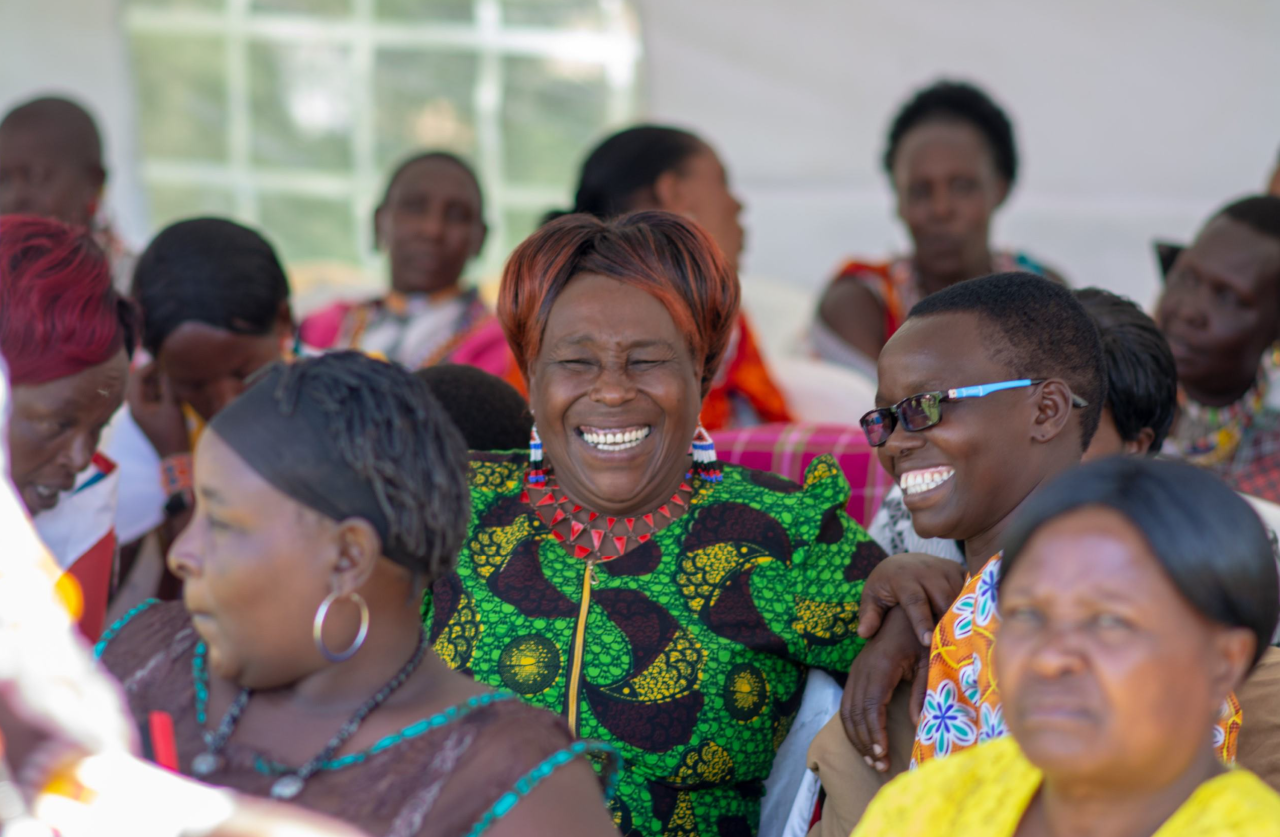
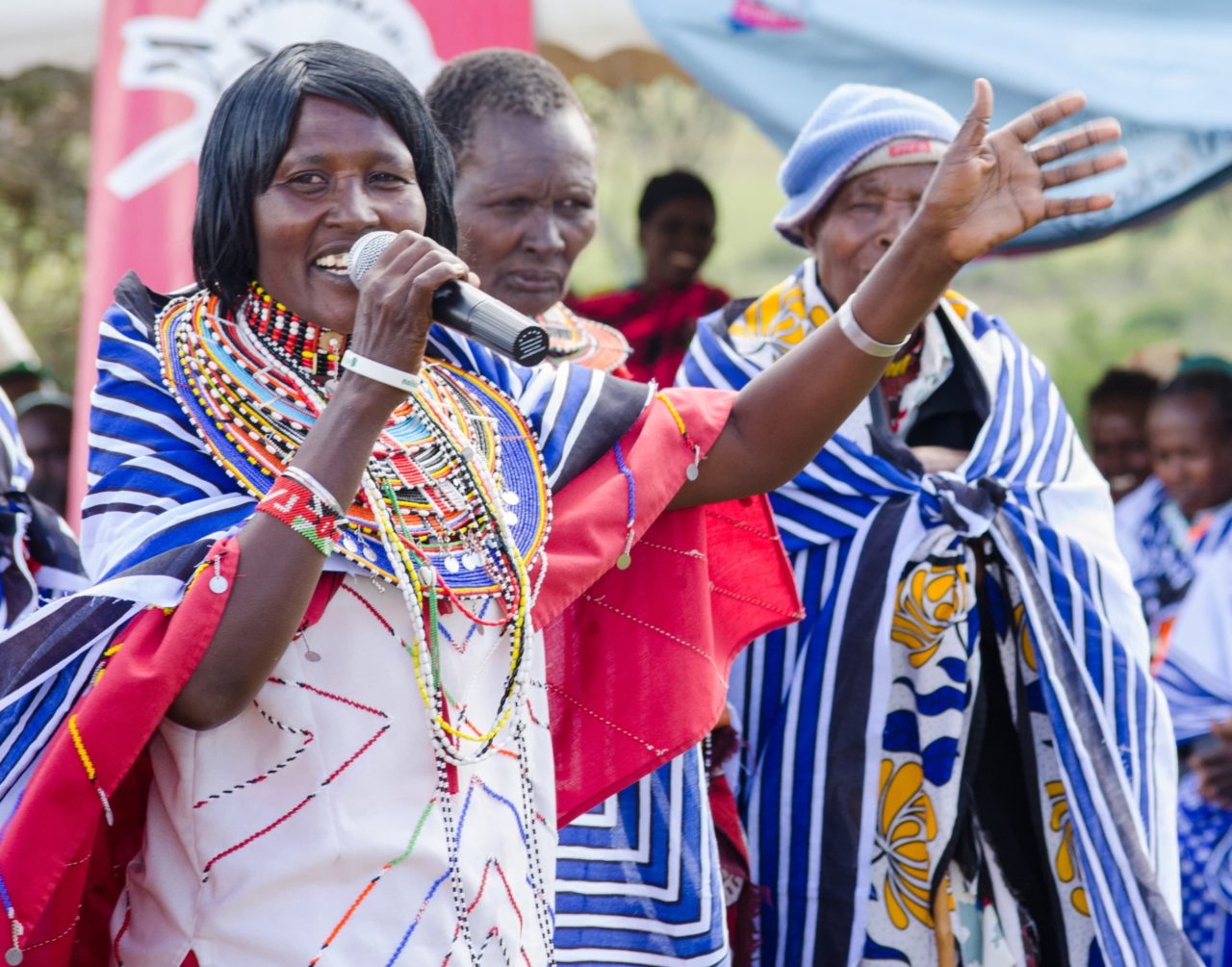
When we meet on a warm Tuesday afternoon, Mumina is facilitating a community dialogues in Kambi Ordha village where Rukia is among the community members listening keening- her exquisite face is framed by a brightly toned scarf wrapped around her head and neck. She cheerfully grins as her fruity voice invites women; men and the girls gathered to a rather subject that is so dear to her- one that must be spoken out loud!
Months ago, Mumina and her co-activists received trainings from CREAW under the Wajibika Initiative supported by United Nations Trust Fund to End Violence against Women aimed at raising awareness on the dangers associated with FGM and other forms of gender based violence (GBV). It is through the trainings that she also learnt of the various ways to mobilize and rally communities against the gendered restrictions that limit that progress of girls in her community.
“The trainings opened my eyes to the day to day realities of many girls. I knew my starting point would be to change the mindset of the elderly in the community hence the pictorial illustrations came in handy,” explains Mumina in reference to the SASA! poster discussions that guides her conversations with the community on GBV issues.
Karu Ibrahim who lives in Kina Sub-County, 200 kilometers away from where Rukia resides has also downed her circumcision knife as activists continues to galvanize support from community elders, the police, men and women to end the cut. In Kina, the community conversations are also taking shape among the Borana community.
“I learnt that FGC does not help girls in any way. Even though I lost my source of livelihood, I am proud to be a good example to other mothers,” narrates the 43-year-old Karu.
“You know, FGC is something valued among the Boranas. It inculcates a sense of respect. Girls who are not cut are considered dirty,” she adds.
Slowly, we are seeing communities waking up to the reality that girls too reserve the right to make decisions about their bodies and their voices cannot be undervalued anymore among the largely pastoralist community- Makai Mamo, a community activist in Kina tells us.
Apart from the community conversations, the women activists under the auspices of the Wajibika project have also employed the use of radios to reach out to the masses.
“We also hold talks with girls in schools to educate them about FGM and help them talk about their experiences,” says Makai as she explains that it was not easy for girls to speak about the taboo topic but after a series of mentorship talks, girls are now opening up and refusing to be cut.
At 49 years old, Glady Kosgey knows too well the wins of having girls go to school. As a mother, her only hope has been to see her three girls build better futures. Despite the inequalities that many other girls from her community faced in their efforts to gain education, she ensured that her three girls did not undergo FGM and were able to complete their tertiary levels of education. Today, she continues to spread her voice out, traversing through Transmara, Narok County and beyond to raise awareness on the need to have more and more girls from pastoralists communities enrolled in school
“It is sad that many families still view girls as a waste of resources as they would soon be married off,” says Gladys, a renowned women’s rights activist, “I want girls to get the education I never got as a young girl.”
In 2003, Kenya introduced free primary education in a bid to increase enrolment of children: boys and girls in school. This was to put girls and boys at a level playing field in realizing their rights to education. Since then, a number of policies and laws have been domesticated at the national and county levels to bridge the gender gap in access to basic education including enacting a law to end FGM. Despite that, girls ailing from nomadic communities still do not enjoy their right to education.
In 2019, Narok was singled out as the County with the highest number of teen mothers with 40% of girls aged between 10 and 14 forced to sit for their Kenya Certificate of Primary Education from their hospital beds as they recuperate from childbirth. This coupled with age-old practice of female genital cutting that force girls out of school as they are married off to well-off elderly men in exchange for cows.
Against this, Gladys and other activists enjoined in the community mobilization efforts united to galvanize support and fundraise for school fees and school essentials for 111 students in the area who were transitioning to secondary schools.
“My ears are always out for new opportunities for girls. When I got wind of the Presidential bursary that targeted needy children in the county, I mobilized fellow women and we approached the County Commissioner,” she says, adding that it was not an easy task for them to get a hearing as there was a predetermined list of students, majority of who were boys.
“The next step was to petition all the county authorities on the matter. We wrote to the County Commissioner keeping the office of the Woman Representative, and the County Executive Member of Education in copy to demand for accountability and that the bursaries be allocated on equal measures among boys and girls,” explains Gladys who is happy that their steadfastness paid off; 57 girls got scholarships and are now schooling in various boarding schools in the County.
As we engage, I get a sense of her outspoken nature and her grip of the cultural disparities that affect girls among the pastoralist community where she ails. She tells me that her outspokenness did not just begin yesterday; it all began in the 2000s when she stood to be elected as a councilor. And even though she was not elected then, her unwavering zeal came into play in 2013 when she vied again to be a Member of the County Assembly. Her reasons; “ I wanted to show other women that it is possible to be at the table where key decisions are made. With the culture that mutes women’s voices, I believe our collectiveness as women is part of the solution to the problems that affects us, our sisters and our daughters,” says Gladys who wears many hats. Currently chairs the Maendeleo Ya Wanawake ( in her Sub-County.
And what does the future look like for the lifelong women and girls’ rights champion?
“For starters, I am grateful for the support and trainings offered by CREAW in our community awareness raising efforts,” she says in reference to the Wajibika initiative that is supported by UNTF and implemented by CREAW in Narok and Isiolo Counties.
Under Wajibika, the women-led groups are capacity built on ways to mobilize and rally communities around on issues that affects the wellbeing of women and girls as well as engage with authorities to effect policy changes that addresses the plight of women and girls more so, FGM and other forms of gender based violence.
Overtime, Glady’s and her co-activists have carried out community conversations targeting parents, women, men and the community elders in an effort to transform their behaviors and perceptions on the traditional practices, rituals and attitudes that perpetuate discrimination and infringement of women and girls’ civil liberties.
“Slowly the community is shaping up and growing more sensitive the rights of women and girls and equity issues; now we have more girls going to school and women are able to own and gain access to land and other matrimonial properties. We are not there yet, but we are keep on till every girl and woman is respected, able to go to school, marry when they want and are able to lead dignified lives free of violence,” she concludes.
Menstrual Hygiene Day (MH Day) is a global advocacy day to promote good menstrual hygiene management (MHM) for all women and girls by breaking the silence, and raising awareness to change negative social norms around MHM, and engage decision-makers to prioritise and catalyse action for MHM, at global, national and local levels.
his appeal raises novel questions of law on whether vicarious liability can be attributed to the appellant, the Teachers Service Commission (TSC) who at the material time had employed Astorikoh Henry Amkoah, (3rd respondent hereinafter referred to as “teacher”) for alleged acts of sexual abuse against the students hereinafter referred to as “WJ” and “LN”).
For 12 years Margaret Sepengo was a renowned female circumciser in the remote village of Leparwa tucked in the north of Isiolo County.
In 2015 she abandoned the cut all thanks to the sensitization efforts by CREAW auspiced under the Tunza Mama Na Mtoto project aimed at empowering communities to abandon retrogressive cultural practices such as Female Genital Mutilation (FMG) that inhibits on maternal and newborn health.
With the support from UKAid through Christian Aid, the project that is in its third year of implementation adopted a community mobilization approach dubbed SASA! (Start, Awareness, Support, Action),to educate and inspire communities to take actions for social change.
Margaret was lucky to be among those who were capacity built on maternal health issues and how they can use the knowledge to advocate against FGM, early marriages, teen pregnancies and gender based violence all of which are rooted deep in culture and the leading causes of maternal and newborn motilities and morbidities in the larger Isiolo County.
“It is the trainings that enabled me shun the practice and engage in alternative source of livelihood,” says Margaret who is now a respected community activist who is using the SASA! model to change perceptions and attitudes of her community towards FGM.
Female Genital Mutilation as she puts it, used to be the cornerstone of livelihoods for many households but the situation has changed. When she learned the art of the cut, her only motivation was to eke a living.
“I used to admire an elderly neighbour who used to circumcise girls and would earn a lot of money. Being a third wife and an only breadwinner in the family, I learnt the art and would make Sh1000 from each girl. The prices would go up to Sh2500 during high season and sometimes poor families will offer their goats or cattle,” she says.
“With the sustained community dialogues targeting the council of elders, men and women, the community has opted abandoned the age-old tradition,” she adds.
In her quest to have the elders lift the ban on the curse placed on any man who marries uncircumcised girl, Margaret reach out to the Masaai Morans to have the elders allow them to marry uncut women. The elders agreed to their quest and held a public forum to ‘break the curse.’ The forum held in Laikipia brought together the young and elderly from Masaai, Turkana and Samburu communities. This was a great step towards eradicating FGM.
“During the exchange visit between reformed circumcisers from Isiolo and Kajiado, I learnt the different initiative that my counterparts were using to have the elders to create a by-in with the elders who are the custodian of culture. I came back and embarked on the same. My efforts bore fruits,” explains the mother of four.
“Among pastoralist communities, uncircumcised girls were doomed to be a bad omen and outcasts. The blessings symbolized an end to the cut among the communities,” she says, adding, “ This was a step to ensuring that women and girls would now be free from early marriages and complications experienced during childbirth associated to FGM. “
Aside from her proactive activism in her community, she has enrolled herself into adult education program now in level three. She explains that like many girls in her community, she was married off to an elderly man at the age of 14 and was not able to ascend through to high school.
“If we give girls the opportunity to go to school, we will be able to break the cultural barriers and make healthy decisions for their reproductive health and that of their families and children,” she says.
Thursday afternoon, the weather is chilly and the usually busy Githongo pitch has no sight of any young ones kicking around the ball in the pitch or athletes working out as in the usual. In the surroundings, the densely constructed shelters are slowly shifting the small rural town of Githongo to an urbanized community center.
Utawala Chiefs Group at the Githongo Chief Camp. PHOTO/CREAW
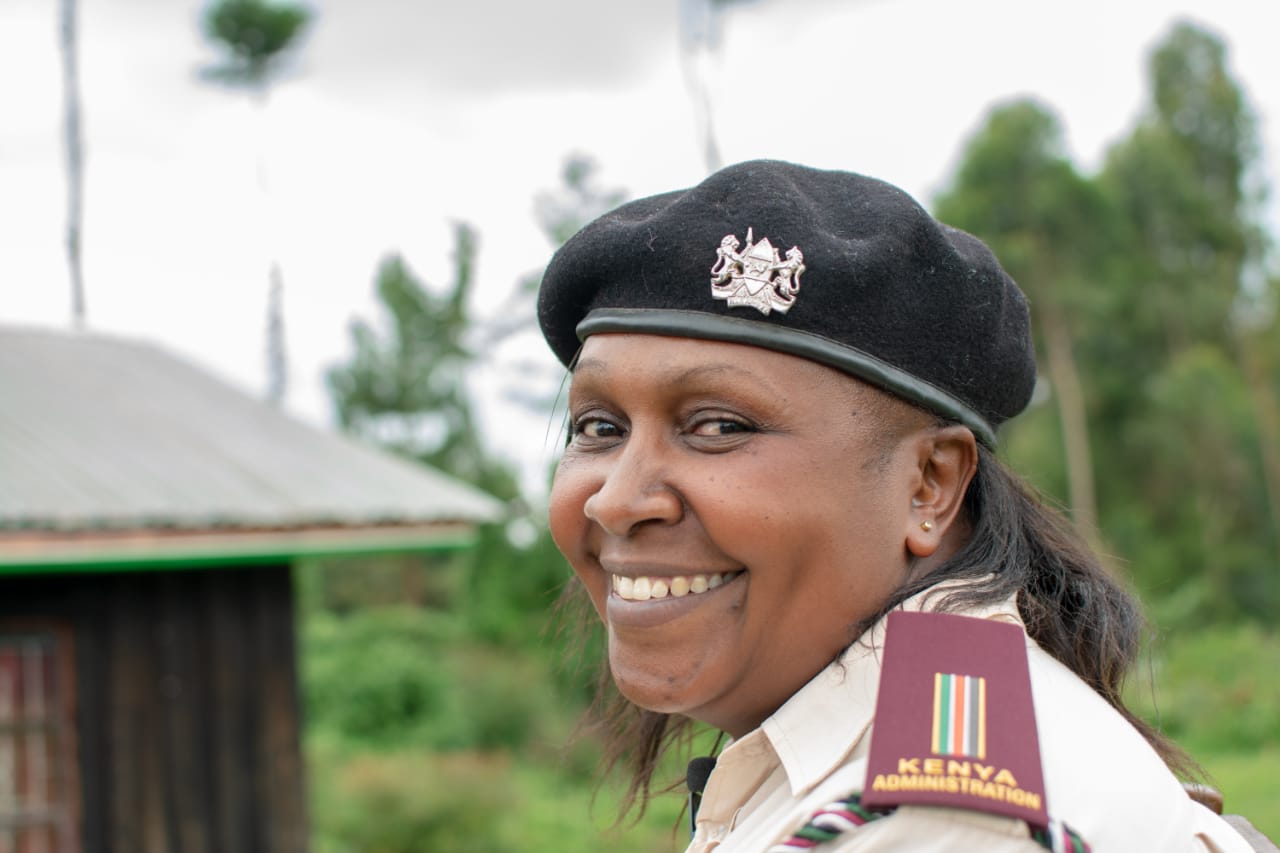
Looking on to the vast field in the left corner is the Githongo Chiefs Offices. Outside, a group of women and men are seen chit chatting. Their starched and well-pressed brown khaki uniform brings their steadfastness to the fore; their threaded shoulders mark them out as protectors and defenders of the larger community as their call of duty bestows them.
The uniformed women and men are Chiefs from Imenti Central, Meru County who came together to establish the 14 members Utawala Chiefs Group with an aim to better provide coordinated response to GBV matters in their localities. Today, they are having their usual biweekly meetings to discuss the emerging issues in the community.
At the location level in Kenya’s administrative system, Chiefs are charged with mandate to maintain order within their jurisdiction. For the Utawala group, the work in the community goes over and above their call of duty. They derive passion from a violence free society where women and girls live in dignity, are better protected and able to move freely and thrive and thus their continued conversations and coordinated response to the ills that bedevils their community.
PHOTO/CREAW
For more than two years now, they have been working together, raising their voices and driving conversations through Chiefs’ Barazas to educate their communities on the ills of GBV and the channels of reporting.
“I was privileged to be part of the Chiefs’ training that taught them on how to handle and support survivors when they report violations,” says Faith Kagwiria, a Chief at Kathurune West Location and also a member of the Utawala Chiefs.
As the first respondent when an incident occurs, it is paramount that Chiefs like Faith are well vast with the roles and responsibilities they play in regards to the various matters reported thus, CREAW through the Haki Yetu Jukumu Letu initiative came in handy to build their capacity to enable them to effectively support survivors and respond to the needs of the locals.
The initiative now in its third year of implementation and supported by the Embassy of Netherlands in Kenya equips Chiefs among other duty bearers with the knowledge on GBV related laws, how to document and report matters as well as how to set up community structures that promotes safe spaces in the community.
“Not a day goes, without widows flocking my office puzzled, confused and bewildered when their in-laws take away their matrimonial lands,” narrates Phyllis Mungatia who is the Chairperson of the Utawala Chiefs.
She says the inequalities when it comes to access and control of matrimonial land particularly in the agricultural rich region of Meru disenfranchises women.
It is such that draws the Utawala group to work with a unity of purpose. Their work in the community is slowly gaining momentum with the continued conversations, the community is slowly opening up and speaking out on matters such as incest that were shelved at family level.
“Apart from the weekly chief barazas, we also conduct targeted dialogues with men, women and in schools,” explains Stella Kinoti.
PHOTO/CREAW
She goes on to say that they have also consistently taught the village elders and area managers on how to tackle GBV noting that it takes both individual and community actions to create a ideal community for all. The Nyumba Kumi clusters have also come in handy to map out cases like female genital mutilation and child neglect.
But as Lucy Magiri puts it, their success has not been without the challenges. Sometimes they are forced to flee their homes or handle cases under cover for fear of their lives. Nonetheless, together, they affirm that their actions are just a starting point to lasting change in the community. They are positive that with their collective efforts, their neighbourhoods will violence free.
In Kilifi County, pregnancy remains a key barrier to girls’ education. In 2018 alone, over 17000 girls fell pregnant – some of the cases are attributed to wayward bodaboda riders who lure young girls with gifts and impregnate them; some girls also fall pregnant after being molested by those they trust most: relatives teachers and clergymen.
When we meet 16 year old *Riziki at her maternal grandparents home, she is cuddling her two year old son- a product of an affair she had with the bodaboda rider. Then, she was in Form two.
“I met him on my way to school and he offered to transport me,” she says. What followed were everyday rides that transitioned into sexual encounters.
“He promised to take care of me but denied being the father of my baby when I informed him I was pregnant,” says Riziki
Like many other girls in Kilifi, Riziki forms part of the statistics of girls whose dream to ascend higher in education and make their future a reality is cut shot by pregnancy emanating from wayward bodaboda riders.
In the wake of this, CREAW through the Haki Yetu Jukumu Letu initiative with the Embassy of Netherlands in Kenya incorporated the Bodaboda riders in the community outreaches where they learn how to ensure that children are safe and well protected from sexual violence and other ills in their communities.
PHOTO/CREAW
Daniel Tinga is the chairperson of Bodaboda riders in Kaloleni Sub County. He tells us that through the community outreaches he has learnt the dangers that sexual violence pose on the lives of young girls. From the lessons, he teaches his fellow riders to uphold respect and dignity of the women and girls they come into contact with.
“As a bodaboda rider I have the responsibility to ensure my customers whether young or old, arrive to their destination safely,” says Tinga.
In Ganze, Tinga’s counterparts are also organizing around the issue of defilement that has labeled them as perpetrators. In them is a resolve defy the ‘normal’ – they are building agency and using their voices to champion for good.
“ As a father I want, other girls in my community to grow well and complete their education just as my daughters. I want girls to fly high and build our village to greater heights,” says Shadrack Kazungu, a bodaboda rider at Matano Manne, Ganze Sub County.
He explains to us that after attending various community dialogues by CREAW his outlook on violence against women and girls has changed.
PHOTO/CREAW
“I learnt that cat calling and groping violates the rights of girls. Before I was never attentive to such matters because in my industry, they are ‘normal.’ I am glad there is a shift, the conversations have helped us build consensus amongst us,” he says while noting that, in their Association they are on the look out for individuals who goes against the ethics and conduct they have set as such, they are excommunicated and matters referred to the police.
At Kibaoni, the Bodaboda riders’ voices are even getting more louder in their day to day work. In their numbers, they want Kibaoni Bodaboda Association to be known for good. With their collective voices, they are certain that their community can only getter better.
“We have a good relationship with village elders and Chiefs within Kibaoni who help us in tackling gender violence matters even among our circles,” says Sudi Zalikini.
Teen pregnancies among school girls is a worrying phenomenon in Kenya. The United Nations Population Fund (UNFPA), notes that 378,397 girls aged 10 to 19 got pregnant between June 2016 and July 2017.
Similar data by Kenya Demographic and Health Survey 2014, indicates that about one in every five adolescent girls has either given birth, or is pregnant with her first child.
Notably, in November 2018, Kilifi County Children Affairs department released shocking statistics. They recorded 13, 624 pregnancies among girls aged 15 to 19 years in the past one year.
Incidents of deliveries among girls, during Kenya Certificate of Primary Education (KCPE) and Kenya Certificate of Secondary Education (KCSE), often surface.
The same year, the Ministry of Education reported at least 50 cases of pregnancies during KCPE. Kitui County presented a classical scenario with a report of 100 pregnancies during KCSE.
Last year, a similar trend was reported in Bomet County during the KCSE with at least 12 pregnancies.
Across Africa, the structural systems are inflexible and inconsiderate of the burdens of adolescent mothers seeking to return to school.
As at 2018, 15 countries had re-entry policies for the girls, but the conditions set for the re-entry are repulsive.
The countries include Botswana, Burundi, Cameroon Gambia, Kenya, Liberia, Madagascar, Malawi and Mozambique. Others are Namibia, Senegal, South Africa, Swaziland, Zambia and Zimbabwe
In Malawi, girls are suspended for one year the moment their pregnancy is known, according to a2018 Human Rights Watch report on discrimination of adolescent mothers’ discrimination in access to education.
There are conditions set for the young mothers to apply for re-admission. She must send a request to the Ministry of Education and the school she intends to join, as noted in theLeave No Girl Behind in Africa Discrimination in Education against Pregnant Girls and Adolescent Mothersreport.
In Zambia and Gabon, girls have a better chance of continuing with their education. The countries have policies privy to their additional needs. They ensure primary and secondary education is free; the girls have time to breastfeed, and can choose morning or evening classes. They also have nurseries and day-care centres close to schools where their babies are sheltered while they attend classes.
In Kenya, a proposed law on supporting girl-child parents to complete their education after childbirth is still pending in the Senate.
Care and Protection of Child Parents Bill
The Care and Protection of Child Parents Bill (2019) proposes a framework for ensuring girls such as those in Kilifi and Kitui are granted care and protection by the national and county governments to actualise their right to basic education while ensuring the care of their children.
The Bill sponsored by nominated Senator Millicent Omanga, mandates the national government through the National Council for Children’s Services to “address any educational and related barriers faced by pregnant and parenting students.”
The Council would also be required to “guarantee funding and sustainability of the initiative and other child welfare programs aimed at benefiting child parents.”
There is also a proposal that county education boards and county executive committee members for education collaborate in establishing “programs to ensure expectant children and child parents have access to education services.”
And that “academic support programs that ensure students with extended absences for reasons related to pregnancy and parenting, are able to enrol back to school or other education facility to access education services.”
The Bill has been reviewed by Senate Committee on Labour and Social Welfare, with the report being tabled in the House in November last year.
It would require National Assembly backing to become law. Upon approval by the Senate, it would be sent to MPs, before the Speaker of Senate forwards it the President to assent to it.
Long-term solution
Addressing pregnancies among the school girls is, however, not just about institutional structures with financial support, argues Dr Emmanuel Manyasa, an education analyst and Executive Director of Usawa Agenda.
“We have to be careful with giving financial support as it may end up being an incentive for pregnancy,” says Dr Manyasa who spoke to the Nation on phone.
He says allowing girl-child parents back to school must be accompanied with a long-term solution.
“Needy girls end up pregnant as a consequence of poverty. The girls must be freed from poverty to avoid repeat pregnancies.”
Ms Isabella Mwangi, of Centre for Rights Education and Awareness (CREAW) underscores a multi-pronged approach to ending teen pregnancies.
She says the government, parents, teachers, religious institutions and community elders play a critical role in creating safe spaces for advancement of school girls.
Ms Mwangi says the government and religious institutions must agree on the introduction of sex education in schools, since sexual relations among teens is a reality that cannot be ignored.
She identifies recreational centres near schools as fertile grounds for luring girls, and the government ought to eradicate them.
She says parents must be responsible for teaching their girls and boys about their sexuality.
“Parents must nurture their children to know that they have a purpose in the society. Talking to their children is a responsibility they must not abdicate to anyone,” she notes.
While emphasising on role of community elders as custodians of cultural traditions, Ms Mwangi says they must be involved, as their influence in spearheading anti- retrogressive practices campaigns would lead to drop in teen pregnancies.
When 16 year old *Kadzo met her boyfriend, she was smitten; she did not in anyway think her life will change completely.
She says, “he promised to marry me and I believed him.” But today, her melancholic look tells the tale of a wound that she has long reconciled with. From the experimental sexual relationship, came pregnancy.
All through her childhood, her grandparents were the sole providers. They had so much hope in her completing her schooling but the tables had turned and now they wanted her out of their home. Swiftly, they married her off to the father of her child.
And as she tells of her ordeal, she fidgets and mumbles some words. The shock and disappointment of being a teen mother is written all over her. Apart from her pregnancy, she was forced to cope with her abusive boyfriend who came home each night drunk and would threaten to burn her alive.
“The scariest of all was when he took a kitchen knife and wanted to cut off my neck. I managed to escape,” she recalls of her deadliest experience at the hands the lover turned foe.
Teen mum trekking from school to their home in Ganze, Kilifi County. PHOTO/CREAW
Once again she was back to her grand parents home, forced to fend for herself and adjusting to the reality of being a mother of a three months old baby with the future unknown.
*Mbodze on the other hand started dating her boyfriend at the age of 14, she was in class six. Now aged 16 and a mother of two moths old baby, she is juggling between nursing her baby and classroom.
Her story bore similarity to that of Kadzo; they are both teen mothers only that one dropped out of school and the other rose through stigma and household poverty to continue with her education.
“I come to school at 8am and leave at 12 noon to go nurse the baby, “she says.
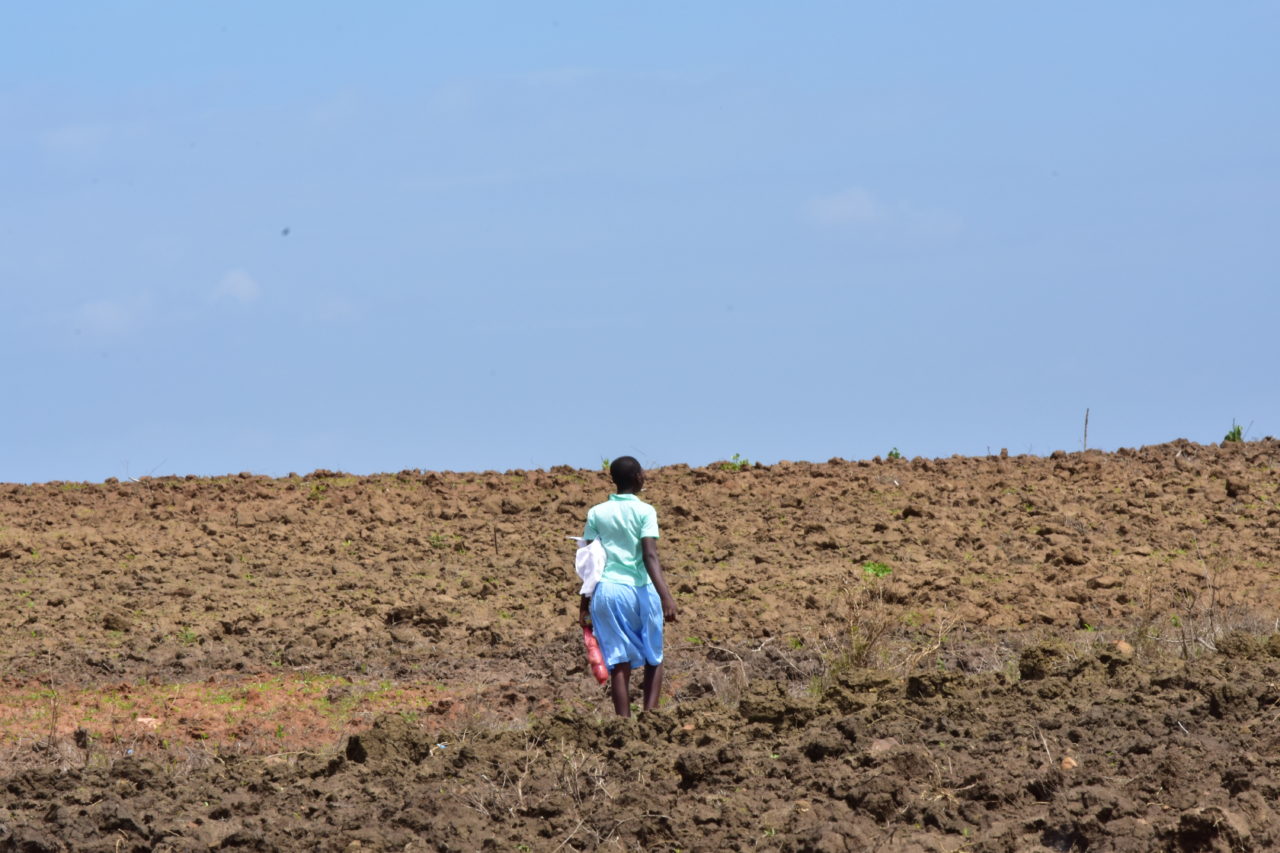
When we set out with her to her home, it takes 30 minutes to navigate through the village paths surrounded by thickets and maize plantations. She usually walks through the 7km journey to Dzitsoni Primary School.
“My dream is to join Ngara Girls after completing Kenya Certificate of Primary Education. I want to be a lawyer so that I can help other girls in my community,” she says.
Mbodze come from a family of five and her parents have since separated.
Hadly a kilometer away is 17 year old *Rehema, Mbodze’s classmate. She is a mother of a seven days old baby.
“I met my boyfriend at the funeral night vigil in the nearby Swere village. I used to call him through my mom’s phone and we would arrange to meet after school. He is a form three student,” says Rehema.
She says, “ when I became pregnant, I informed my boyfriend and he denied responsibility. From there on, I never wanted to see him or have anything to do with him.”
Rehema is lucky that her parents have been very supportive; when she is in school, her mom takes care of the baby.
“I want to learn so that I can have a good life,” says Rehema.
Why so many teen mums?
The life of Kadzo, Rehema and Mbodze mirrors the life of many teens in Kilifi and by extension across Kenya who are now forced to transition to mother hood at a young age. Their situation is not an isolated one. Over the last three years, Kilifi County has drowned under the weight of high numbers of teen pregnancy.
Statistics from the Kilifi County Ministry of Health shows that in 2017, 12,790 girls fell pregnant. In 2018 the numbers skyrocketed to 17,866 and in the period of January and March, 3102 girls were pregnant.
The Kenya Demographic Health Survey 2014 indicated that one out of five (18%) girls aged 15-19 years were pregnant or were already mothers. By February 2018, the County had approximately 203,094 teenagers.
In 2017, statistics from the United Nations Population Fund (UNFPA) indicated that 378,397 adolescents in Kenya aged between 10 and 19 got pregnant. It is this worrisome statistics that continues to wipe out the future young girls.
Supportive systems
For the 11 years that Olive Nyawana has been a teacher at Dzitsoni Primary School, the school has never experienced high numbers of teen getting pregnant but in 2018 and 2019 the numbers came as a shock.
“Previously we’ll have one or none. In fact for the last four years preceding 2019 we had none. This year we have four who are candidates,” explains Olive.
Olive Nyawana is a guiding and counselling teacher and a refugee to many young mothers who seek her counsel at Dzitsoni Primary School. PHOTO/CREAW
Olive who is a guiding and counseling teacher interacts daily with the Rehema and Mbodze, teen mums from the school. She says that she has been encouraging them to continue with schooling.
“I continuously talk to parents to be supportive of their children till they finish school,” says Olive who is also the Deputy Chairperson of the Beacon Teacher Movement in Kilifi.
As a Beacon Teacher, she has undergone trainings on child protection and GBV laws that are supported by CREAW’s Haki Yetu Jukumu Letu project in Kilifi and Meru Counties.
In her guiding and counseling sessions, Olive has adopted the use of materials that are child friendly and fun to hold conversations with pupils in her school. She teaches them on age appropriate sexuality issues.
As a teacher she has nurtured an environment where pupils are free to approach her with any challenges they experiences at home and while in school.
“Aside from the speak-out boxes that we have installed in school, we also have session with the boys and girls so that they are able to speak out freely,” says Olive who is also the Deputy Chairperson of the Beacon Teacher Movement in Kilifi County.
But why so many teen mums?
The 2016 Plan International report cited the root causes of teenage pregnancies in Kilifi as cultural practices, poor parenting coupled with broken marriages, poverty and inadequate sex and family planning education.
On cultural practices, the research touched deeply on the issue of funeral discos. It also cited long-held beliefs that girls’ work is to give birth in the society upon reaching puberty. The report noted that it is regarded as normal when a teenage girl gets pregnant before marriage. Some girls are exposed to drunkards at their homesteads, where mnazi (palm wine) business is done. This is more so in rural areas, where strict rules of establishing palm wine clubs away from home are not followed.
Ending teen pregnancies
In the wake of this, duty bearers continue to grapple and ponder on the appropriate redress mechanisms. Recently, there have been talks of introduction of Comprehensive Sexuality Education (CSE) in schools to ensure healthy sexuality and reproductive lifestyles for adolescents as in countries like Netherlands, Switzerland and Denmark where such initiative has proven to be effective.
In 2014, a Reproductive Healthcare Bill was introduced in the Senate. The Bill sought to provide children as young as 10 with condoms and birth control pills. The bill also proposed unhindered access to CSE and confidential services to adolescents. Ideally this would have gone along way in building the knowledge of children on pregnancy among other reproductive health issues and as fate would have it, the Bill was shot down on grounds that it would promote moral decay.
Fast forward, here we are with the ballooning statistics on teenage mothers wiping out the potential of our girls. Who would blink first? Parents, government? And is the society ready to change and create room for unrestricted access to reproductive health services including information to the young ones?
The government of Kilifi is however well aware of the bigger problem that child pregnancy posits to the development of its citizens. As such, the County Government of Kilifi constituted a taskforce constituting line state and non-state actors to look into the matter.
“The culture of silence make it difficult for perpetrators to be held accountable and punished for their harmful actions. It shows how sexual violence against children has been normalized making it difficult to shield girls from sex predators especially at family level,” says Saumu Mwadime who has been representing Women on the Move Against (WIMA) GBV at the taskforce.
WIMA is women led accountability group that has been working closely with CREAW in educating communities and spearheading actions geared towards increasing transparency, responsiveness and accountability for public service delivery by the county governments.
As an anti-GBV crusader, Saumu notes, “even with the existing laws and policies to curb the menace, the roaring statistics on child pregnancy are nothing to write home about.” She says.
“I look forward to the Kilifi government enacting a gender based violence policy to ensure that the needs of survivors are well catered for and the vice mitigated,” adds Saumu.
Under the auspices of the Haki Yetu Jukumu Letu project supported by the Embassy of Netherlands in Kenya, CREAW has worked to empower women groups such as WIMA on gender based violence and the existing redress mechanisms postulated by the law. The knowledge to which they have used to sensitize communities to challenge norms and attitudes that promotes sexual violence against children and other forms of gender based violence.
Over the last three years, CREAW has been working within communities to end sexual violence among children among other forms of gender based violence. We have continuously engaged the custodians of culture to eliminate the barriers that put girls at harms way and build equitable societies for women and girls to realize their rights and thrive in their communities.
To address child pregnancies, WIMA members are continuously conversing with parents on good parenting skills. They have also been holding mentoring sessions in schools around Kilifi, speaking to girls on their sexual and reproductive health rights and way they can report sexual violations.
For girls who fell pregnant while in school like Kadzo, Rehema and Mbodze, WIMA members have formed a supportive system to address their needs while in school and at home. For example, they have approached the office of the Women Representative to sponsors girls like Kadzo to continue her education. This year alone, the Office of the Women Representative has sponsored 91 girls in various secondary schools through the affirmative action funds.
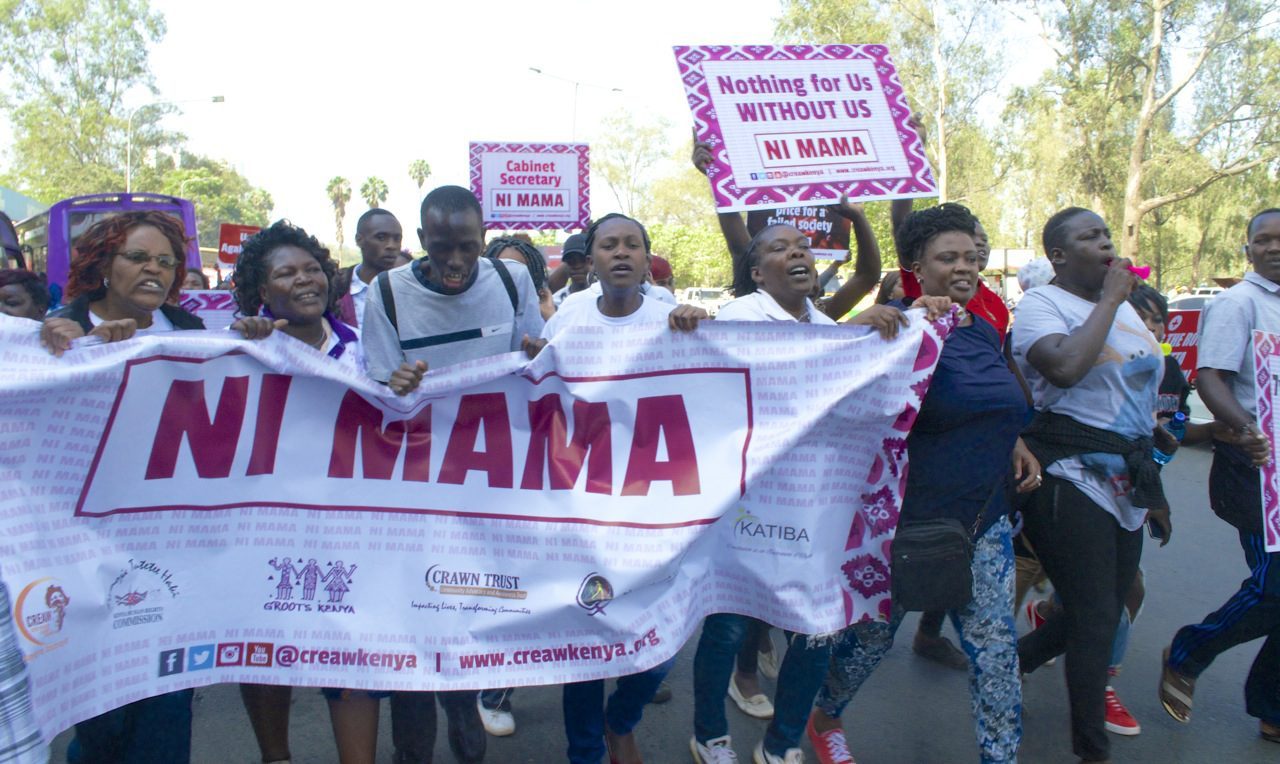
The changes in government announced on Tuesday by President Uhuru Kenyatta have raised a ray of hope for a gender balanced public service.
In the fresh changes, Mr Kenyatta appointed Betty Maina as Industrialisation Cabinet secretary and 15 new chief administrative secretaries (CAS) — eight are women.
The nomination of Ms Maina raises the number of women in the Cabinet to seven. They are Amina Mohamed (Sports, Culture and Heritage), Margaret Kobia (Public Service and Gender) and Farida Karoney (Lands and Physical Planning).
Others are Raychelle Omamo (Foreign Affairs), Sicily Kariuki (Water) and Monica Juma (Defence).
The CAS include Rachael Shebesh, Maureen Magoma and Winnie Guchu. Others are Wavinya Ndeti, Linah Jebii Kilimo, Ann Martha Mukami, Mercy Mukui, Mumina Bonaya and Nadia Ahmed Abdalla.
However, pundits say seven women in a 21-member Cabinet is still far from achieving gender equality compared to other countries in the region such as Rwanda and Ethiopia.
QUALITY IS IMPORTANT
Mr Chryspin Afifu, a gender and governance policy adviser, however told the Nation that the changes are a win for women in their quest for gender parity in public service.
He said the new appointments raise the ratio of women in the Cabinet to 30 per cent.
“We need to see a lot of policies being put in place among them women and sports, water, women and lands and property rights, employment in Middle East countries where reports of women being mistreated continue to come in,” he said.
Mr Afifu added that the push for gender parity should not only be pegged on numbers, but also on whether the women will do a good job.
Kenya has made progress in appointing women to powerful Cabinet positions. However, the Treasury seems to be still under the men’s stranglehold.
Since 1963, no woman has been appointed to head the ministry even as the country inches closer to achieving the two-thirds gender parity in Cabinet composition.
POWERFUL DOCKETS
Prior to 2013, the ministries of Defence, Foreign Affairs and Commerce — considered powerful dockets — were headed by men.
In his first Cabinet appointments, Mr Kenyatta took a laudable step towards the constitutional requirement of two-thirds gender representation by opting for women to head these crucial ministries.
Raychelle Omamo made her maiden entry into the Cabinet as CS for Defence. Foreign Affairs was handed to Amina Mohamed while Phyllis Chepkosgey headed the East African Affairs, Commerce and Tourism.
Women have held the substantive ministries of public service, education and health in succession. And now Water and Industrialisation ministries would be held by women should Parliament approve their appointment.
Still, men have a firm hold on Finance. Nigeria, the largest economy in Africa with a $376.3 billion gross domestic product (GDP), has had three women running the Finance ministry consecutively since 2011.
Ms Ngozi Okonjo-Iweala headed the ministry between 2011 and 2015, handing it over to Kemi Adeosun, who in 2018 passed on the mantle to Zainab Shamsuna Ahmed, the incumbent.
RWANDA LEADS
Other 16 countries in Africa with past or present female Finance ministers include Tanzania, Uganda, Liberia, the Gambia, Namibia, Togo and Mozambique. Others are Zambia, Burkina Faso, Cape Verde, Burundi, Chad, Benin, Lesotho, Guinea and Tunisia.
Mercy Jelimo, an officer at the Centre for Rights Education and Awareness-Kenya, said women are capable of holding powerful positions, adding that time was ripe for the President to entrust them with the responsibilities.
She said that the appointment of seven women to the Cabinet is good progress considering Kenya’s history of marginalising women in leadership.
Rwanda is one of the countries in Africa with the most gender balanced Cabinet as women form half of the 26-member Cabinet.