Uncategorized Archives - CREAW KENYA

WOBN1-1280x606.jpg

December 16, 2025by CREAW
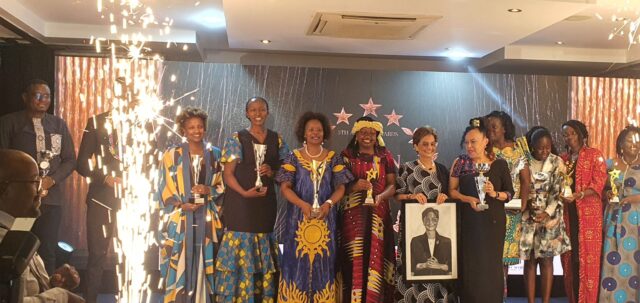
WOBN winners at the recently concluded award ceremony

This quarter came with moments of reflection, pride, and celebration for the Centre for Rights Education and Awareness (CREAW). We are deeply honored to have our work recognized through two prestigious awards, affirming our long-standing commitment to advancing women’s leadership, gender equality, and human rights in Kenya and beyond.

Governance and Human Rights Award – 2025 NGO Awards

CREAW was awarded the Governance and Human Rights Award at the 2025 NGO Awards, a recognition that speaks to decades of intentional, values-driven work.

This honor reflects our unwavering commitment to promoting women’s leadership, protecting human rights, and strengthening governance structures that center dignity, equity, and justice. It is also a powerful reminder that this work is never done alone. The progress we continue to make is possible because of the solidarity, trust, and support of our partners, allies, and communities.

CREAW team receiving the Governance and Human Rights Award at our offices

1st Runner-Up: Organization of the Year – WOBN Awards

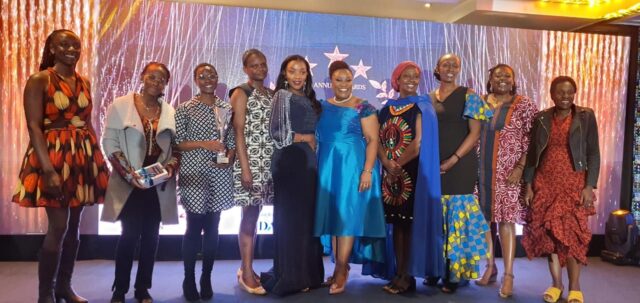
At the 5th Annual Women on Boards Network (WOBN) Awards Gala, CREAW was recognized as 1st Runner-Up in the Organization of the Year category.

This recognition celebrates our continued efforts to uplift and empower women leaders within CREAW, across the communities we serve, and among the many incredible women we work alongside every day. For over two decades, women’s and girls’ rights have been at the heart of our mission. Our approach has always been bold, innovative, and holistic, driven by the belief that women’s voices must be heard loudly and clearly.

This award is a testament to our vision of a just society where women and girls are valued, respected, enjoy their full rights, and live in dignity.

CREAW team accepts the organisation of the year – 1st Runner Up award at the WOBN gala

We extend our sincere gratitude to our staff, partners, supporters, and communities who continue to walk this journey with us. These awards belong to all of you who believe in the power of collective action and feminist leadership.

As we celebrate these milestones, we remain grounded in our purpose and energized for the work ahead.


Nasimiyu.png

November 23, 2025by CREAW

Justin Nasimiyu, a mother and resident of Kibra, has walked a challenging path as a survivor of gender-based violence (GBV). Her journey is one of courage, reflection, and starting anew.

For years, Justin endured a painful marriage with a violent, alcoholic husband. He not only disregarded her feelings but also brought another woman into their home to humiliate her in front of their children. Justin faced daily beatings, insults, and was left to raise her children alone, as her husband support the needs of the family. “I lived through pain every day, but no one seemed to notice. I had to carry the burden alone,” she recalls quietly.

One day, Justin realized she couldnt continue living like that. After deep reflection, she made the brave decision to walk away and take her children with her. Leaving was not easy, but she knew she had to do it for herself and her children.

A close friend who witnessed Justin’s struggles introduced her to CREAW, where she was enrolled in the Jasiri Program. This connection transformed her life. Through Jasiri, Justin received counseling that helped her begin to heal from the emotional pain she had carried for so long. She also participated in financial literacy training, learning essential skills for managing her business. She was taught the importance of pursuing her passions, saving money for personal use, business, and emergencies, as well as keeping accurate records of every coin earned and spent.

“Before Jasiri, I didn’t know how to manage anything. I was just surviving, but they taught me how to plan for my life and my future,” she expresses.

After completing the training, Justin received a grant that enabled her to open her own salon business. From that moment on, her life started to improve. Today, Justin can comfortably pay school fees and provide food for her children, allowing her to support her family without the daily struggles that once weighed her down. “I now feel proud when I can meet my children’s needs without begging or waiting for someone to step in,” she says with a soft smile.

Justin is deeply grateful to Jasiri for giving her the opportunity to rebuild her life. “Jasiri came through for me in a way my friends and family could not. They helped me when I had no other way out,” she shares sincerely.

The difference between her past and present is stark; she has gone from days filled with pain and fear to days filled with hope and growth. She now has the strength to support her children even when they face challenges in school.

“To all the women going through the same thing, don’t sit in silence, waiting for friends or family to save you. Look within yourself and ask the hard questions. Staying too long in suffering can destroy you in the end,” she advises. Justin encourages women to share their stories and seek help from people and organizations that can genuinely support them.

Justin is thankful to Jasiri for pulling her out of a life of pain. She hopes Jasiri will continue to encourage and support her as she raises her children and builds her life.

The Jasiri Program aims to enhance the resilience of GBV survivors, increase their participation in economic opportunities, and shift social norms to create an enabling environment for them to thrive in the world of entrepreneurship and work. The program is implemented by a consortium comprising Centre for Rights Education and Awareness (CREAW), Grassroots Organizations Operating Together in Sisterhood (GROOTS Kenya), Collaborative Center for Gender and Development (CCGD), Centre for Domestic Training and Development (CDTD) and Advocates for Social Change Kenya (ADSOCK in partnership with the Mastercard Foundation. 


Screenshot-2025-09-01-at-12.23.30.png

September 1, 2025by CREAW

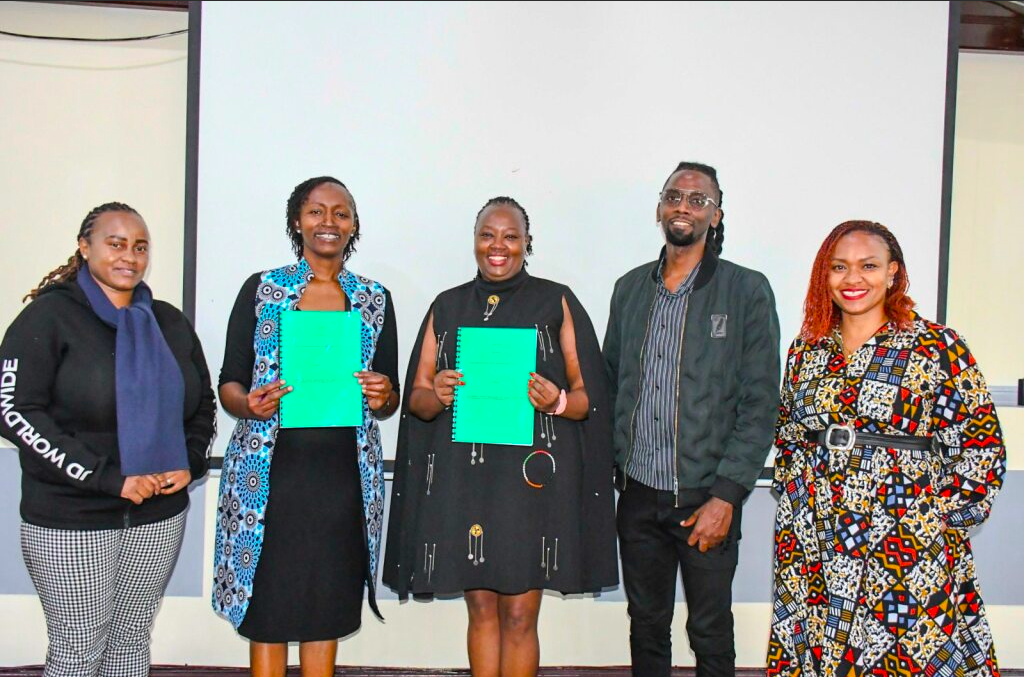
On 7th of August 2025, CREAW in partnership with the Embassy of Sweden in Kenya, signed agreements with seven grassroots Women’s Rights Organizations (WROs) from Tharaka-Nithi, Narok, Nairobi, Meru, and Marsabit counties. These organizations are at the forefront of advancing gender equality in key areas including addressing Gender-Based Violence (GBV), promoting Sexual and Reproductive Health and Rights (SRHR), and nurturing young women in leadership.

This partnership has come at a right time, given that globally, only 0.13% of Official Development Assistance (ODA) reaches WROs, despite their key role in driving social change. By channeling resources directly to local organizations, this collaboration marks a significant shift towards localized solutions. It acknowledges that women-led organizations, working closest to the issues, are also best positioned to craft sustainable solutions for their communities.

Through this approach, the funding will be localized, feminist leadership strengthened, and grassroots organizations empowered to continue their essential work. The support will also contribute to recognizing and enhancing economic opportunities for women, while ensuring that advocacy is translated into tangible action at the community level.

“We are excited about this partnership. By investing in local women-led organizations, we are not only growing a vibrant ecosystem but also promoting sustainable change in our communities,” noted CREAW’s Executive Director, Wangechi Wachira.

The partnership between CREAW and the Embassy of Sweden in Kenya is more than a funding agreement, it shows commitment to building resilient, women-led movements that champion justice and equality.


Screenshot-2025-08-19-at-15.06.53-1280x720.png

July 18, 2025by CREAW

In this publication, we spotlight the leadership journeys of 25 Women’s Rights Organizations (WROs) that have been supported by CREAW under the WVL program. Each of these women leaders have grown into a driving force for change, tackling some of the most pressing issues facing women and girls today, ranging from gender-based violence and economic inequality to reproductive health rights and political participation. As you explore the pages of this book, you will encounter the diverse and dynamic approaches these women have employed to empower women and girls. Their journeys are marked by resilience, creativity, and an unwavering commitment to justice and equity.


The impact of their work extends beyond the individual lives they touch; it resonates across the nation, contributing to a broader movement that seeks to reshape Kenya into a society where every woman and girl can realize her full potential. We invite you to be inspired by their stories, to learn from their experiences, and to join us in celebrating their achievements.


Screenshot-2025-08-19-at-15.09.42.png

July 18, 2025by CREAW


In commemoration of the 30th anniversary of the Beijing Platform for Action (BPfA) in 2025, Kenya prepared the Beijing+30 report, covering the period from 2020 to 2024. This comprehensive document assessed the country’s progress in implementing the BPfA’s critical areas of concern, aligning them with the Sustainable Development Goals (SDGs).

The report highlighted key achievements, including the integration of gender perspectives into national development plans and the strengthening of legal frameworks to promote women’s rights.


Screenshot-2025-04-08-at-13.15.30.png

April 8, 2025by CREAW
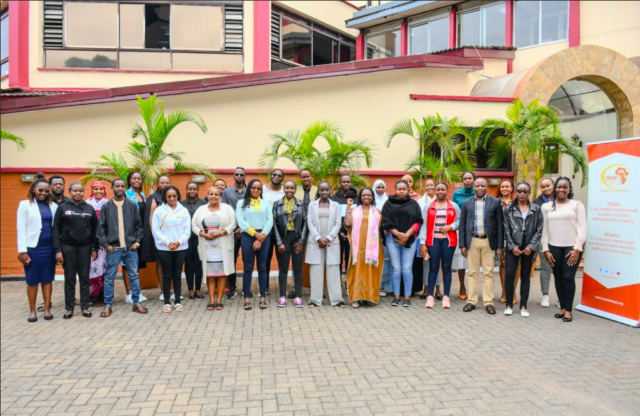
CREAW team celebrates the launch of the revamped culture handbook

It is no secret that culture eats strategy for breakfast.

Which is why as CREAW celebrates 25 years, we proudly unveiled our revamped Culture Handbook—a reflection of who we are and where we’re headed. As we experience significant growth, we recognize the importance of staying agile and responsive to the needs of our team, stakeholders, and participants.

This renewed culture embodies our commitment to fostering a supportive, high-performing environment where everyone thrives while championing CREAW’s vision every day.

The revamped CREAW Culture Handbook has been designed to defines our identity, values, and way of working. It outlines key principles such as Synergy, Professionalism, Respect, Trust, and Integrity values that guide how we interact with each other, make decisions, and deliver our mission. As an organization committed to advancing gender equality and social justice, having a clear and intentional culture is important. This handbook ensures that all staff, participants and stakeholders understand what CREAW stands for and how we embody these values in their everyday work. By aligning our behaviors with these principles, we create a strong foundation that drives both individual and collective success.

At the heart of it all is our mission: to transform the lives of all women and girls by championing gender equality, rights, and social justice. We envision a just society where women and girls are valued, respected, enjoy full rights, and live in dignity.

Read our culture handbook here


Narok_Reformed_Cutter-1280x853.jpg

April 22, 2022by CREAW

In the year 2011, the Kenyan government passed the Prohibition of Female Genital Mutilation Act into law, imposing harsh criminal penalties for cutting. Global efforts have accelerated progress towards the elimination of female genital mutilation (FGM) for the past decade.

In cultures where FGM is entrenched in tradition and social norms, it takes courage to speak up against it. One such voice is that of 62 year old Nooretet Saidimu from Olootingual village in Narok County. The reformed cutter in now spearheading the protection of girls against the vice, albeit one village at a time. We were interested to find out what motivated the U-turn from a perpetrator to a protector.

Why is Female Genital Mutilation (FGM) still being carried out? 

Female genital mutilation was part and parcel of our life because it is a culture we found in existence. It signified the rite of passage from a girl into womanhood. Once a girl had been circumcised, she was ready to be married off. Their ages would range from 9 year old to 15 year old girls.

Talk to us about how you became a circumciser and what really motivated you into the practice.

Money was my biggest motivation. During peak season I would cut almost 50 girls for Kes 3000. That was quick money. I have been a traditional circumciser for over 20 years. Unlike others, none of my siblings or even mother was a cutter. Majority of women in this community have gone through my hands. However, I noticed recently that the police officers as well as the area chief were on our case, claiming what we were doing was a crime. I confronted our area chief because his mother was a retired circumciser, whereas I am the one who circumcised his wife before he married her. I felt like he was misleading this current generation of young girls.

So how did you go about it since you were now being on the local administrators radar and where exactly was your turning point?

I started hiding the girls in the bushes, where we would do the initiation. Girls would be brought in the forest at night where I would initiate them and nurse them to recovery. One day the police got wind of what I was doing and came to rescue the girls in the forest. We took off with the girls who were nursing fresh wounds. Unfortunately one of them died due to excessive bleeding while we were being pursued by the police. Though I know lack of proper care and the cold in the forest must have contributed to her being weak as well. That was my turning point.

Did you immediately let go off the practice and turned a new leaf?

One day some community champion came over to my place to have a candid discussion with me in regards to FGM. After we had that long discussion, she convinced me to go for some training that they were conducting in Narok regarding FGM. I was hesitant to go since I thought it was a trap to arrest me ( she chuckles covering her face) but I later on decided to go.

Other than being a “cutter” were you engaged in any other economic generating activity?

No. I solely looked forward to the initiation seasons. Once in a while I would do beadwork as a pastime activity but not for sale. For me FGM was not only part of my culture but also an income generating activity. When I decided to stop, my concern was how I was going to make money now that this stream of income had been closed.

What changed your mind and attitude towards FGM to the point of being a champion of girls education?

One day our trainers took us to a graduation ceremony in Meru county where a girl was being fated. I could not control tears in my eyes. I realised how I had hampered girls in my community from securing education and graduating to better their lives. That is when I swore not to champion for FGM, rather advocate for girls education.

Other encounters that affirmed your pursuit to protection of girls against FGM?

One day we were invited for a community forum with the local administrators here in Narok as reformed cutters. I noticed the District Officer is a Maasai woman from my community. I asked her privately if she had undergone the cut and if she was married. This is because girls in my community did not hold such high ranking positions at places of work.  To my surprise, she confirmed not being initiated and was equally married to a Maasai man. That is when I realised that there are men who are marrying women who are uncut.

Another incident happened when I accompanied my fellow champions to a health facility in the neighbouring town. We visited the labour ward where women who were brought in ready to deliver were accommodated. I noticed those that had undergone the cut would take longer in labour and would sometimes develop complications, whereas the other ones took little time and delivered naturally. That is when the doctor confirmed to me that FGM has a direct implication to difficulty during child birth.

How has it been so far, championing for the protection of girls against FGM?

It has not been easy since we are in a patriarchal society, where men dictate our culture. I am engaging young men who I believe are the change makers and the ones who will transform this community. They are now championing for the protection of their sisters and are coming out publicly to marry women that are not circumcised. I am also standing up for my daughter who have not gone through the cut. One has graduated from university as a medical doctor, she is now a beacon of hope to her peers.

Any regrets?

It really pains me knowing that I was shedding innocent blood in the name of culture. I honestly pray that God forgives me for I was acting out of ignorance. For the remaining days of my life, I want to ensure this coming generation in my community does not go through what we went through.

Parting shot

I want to thank CREAW for taking us through the extensive training on effects of FGM. I feel like am living life afresh since I have a new purpose. I am skilled and very confident to talk about child protection and champion for girls education. Wacha wasichana wasome (Let our girls get education)

According to the Kenya Demographic Health Survey 2014, overall prevalence of FGM has decreased from 38 per cent in 1998, to 21 per cent in 2014. Various stakeholders are urging both state and non-state actors to allocate more resources to eradication campaigns, as FGM is still being carried out in some communities. Narok County is one of the counties in Kenya where FGM is still prevalent and is believed to have contributed to the high number of teenage pregnancy and child marriage.


Mural.jpg

January 26, 2021by CREAW

In the wake of the Covid-19 pandemic, government enforced social distancing restrictions among them the stay at home order in a bid to suppress transmission of the Coronavirus and keep people healthy, but for many women and girls home became a ‘danger zone’ as they were forced to be in the ‘lockdown’ with their abusive spouses, partners and family members and cut off from supportive network and resources that could help them.

The ordeal of one evening morning in early July, brings gloomy memories to 38 year old *Nafula (not her real name). Her husband of three years had turned against her; what started as verbal insults progressed real quick into physical leaving her bruised.

“It was not the first time that he was abusive to me. At one point he hired goons to beat me up,” recounts Nafula.

Nafula’s own abusive experiences form part of the statistics of countless women and girls whose lives have been affected by the wave of gender based violence during the pandemic. In December 2020, a report by the National Crime Research Center indicated that incidences of gender based violence had increased by 92 percent in the period of January and June compared to that of January and December in 2019, with murder, sexual offences, defilement, grievous harm, physical abuse, child neglect and child marriages taking the larger chunk of cases.

Similarly, the Center for Rights Education and Awareness (CREAW) has received increased cases of women and girls reporting violations. On average, CREAW would received 20 cases in a month, with the Covid-19 pandemic, the numbers have spiked to 34 cases necessitated by the social and economic effects of COVID-19 on women and girls. Consequently, the demand for legal and counselling support was on the rise.

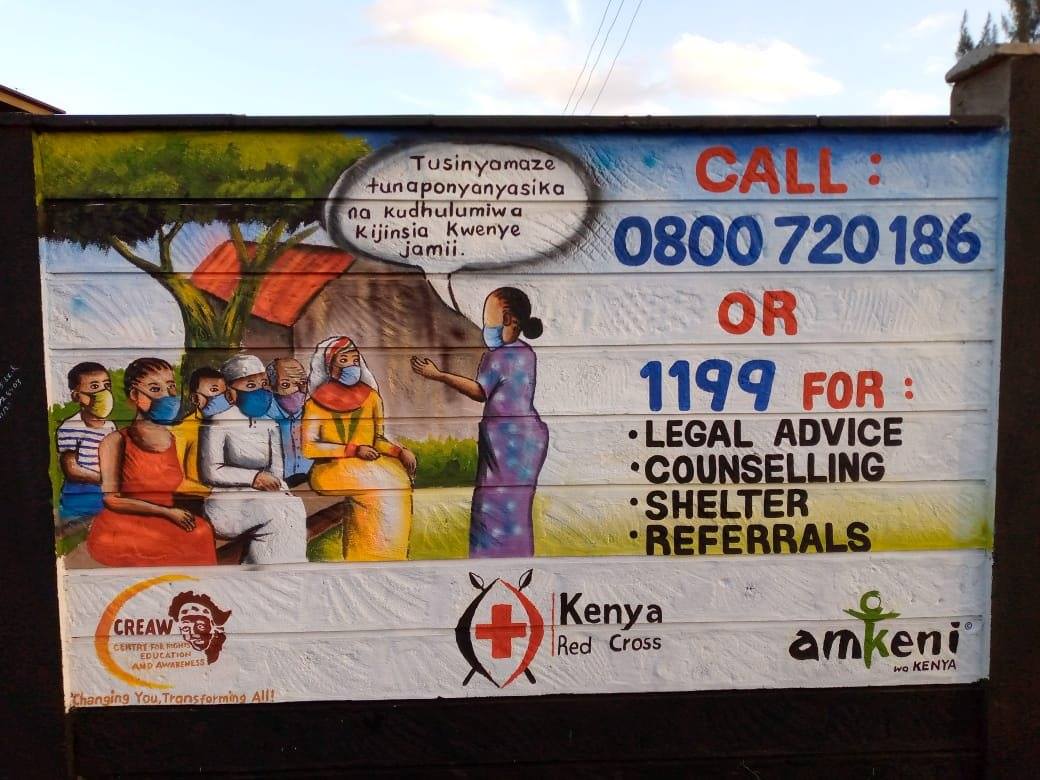
Amidst the surge, CREAW rolled out a 24 hour hotline-0800-720-186 to help survivors like Nafula to access support services virtually including legal information, counselling, access to safe shelters and referrals to other GBV services.

With the support from grassroots community champions and messaging on community radios and social media, CREAW has been able to publicise the hotline that now have over flow of cases reported even from the counties in the outskirts of Nairobi.

“Through the hotline, survivors are able to get timely legal aid services, information and psycho-social support to rebuild their lives,” says Nereah Oderah, the lead Counsellor who supports survivors through the helpline.

With the support from UNDP, CREAW has adapted its interventions to provide free tele-counselling and pro-bono legal services to survivors of gender based violence among them, women and girls who reside in the informal settlements of Nairobi. A total of 597 GBV survivors benefitted from pro-bono legal assistance & advice during the pandemic period.


Gladys-Kosgey.png

June 7, 2020by CREAW

At 49 years old, Glady Kosgey knows too well the wins of having girls go to school. As a mother, her only hope has been to see her three girls build better futures. Despite the inequalities that many other girls from her community faced in their efforts to gain education, she ensured that her three girls did not undergo FGM and were able to complete their tertiary levels of education. Today, she continues to spread her voice out, traversing through Transmara, Narok County and beyond to raise awareness on the need to have more and more girls from pastoralists communities enrolled in school 

 “It is sad that many families still view girls as a waste of resources as they would soon be married off,” says Gladys, a renowned women’s rights activist, “I want girls to get the education I never got as a young girl.”  

In 2003, Kenya introduced free primary education in a bid to increase enrolment of children: boys and girls in school. This was to put girls and boys at a level playing field in realizing their rights to education. Since then, a number of policies and laws have been domesticated at the national and county levels to bridge the gender gap in access to basic education including enacting a law to end FGM. Despite that, girls ailing from nomadic communities still do not enjoy their right to education. 

In 2019, Narok was singled out as the County with the highest number of teen mothers with 40% of girls aged between 10 and 14 forced to sit for their Kenya Certificate of Primary Education from their hospital beds as they recuperate from childbirth. This coupled with age-old practice of female genital cutting that force girls out of school as they are married off to well-off elderly men in exchange for cows. 

Against this, Gladys and other activists enjoined in the community mobilization efforts united to galvanize support and fundraise for school fees and school essentials for 111 students in the area who were transitioning to secondary schools.  

“My ears are always out for new opportunities for girls. When I got wind of the Presidential bursary that targeted needy children in the county, I mobilized fellow women and we approached the County Commissioner,” she says, adding that it was not an easy task for them to get a hearing as there was a predetermined list of students, majority of who were boys. 

 “The next step was to petition all the county authorities on the matter. We wrote to the County Commissioner keeping the office of the Woman Representative, and the County Executive Member of Education in copy to demand for accountability and that the bursaries be allocated on equal measures among boys and girls,” explains Gladys who is happy that their steadfastness paid off; 57 girls got scholarships and are now schooling in various boarding schools in the County.  

As we engage, I get a sense of her outspoken nature and her grip of the cultural disparities that affect girls among the pastoralist community where she ails. She tells me that her outspokenness did not just begin yesterday; it all began in the 2000s when she stood to be elected as a councilor. And even though she was not elected then, her unwavering zeal came into play in 2013 when she vied again to be a Member of the County Assembly. Her reasons; “ I wanted to show other women that it is possible to be at the table where key decisions are made. With the culture that mutes women’s voices, I believe our collectiveness as women is part of the solution to the problems that affects us, our sisters and our daughters,” says Gladys who wears many hats. Currently chairs the Maendeleo Ya Wanawake ( in her Sub-County. 

And what does the future look like for the lifelong women and girls’ rights champion? 

“For starters, I am grateful for the support and trainings offered by CREAW in our community awareness raising efforts,” she says in reference to the Wajibika initiative that is supported by UNTF and implemented by CREAW in Narok and Isiolo Counties. 

Under Wajibika, the women-led groups are capacity built on ways to mobilize and rally communities around on issues that affects the wellbeing of women and girls as well as engage with authorities to effect policy changes that addresses the plight of women and girls more so, FGM and other forms of gender based violence. 

Overtime, Glady’s and her co-activists have carried out community conversations targeting parents, women, men and the community elders in an effort to transform their behaviors and perceptions on the traditional practices, rituals and attitudes that perpetuate discrimination and infringement of women and girls’ civil liberties. 

“Slowly the community is shaping up and growing more sensitive the rights of women and girls and equity issues; now we have more girls going to school and women are able to own and gain access to land and other matrimonial properties. We are not there yet, but we are keep on till every girl and woman is respected, able to go to school, marry when they want and are able to lead dignified lives free of violence,” she concludes. 


IMG-20190705-WA0038.jpg

February 4, 2020by CREAW

By Christine Ogutu

Thursday afternoon, the weather is chilly and the usually busy Githongo pitch has no sight of any young ones kicking around the ball in the pitch or athletes working out as in the usual. In the surroundings, the densely constructed shelters are slowly shifting the small rural town of Githongo to an urbanized community center.

Utawala Chiefs Group at the Githongo Chief Camp. PHOTO/CREAW

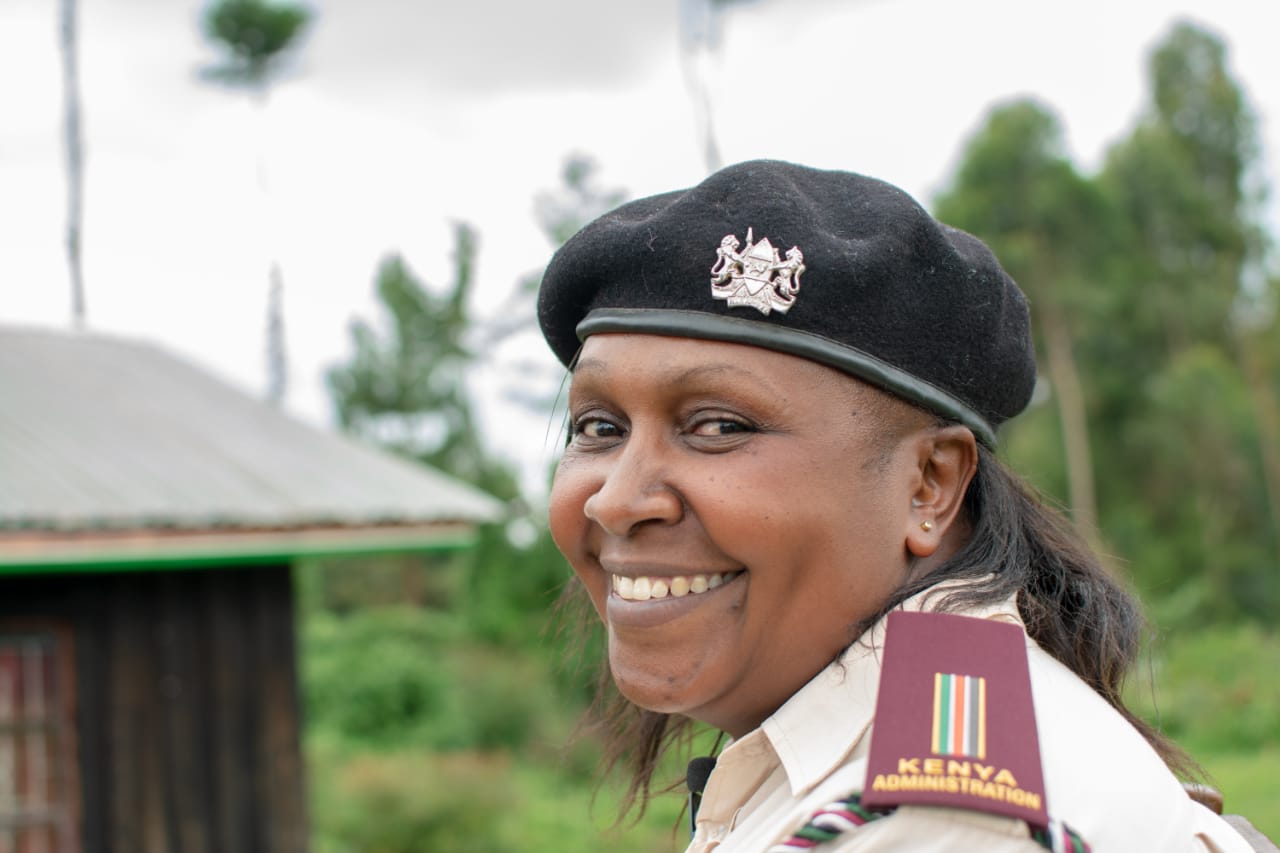
Looking on to the vast field in the left corner is the Githongo Chiefs Offices. Outside, a group of women and men are seen chit chatting. Their starched and well-pressed brown khaki uniform brings their steadfastness to the fore; their threaded shoulders mark them out as protectors and defenders of the larger community as their call of duty bestows them.

The uniformed women and men are Chiefs from Imenti Central, Meru County who came together to establish the 14 members Utawala Chiefs Group with an aim to better provide coordinated response to GBV matters in their localities. Today, they are having their usual biweekly meetings to discuss the emerging issues in the community.

At the location level in Kenya’s administrative system, Chiefs are charged with mandate to maintain order within their jurisdiction. For the Utawala group, the work in the community goes over and above their call of duty. They derive passion from a violence free society where women and girls live in dignity, are better protected and able to move freely and thrive and thus their continued conversations and coordinated response to the ills that bedevils their community.

PHOTO/CREAW

For more than two years now, they have been working together, raising their voices and driving conversations through Chiefs’ Barazas to educate their communities on the ills of GBV and the channels of reporting.

“I was privileged to be part of the Chiefs’ training that taught them on how to handle and support survivors when they report violations,” says Faith Kagwiria, a Chief at Kathurune West Location and also a member of the Utawala Chiefs.

As the first respondent when an incident occurs, it is paramount that Chiefs like Faith are well vast with the roles and responsibilities they play in regards to the various matters reported thus, CREAW through the Haki Yetu Jukumu Letu initiative came in handy to build their capacity to enable them to effectively support survivors and respond to the needs of the locals.

The initiative now in its third year of implementation and supported by the Embassy of Netherlands in Kenya equips Chiefs among other duty bearers with the knowledge on GBV related laws, how to document and report matters as well as how to set up community structures that promotes safe spaces in the community.

“Not a day goes, without widows flocking my office puzzled, confused and bewildered when their in-laws take away their matrimonial lands,” narrates Phyllis Mungatia who is the Chairperson of the Utawala Chiefs.

She says the inequalities when it comes to access and control of matrimonial land particularly in the agricultural rich region of Meru disenfranchises women.

It is such that draws the Utawala group to work with a unity of purpose. Their work in the community is slowly gaining momentum with the continued conversations, the community is slowly opening up and speaking out on matters such as incest that were shelved at family level.

“Apart from the weekly chief barazas, we also conduct targeted dialogues with men, women and in schools,” explains Stella Kinoti.

PHOTO/CREAW

She goes on to say that they have also consistently taught the village elders and area managers on how to tackle GBV noting that it takes both individual and community actions to create a ideal community for all. The Nyumba Kumi clusters have also come in handy to map out cases like female genital mutilation and child neglect.

But as Lucy Magiri puts it, their success has not been without the challenges. Sometimes they are forced to flee their homes or handle cases under cover for fear of their lives. Nonetheless, together, they affirm that their actions are just a starting point to lasting change in the community. They are positive that with their collective efforts, their neighbourhoods will violence free.