Blog Archives - Page 10 of 13 - CREAW KENYA

Pastor-Maina-1-1280x853.jpg

January 16, 2020by CREAW

As we approach the New Life Tabernacle church in Nkubu, a sweet, soothing melodious sound fills the air. We are mesmerised! The heavenly tones are weaved in such a beauty that creates an aura of peace and serendipity.

Saturday evening and the sunset has filled the sky with deep red flame, setting the clouds ablaze. Inside the church, the red and sky blue curtains drapes around the iron sheet thatched walls, illuminating our minds to a rather conversational evening.

Seated at the right corner is Pastor Anthony Maina, deeply consumed in the melody. His fingers run over the piano keys so gracefully and he closes his eyes as he feels each melody he plays. He looks up and smiles to welcome us to the pulpit that has been his way of life for the last 20 years.

Maina’s calling goes beyond the pulpit; and as he tells it all, his vision has been to see an empowered society- his voice from the pulpit not only feeds his flock scripture wise, but also transfers words of nobility that mobilises his flock to address the plight of the community.

“For me, an ideal society is where everyone is aware of what is good and what is bad. I believe that everyone is gifted to make a difference however small their actions are,” he says holding his head a little higher; depicting hope for better.

Three years ago, Maina and 80 other pastors formed the Imenti South Pastors Association (ISPA); bringing together clergymen and women from various denominations with a common goal of uplifting the society and providing support to one another.

“We realised that we needed a collective voice to speak out on issues that affects our community,” he says.

Maina now the chairperson of the ISPA says he was privileged to be part of the community actors who were trained by the Center for Rights Education and Awareness (CREAW) on how to map out gender based violence, mitigate it and work with other county structures to ensure that women and girls are better protected and able to thrive in the community.

As a religious leader, Maina is an influential member of the community and as such his opinion on social matters is held with high regard.

Pastor Anthony Maina interacting with the New Life Tabernacle Church faithfuls. PHOTO/CREAW

His order of day entails daily church summons and pastoral visits in the community. It is here that he converses against social ills such as gender based violence (GBV) and advocates for respectful relationships among men and women.

As such, CREAW’s Haki Yetu Jukumu Letu initiative in partnership with the Netherlands Embassy works to capacity build religious leaders like Maina to continuously engage in conversations on matters GBV at the pulpit and in wholesomeness to shun bad behaviors and encourage community to coexist peacefully.

“Talking about GBV is not easy. Talking about it to a population that is highly patriarchal is even harder and requires skill, patience, charm and persistence,” says the Reverend whose calm, cheerful and friendly demeanour continue to bestow community confidence in him.

During our interactions, his community oriented perspective draws us to the personality and qualities that has enabled thrive as the man of cloth for decades, carving out a niche for himself as a much trusted ear of confession, shoulder to lean on and from whose lips wise counsel can be found by hundreds of his flock in the neighborhoods.

In the community, his deeds and that of fellow clergy in the ISPA speaks loud- a Kilometer away is the Nkubu Police Station where they are currently putting up a holding cell for women.

In one of the Court Users Committee, which he is a member, he got a report about a seven months old baby who died in the police holding cells.

“It is very undignified to lose a young life in such a manner. I engaged my fellow pastors and together we visited the station to ascertain the condition. To our surprise, adults were being made to share cells with children in dilapidated condition,” he narrates, explaining that they made a resolve to raise funds to establish a standard cell with sanitary structures, beddings and child friendly cells for women at the station.

He says the CuC sittings have enlightened him on the operations of the legal systems. More so, he has been able to understand the Alternative Dispute Resolution Mechanisms through the various court training. With the knowledge, he has been helping families resolve land feuds amicably.

“Every year, we map out the immediate social needs in the community, raise funds to actualise it and give it to the community,” say the Reverend.

In 2018, the group visited Meru Women Prison and saw the need for a more women friendly space. Again the ISPA through their table banking monthly contributions, bought mattresses, sanitary towels and other personal effects. This has gone along way in improving living conditions for Women in prisons.

One of the issues that Meru Community grapples with is the disinheritance of women especially when it comes to land ownership. This the Maina, attributes to lack of awareness on the law and inheritance.

“It is unfortunate that when husbands die, their widows are disinherited and left without means to build their livelihoods- we end up with a community where women are oppressed and a generation that is hopeless. Such is a source of disharmony. We must advocate for equal share of land,” explains Maina.

and about the future?

“We are looking forward to establishing a Counselling Center to help women and children deal with psychological trauma. We want to prevent cases of femicide and other forms of GBV. Thus we are engaging like-minded organisations and government structures to support the initiative,” he says.

Writing by Christine Ogutu

33944918_2171883972828533_6094932650315743232_o-1280x853.jpg

January 15, 2020by CREAW

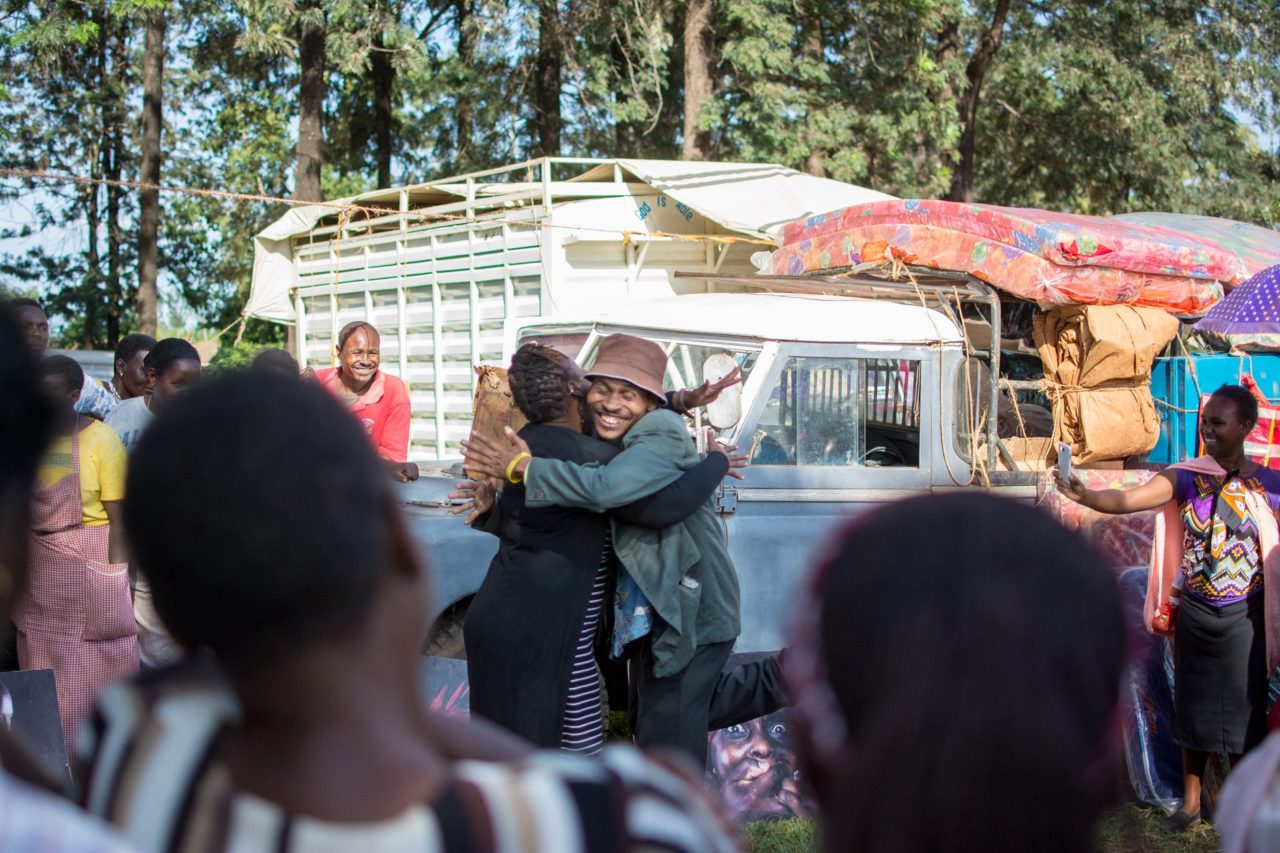
Meru Youth Arts Program (MYAP), have revolutionised their skits to not only build a buzz but also rally their communities against retrogressive cultural practices that promotes violence against women and girls.

Amid the wheat tucked in greenery fields, Meru stands tall as one of the counties that has enacted a sexual and gender based violence policy geared towards the prevention, response and management of gender based violence but beneath the milestone, the youth who form the larger population of the agricultural rich region still stare at a myriad of challenges, perpetuated by the societal underpinnings.

MYAP members at their youth center in Meru. PHOTO/CREAW

From unemployment, mental health issues, female genital mutilation to unwanted pregnancies, and now the skyrocketing cases of femicide pitying the youth at the mercy of their own struggles.

But is it a case of a failed system?

Not exactly, as MYAP tells us during the recent interview with CREAW. Despite the grueling challenges, the MYAP are turning the tides, amplifying their voices to push back the ills that bedevil their peers and the community at large. To them, dramatized conversations are just a starting point to change.

“As we speak about reproductive health issues among young people, we are also addressing the gendered inequality that brings squabbles to the community,” explains Santa Kagendo, the Organizing Secretary of MYAP.

“We came together to galvanize our voices through arts. In this, we knew the society would identify with the issues that mostly affect them. Key among them; female genital mutilation that denies young girls bodily autonomy and put their lives at risks,” adds Santa.

For MYAP, the power of creative words cannot be underscored when addressing gender violence; a topic that is a taboo in most household. Activism through art not only gives them the power to empower their peers but also change societal attitudes regarding issues such as female genital mutilation and domestic violence.

“Dramatizing issues in local dialects brings to touch the issue at hand with the community. People are not only able to understand but also internalize what repercussions violent actions could bring to families,” says Santa.

Every week the MYAP group has two days set aside to develop their skits based on the issues that emerges in their localities. Most of them are not only activists but also change agents in their own rights.

On this particular Saturday morning when we meet at their usual youth center tucked within the Family Care Medical Center, they are having a discussion about the wave of femicide that has rocked their peers.

Leading the conversations is Jamila Mohammed as the young men and women take turns to voice out their opinions. After, they head on to Gakoromone Market; some two kilometers away where they mesmerize the onlookers with their multicolored costumes and props. Soon, the crowd builds up.

“It always begins with an icebreaker,” says Clinton Mwenda alias Skinny

“Their skit is set in a household with a family of six. The couple in their fifties at first paints a picture of a happy home but behind the scene, the husband is hooving around with a 20 year old clandestine who is also in a romantic affair with the son.

After awhile, the wife is made aware of the husband’s meanderings and the home turns chaotic with revelations of HIV infections.” – Such paints the reality of household marred by domestic violence. How then do they address it?

“Conversations with market sellers that follows the street theatre, gives them an opportunity to query the violent actions and discuss bad behaviours collectively. They begin to understand that violence is unacceptable and adopt positive actions,” says George Kimathi.

The end game to them, is that women and men foster respectful relationships. “From where we stand, we believe each person can be part of the solution,” explains George.

Apart from the street theatre, MYAP also holds community dialogues in the villages and behavior change conversations in high schools and universities around Meru. They also use mass media to create awareness on GBV issues.

“So far the reaction has been good especially the youth who are now more comfortable to report and discuss issues affecting them,” he says.

Beyond their artistic prowess, their successes are also depicted in the manner in which they build partnerships with key GBV actors and county government structures for effective and quality service delivery to the populations that their group exists to serve.

“For a long term the most facilities in the County lacked youth friendly centers. Most youth were shying away from seeking health in hospitals because the spaces were not favorable for them and so we petitioned the county and now we have two centers that serve the youth,” explains Santa.

Writing by Christine Ogutu


Lucy-Nkatha-1280x853.jpg

January 15, 2020by CREAW

“ Physical disability does not mean you’re mentally challenged.”

These are the words of Lucy Nkatha as she reflects of how  tough  it was for her to gain access education due to her physical disability. Today she is eloquently challenging the barriers that underpin the growth of differently abled persons and more so women and girls.

Lucy Nkatha participating in a learning forum on gender based violence in Nairobi. PHOTO/CREAW

As most children with disability growing up in the remote areas of Meru, going to school is an out of reach dream. Most schools are physically inaccessible to children with special needs like in the case of Lucy back then. She ended up spending most of her childhood in an orphanage just so she could get education. But even with that, her dream long journey to ascend to tertiary level of education proved futile- life at the orphanage was a hard one.

“My childhood was tough. I don’t feel I was able to realise my full potential,” says Lucy.

She says, she was discriminated by the community she was born and bread. From her experiences, she understood that change could only happen to other children who are differently abled if she used her voice to make it better for them.

Lucy Nkatha standing on the ramp at the Igembe Central CDF offices. Her actions saw the ramp established ease PWDs movement in the premises. PHOTO/CREAW

“Because of the stigma, families see persons with disability (PWDs) as a burden, thus most children are not able to get equal opportunities as other children,” she explains.

As a result, she founded the Kiengu Women Challenged to Challenge, a Self Help Group to advocate for the rights of Persons With Disability. To date, the group has attracted a membership of 30 other advocates who share in her passion.

Through the group, they continually engage the county government and the local administration to improve schools for children with special needs and to enact disability friendly policies to create a level playing field where PWDs can actualise their rights and lead better livelihoods.

“We realised that we have so many children in y village who were not able to go to school and so we approached the head teacher of a nearby school and together we did a proposal and was awarded Sh300000 which we used to fund the construction a dormitory,” she says while explaining that they continue to fundraise to ensure that they have a fully fledged special school in the next two years.

Lucy is thankful to CREAW for enhancing their skills and building their confidence to speak out and engage better with their community on issues of rights and equality.

Her successes also spread to the manner in which she also advocate for the improvement of public spaces to accommodate the needs of PWDs. The highlight of it all is when she and her group were able to successfully petition the Office of the County Development Fund in Igembe Central to construct a ramp to enable PWDs access the offices.

What did it take?

“When I saw the building I was enraged and I thought we needed accountability for our rights to be recognised. It took months exchange of letters and meetings. Finally the ramp is a reality and we are able to access all the floors in a two story building,” she explains.

She says the other part of the work that remains is to maintain the momentum in conversing with the community more so, parents about the needs and rights of PWDs to stem out the stigma completely.

and for the future?

“We want to spread beyond Igembe Central to other parts of the county. In the next five years we want to be a community based organisation that would make inclusion a reality in our community,” she says.

“It is time for people to focus on our abilities not our disabilities,” she concludes.

Writing by Christine Ogutu


Makadara-Dialogue-2-1280x757.jpg

January 15, 2020by CREAW

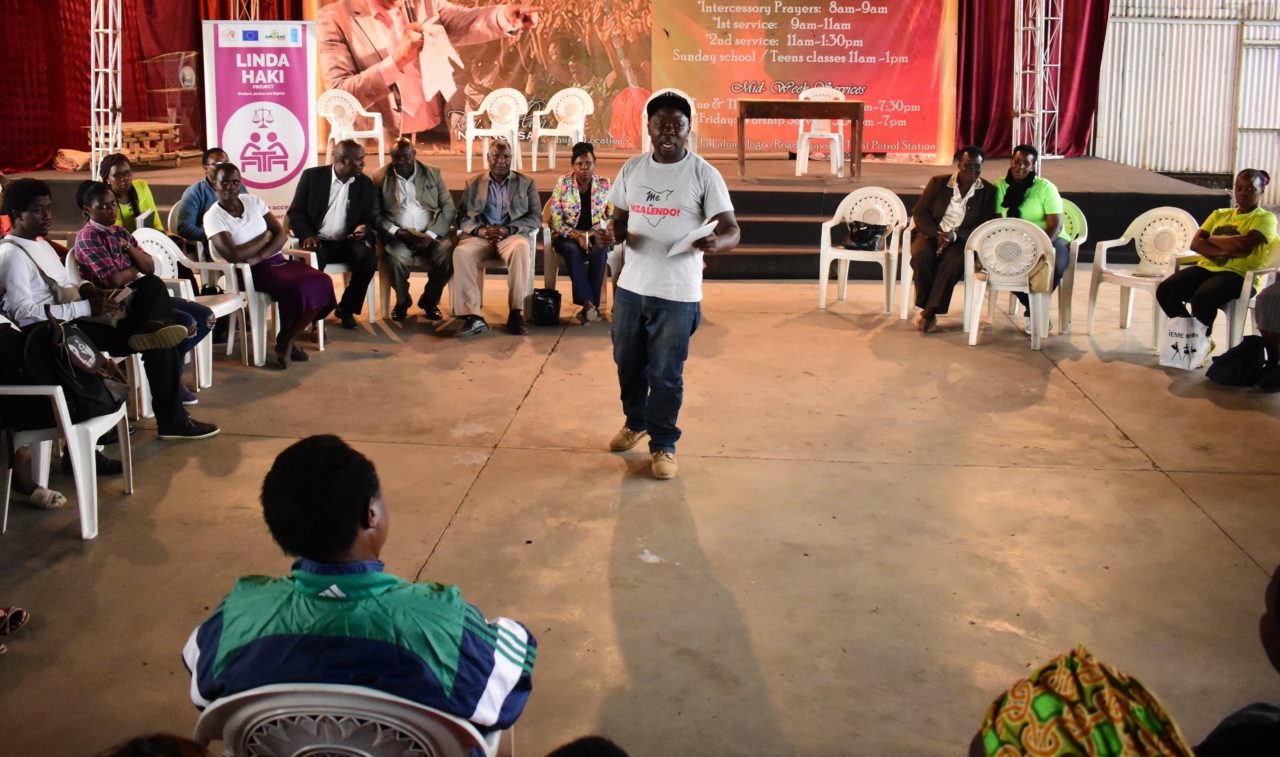
Thursday afternoon, men and women are gathered at the Tom Mboya Hall in Makadara to converse on rather difficult subject that is mostly unspoken in the households, the silence is even louder among the communities.

Tom Mboya Hall is synonymous with community gatherings that called for liberation in the clamour for independence in Kenya. And so, I gather that the ground where we are seated is symbolic enough; from the conversation, freedom calls- it is a day to let free and openly talk about domestic violence and by extension, other forms of gender based violence.

But first, a skit is dramatised…

“The play is set in a household with a family of six. The couple in their fifties at first paints a picture of a happy home but behind the scene, the husband is involved in a romantic affair with a 19 year old  who is also in a romantic affair with the son.

After awhile, the wife is made aware of the husband’s meanderings and the home turns chaotic with revelations of HIV infections.” –for a minute, a sharp silence follows, the melancholic faces connotes the realities that women and girls are forced to contend with in the various households.

Slowly and slowly, the murmurs transitions into a buzz of discussions. Ken Odaga a Community Champion leads the conversations.

From the conversations, it emerges that silence around gender violence makes women and girls more vulnerable and often compounds their sufferings. Today is a day to break the silence; notes Odaga.

Odaga, a long time resident of Makadara understands that the stigma around gender based violence (GBV) has contributed greatly to survivors not speaking out on their perpetrators and hence they are not able to get justice and heal from the harm done to them.

“In the conversations, we are making communities aware of their rights and the existing GBV related laws. This is a sure way of ensuring communities are involved in actions that addresses the vice,” he says.

Odaga also explains that, the skits makes it easier to communicate what would have otherwise been difficult to talk about given the social norms around issues like intimate partner violence that exists among communities.

The conversations are spearheaded by community champions under the Linda Haki project implemented by CREAW in partnership with the United Nations Development Programs.

The Linda Haki project aims at educating communities on their rights as provided for in the constitution to enable them seek legal redress and stem out gender based violence in Nairobi’s informal settlements of Kibera, Kamukunji and Makadara.

Under the project, Odaga and 60 other community champions were trained on the existing legal frameworks and GBV. From the knowledge, they have taken the initiative locals within their localities.

“Following the dialogues, community members are now opening up and debunking the myths around intimate partner violence and supporting survivors to deal with the violations,” says Odaga.

The community conversations have also instilled a growing interest among community members on the available laws that protects women and girls from gender violence.

Writing by Christine Ogutu


Linda-Haki-Launch-18-1280x853.jpg

October 10, 2019by CREAW

October 3rd 2019 marked a new dawn for the women and girls residing in Nairobi’s informal settlements as the Linda Haki project was launched.

Locals pose for a photo during the Linda Haki project launch. PHOTO/CREAW

The Linda Haki project implemented by CREAW with the support from the United Nations Development Programs aimed at increasing access to justice and legal aid services for the poor and vulnerable women in the informal settlements of Nairobi.

Speaking during the launch, the Nairobi County Director of Gender, Culture and Social Services Jane Waruguru lauded the efforts to enhance access to legal information, noting that the initiative is timely and will go along way in ensuring that the rights of women and girls are well respected.

“I am happy that the project will bring power to the people and empower them to enhance protection for women and girls in the households and around Nairobi,” said the Director.

Universities signs MOU with CREAW to provide legal aid in Nairobi’s informal settlements. PHOTO/CREAW

She said that the County Government of Nairobi, is concerned about the plight of residence who face challenge in accessing legal information and representation and thus is open to partnerships geared towards helping residents realize their rights.

Echoing in her sentiments was the CREAW’s Director Wangechi Wachira who called on the GBV stakeholders and duty bearers to work together and enhance actions towards eliminating gender based violence in the informal settlements of Nairobi.

The Kamkunji Sub-County Assistant County Commissioner Fred Ndunga reiterated the need to address defilement matters which are sky rocketing in the community. He said, the silence around the matter is worrisome and must be addressed to protect children from repeated attacks.

“I am concerned that some Chiefs conspire to solve defilement cases at familial level. We must stop this,” said Ndunga who also called on the locals to take responsibility and report violations for perpetrators to be held accountable.

During the Launch, CREAW got into partnership with three universities law schools in provision of legal aid services to poor and vulnerable members of communities in Kibera, Makadara and Kamukunji areas in Nairobi County. The universities involved includes; Strathmore University Law School, Kenyatta University –School Of Law and Jomo Kenyatta University of Agriculture And Technology University-Law School.


Women-Polcie.jpg

June 30, 2019by CREAW

We meet Caren Ruto at the Nchiiru Police Station and she quickly usher us in to the Gender Desk office and offers us seats with a warm smile and gentle spirits; a gesture that takes away the distress and stress that is usually associated with visiting a police station.


82187188_2403240913136600_395673518546616320_o.jpg

June 26, 2019by CREAW

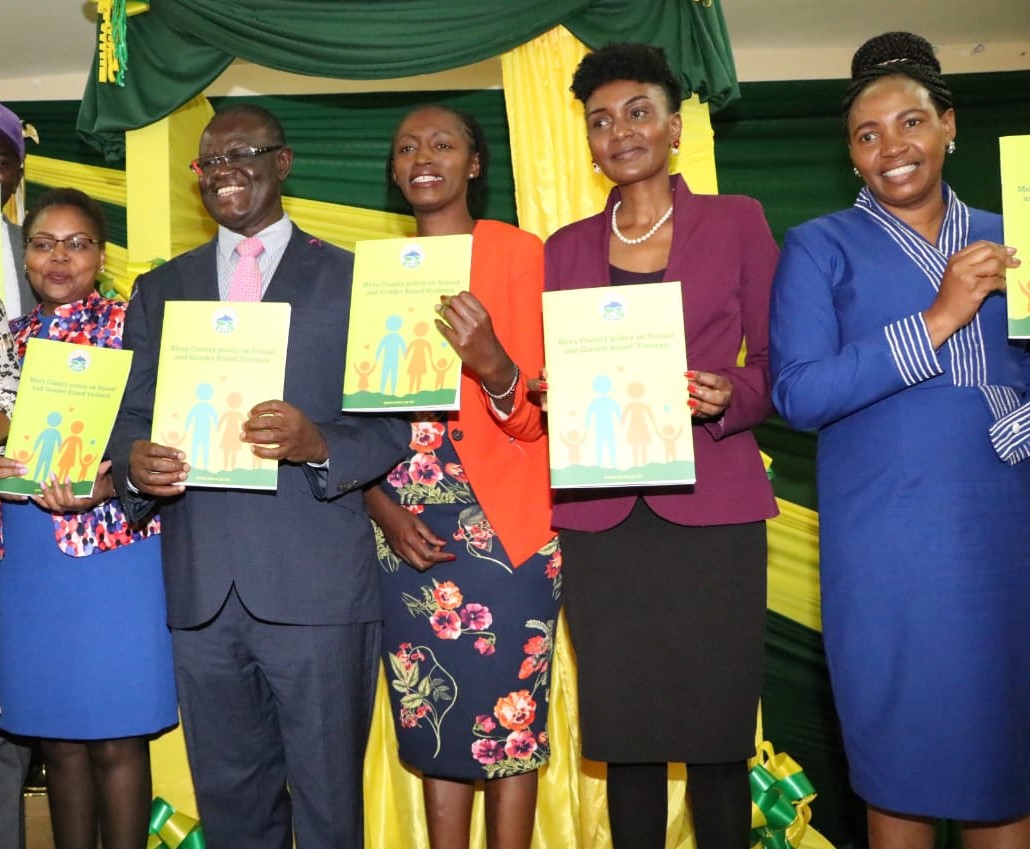
Meru County has become the first county to domesticate model legislation on Sexual and Gender Based Violence.

The policy developed with the support from CREAW is designed to help accelerate and reinforce efforts towards the elimination of all forms of gender based violence (GBV) and improve the quality of life for women and men, boys and girls in the county.

Speaking during the launch of the policy, Meru County Governor Kiraitu Murungi reiterated his commitment to end all forms of gender based violence (GBV). The governor praised stakeholders for their support in addressing the vice in the county.

“I have a dream to make Meru great but we cannot do this with women being battered and oppressed yet they constitute half of the population,” said the Governor, while recognizing that women play a critical role in the development of communities they live in.

Governor Kiraitu explained that “the county government will increase access to quality and comprehensive response and support services across sectors and facilitate the establishment safe houses.” This will go along way in improving accountability SGBV service delivery.

In 2018, Meru County launched the Twaweza initiative to enable women build strong livelihoods and a voice to challenge oppressive norms that denies them the opportunity to lead.

“I commit to providing the necessary support- financial and human resources to ensure that the policy is well implemented. I am a womanist and I support the liberation of women and girls from all forms of violence and discrimination,” he said.

The adoption of the policy comes at a time when media reports are awash with cases of women being killed by their intimate partners and girls forced to undergo female genital mutilations.

The Gender and Special Development County Executive Member (CEC) Nkirote Kailanya bemoaned the high prevalence of SGBV in the county. Surveys have indicated that about 66.7 per cent of women have experienced GBV in the preceding 12 months.

“This policy was developed on the principle that SGBV represents not only a human rights violation, but also a hidden obstacle to economic and social development. Domestic violence not only entails private costs for the victims and their families, but also wider social and economic costs, which in the end slow down the rate of development of a community,” Kailanya said.

CREAW’s Executive Director Wangechi Wachira lauded the county effort to ensure that women and girls are better protected and are able to lead dignified lives.

“It is a great time for survivors. With the police more power and voice has been accorded to women and girls. We will continue to work with the County and stakeholders in ending GBV,” said Wangechi.

Stakeholders present at the event lauded the move stating that the policy will ensure that GBV services are better coordinated.

Writing by Christine Ogutu


Furaha.jpg

June 1, 2019by CREAW

Each and every Wednesday of the week Saumu Mwadime and Eunice Baya sets out to traverse through the villages of Kilifi North Sub-County with a mission to hold conversations with the communities and get an in-depth understanding into the issues that bedevils communal coexistence; of core concern to them is gender based violence which has a damaging impact on the education of many girls around Kilifi County. 


JourneyTwoThirds-1280x853.png

March 29, 2019by CREAW0

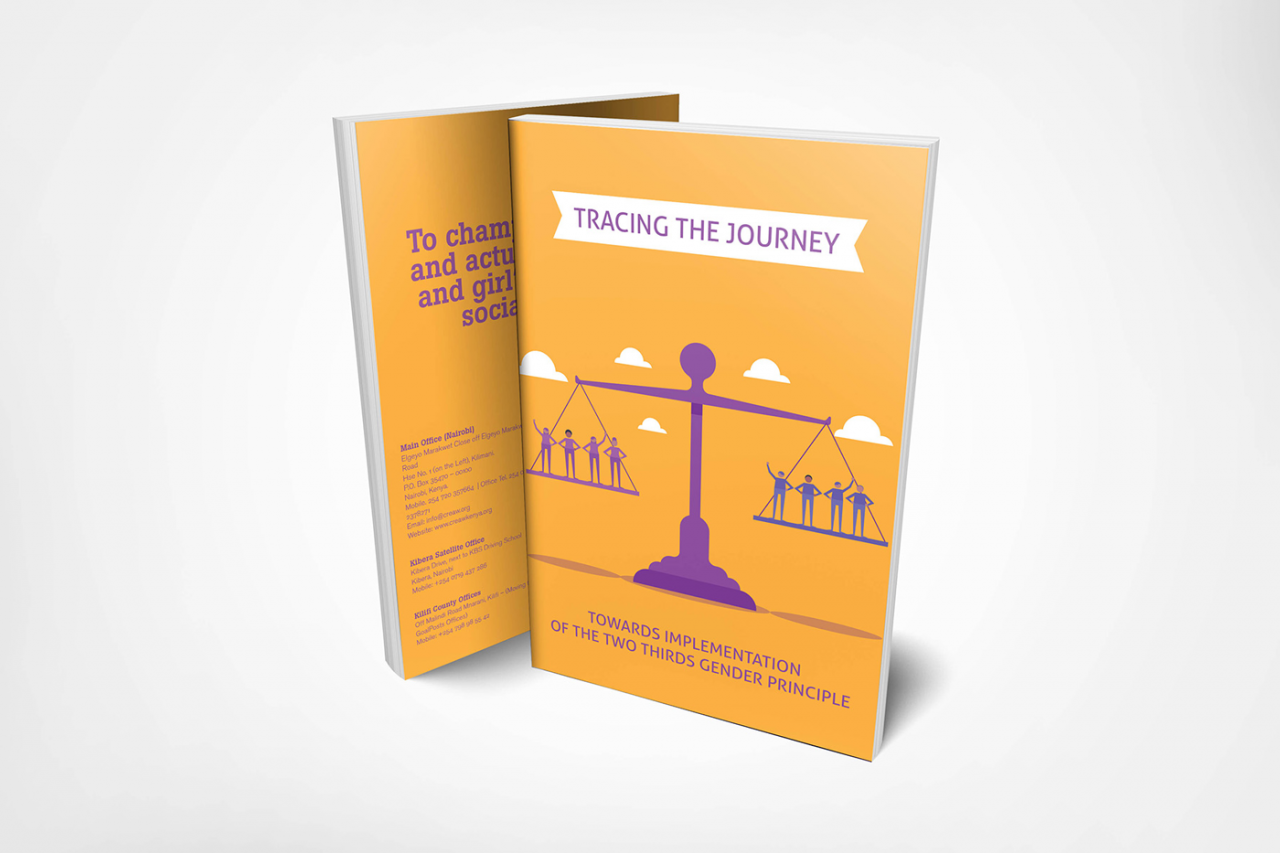
At the core of the Constitution of Kenya (COK, 2010) is the belief that there can only be real progress in society if all citizens participate fully in their governance, and that all, male and female, persons with disabilities (PWDs) and all previously marginalized and excluded groups are included in the affairs of the republic.